
European Policy Direction on Iran Crisis Discussed at Munich Security Conference
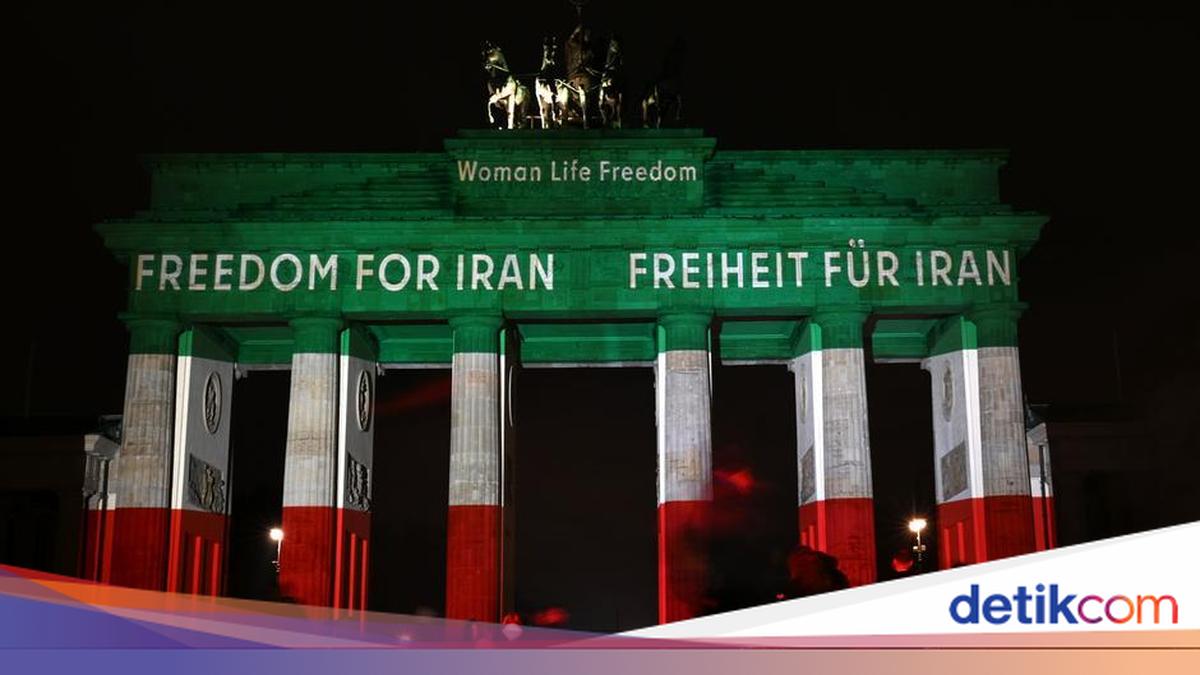
Tensions over Iran took centre stage at the 2026 Munich Security Conference (MSC), following the regime’s deadly crackdown on protesters and US President Donald Trump’s pressure on Tehran to halt its nuclear programme.
Iran’s conservative leaders have maintained their grip on power despite the largest wave of anti-regime protests in decades. Against this backdrop, Reza Pahlavi, the son of Iran’s late Shah who now lives in exile, has been actively attending international conferences to call for regime change in Iran.
During a session on Iran’s future on Friday (13 February) and at a press conference the following day, Pahlavi highlighted human rights abuses by the Iranian regime. Several human rights groups have reported that the regime’s repressive actions against citizens during anti-regime protests have killed thousands.
Pahlavi, regarded by some Iranians as a figure capable of uniting the nation against the government of 86-year-old Supreme Leader Ali Khamenei, presented a political roadmap for Iran’s future and a concept for a “transitional government” at the MSC.
Approximately 250,000 people subsequently joined a demonstration in Munich on Saturday (14 February) to oppose the Iranian regime and support the Pahlavi-led opposition.
“I am here to guarantee a transition towards a secular and democratic future,” Pahlavi said in his address.
“I am committed to being a transitional leader for you, so that one day we can determine the fate of our country through a transparent democratic process via the ballot box.”
However, a transitional government could only be formed if the current regime collapses. Despite facing unprecedented pressure, the regime has endured and reportedly intensified domestic repression. Nevertheless, extensive discussions on the possibility of regime change in Iran also took place at the MSC.
Reading Washington’s Position
Pahlavi, who is part of the Iranian opposition in exile, hinted at hopes for US action to end the fundamentalist regime.
During the anti-regime protests, US President Donald Trump had said that help would come for the Iranian people. The Trump administration is currently in the process of negotiating with Tehran over its nuclear programme, though observers consider it unlikely the talks will produce definitive results.
“I think many Iranians, both inside and outside the country, hope for intervention that could disable the regime’s instruments of repression and give us the opportunity to resolve this crisis comprehensively,” Pahlavi said at the MSC forum. He stressed that what he was requesting was “humanitarian intervention” to prevent further loss of life.
Having initially tempered threats of military intervention following the deaths of protesters, Trump again threatened to use force if the Iranian regime refused to negotiate a new “deal” on its nuclear programme.
Last week, the US dispatched a second aircraft carrier group to the Arabian Sea. On Friday (13 February), Trump said it would be “a very bad day” for Iran if an agreement between the two countries failed to materialise.
Pahlavi acknowledged that the US president needed to give diplomacy a chance before opting for military action. He expressed his belief that Trump understood the Iranian people still believed in the promises he made at the height of the January 2026 demonstrations.
Karim Sadjadpour, a policy analyst at the Carnegie Endowment for International Peace, said that replacing the regime was no simple matter.
“Everyone in Washington, including President Trump, if they could press a button and remove the Iranian regime, they would certainly do so,” he said during an MSC panel discussion, adding that the Trump administration was likely considering the aftermath, such as what occurred following US military interventions in Iraq and Libya.
Nevertheless, Sadjadpour argued that a US strike on Iran remained highly possible.
“In 2018, Trump withdrew from the 2015 nuclear deal. In 2020, he ordered the killing of Qassem Soleimani, a military commander and close associate of Khamenei. In the summer of 2025, he dropped 14 bunker-buster bombs on Iran’s nuclear facilities,” Sadjadpour explained. He added that, in his view, the likelihood of Trump launching a strike on Iran was greater than the chances of both sides reaching a nuclear agreement.
Europe Favours Diplomacy
Whilst the US continues to pressure Iran with the threat of military force, the European Union (EU) has called for de-escalation and favours sanctions and support for civil society in Iran.
In January 2026, when the Trump administration appeared on the verge of striking Iran, German Defence Minister Boris Pistorius said at a joint press conference with EU Foreign Policy Chief Kaja Kallas that the Iranian people “do not want regime change imposed by external forces” and warned of potential unintended consequences.
According to Kallas, many regimes throughout history have been overthrown, but the question is what happens afterwards.
“You need alternatives and decisions that truly come from within the country for the state to continue functioning.”
For Pahlavi, Europe’s refusal to support US military action could be perceived as a lack of support for efforts to topple the regime.
Although Europe has played a significant role in imposing sanctions on Iran’s nuclear programme, statements by officials at the MSC did not clarify Europe’s position should the US actually launch a strike, as they continued to prioritise diplomacy over the use of force.
In 2015, several major European nations helped mediate a landmark agreement to limit Iran’s nuclear programme, particularly uranium enrichment, accompanied by the lifting of economic sanctions.
The agreement, known as the Joint Comprehensive Plan of Action (JCPOA), was signed in July 2015 between Iran and the P5+1 nations — the US, the United Kingdom, France, China, Russia, and Germany.
Trump called the deal “horrible” and “one-sided,” then withdrew the United States from the agreement in 2018 during his first term, a move that dismayed America’s European partners.
Now, as Trump pushes for a new nuclear deal whilst keeping the military option open, Europe appears only able to wait and see how events unfold.
“The impetus for change must come from the Iranian people themselves who are demanding freedom, and Europe needs to align its actions with that reality,” said European Parliament President Roberta Metsola at the MSC.
She added that the EU’s decision to designate Iran’s Revolutionary Guards as a terrorist organisation marked a turning point and signalled the end of routine European diplomacy.
“Europe must show clear support for those risking their lives in demonstrations. We stand with you,” she said.
Relations with Iran Increasingly Uncertain
In 2025, Europe also reimposed UN sanctions against Iran on the grounds of JCPOA violations, resulting in increased financial pressure on the regime. The demonstrations in January 2026 were partly driven by economic grievances, including high unemployment and inflation.
International Atomic Energy Agency (IAEA) Director General Rafael Grossi acknowledged that a “business as usual” relationship with Iran appeared no longer feasible. Following the US strikes on Iran’s nuclear facilities in July 2025, Tehran suspended cooperation with the IAEA.
“This situation cannot be allowed to drag on. There are political circumstances at play. On our side, there has been some progress. However, nuclear facilities and materials remain, particularly highly enriched uranium that must continue to be closely monitored. So the political process and technical oversight proceed in parallel,” Grossi stated.
The US and Iran are scheduled to meet again in Geneva next week to continue nuclear negotiations, with Oman once again serving as mediator.