
Environment Minister Confident Bali's Waste Problem Will Be Resolved in 3 Months
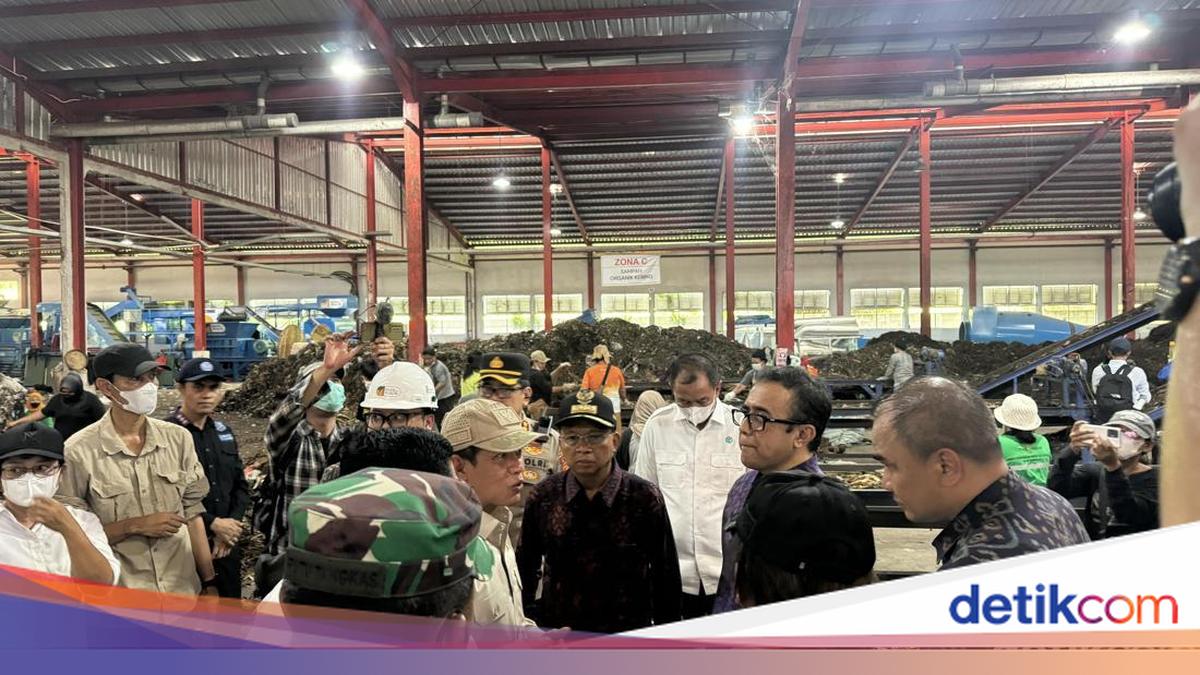
Environment Minister Hanif Faisol Nurofiq is confident that Bali’s waste problem will be resolved by July 2026, or three months from now. He requested that waste handling not be focused solely on Denpasar and Badung, but expanded immediately to other districts in Bali.
“I don’t think we need to wait long. I’m confident that by July, all waste can be managed properly. However, we remind the Governor that we are not waiting for waste handling in Denpasar and Badung. We want to start immediately in the other districts,” Hanif explained during his visit to the Suwung Final Disposal Site (TPA Suwung) and the Integrated Waste Processing Site (TPST) Tahura Ngurah Rai I, accompanied by Bali Governor Wayan Koster and Denpasar Mayor IGN Jaya Negara, on Friday (17/4/2026).
Hanif stated that his side has issued administrative sanctions and will summon relevant parties next week. If there is no improvement by the deadline, the government will use its authority under the law to halt open dumping practices.
“Next week they will be summoned; we have already issued administrative sanctions until August,” Hanif added.
New Waste-to-Energy Facility to Operate in 3 Years
Hanif revealed that Bali’s current waste volume is around 2,000 tonnes per day. Meanwhile, the new waste-to-energy (WTE) project will begin construction around June and is estimated to operate in the next three years.
“It’s planned for groundbreaking around June. But that’s under Danantara’s authority; we are handling the implementation norms,” Hanif clarified.
Hanif requested that Waste Processing Sites (TPST) and Reduce, Reuse, Recycle Waste Processing Sites (TPS3R) in Denpasar City and Badung Regency handle up to 200 tonnes per day.
Hanif targeted several waste processing facilities to operate at maximum capacity, such as TPST Kertalangu and TPST Tahura I, which are asked to reach 200 tonnes per day. Meanwhile, TPST Tahura II is targeted at 100 tonnes per day, and the TPS3R in Sesetan is to be increased from 10 tonnes to 35 tonnes per day.
“So I really urge that the equipment must arrive by the end of July; the equipment must be operational,” Hanif explained.
Based on preliminary data, there are about 23 TPS3R units in Denpasar and 48 units in Badung. Hanif emphasised the importance of dividing waste service areas in each village for more effective management. He also suggested that waste handling processes be carried out before sunrise to maintain Bali’s aesthetics.
However, Hanif assessed that the current TPST performance is not yet optimal, especially in the waste recovery process. He mentioned that the completeness of new equipment is estimated to be fulfilled by the end of June.
Hanif denied any involvement of specific parties in the plan to close TPA Suwung, including the Bali Kura-Kura Special Economic Zone (KEK). He affirmed that waste management policies apply generally and are not targeted at any particular party.
“We have nothing to do with KEK Kura-Kura. I have stated that everything applies generally; no one is allowed to process waste without norms,” Hanif stressed.
Only Denpasar-Badung Serious About Waste Sorting
He also mentioned that only Denpasar City and Badung Regency are truly implementing waste sorting in Indonesia. “But I personally give great appreciation. Perhaps in our country, the ones sorting waste are only these two cities. Governor, with your permission. Even though I’m forcing myself, because Bali has its uniqueness, the waste emergency is also one of the anchors or epicentres of our tourism world,” Hanif stated.
Hanif revealed that the latest report shows Denpasar City and Badung Regency have achieved nearly 60% waste sorting rates. “I’m a bit moved and surprised, and very grateful that in less than a month, the government and people of Denpasar City and Badung Regency have managed to sort over 50%,” Hanif said.
He emphasised the importance of implementing Law No. 18 of 2008 on Waste Management, particularly in handling waste produced by each party.
“We must not neglect or create a sense of injustice; when one community has sorted, the other must also be urged to sort immediately,” Hanif said.
Organic Waste Transported to TPA Suwung
Meanwhile, Jaya Negara explained that current waste management is done through sorting. Organic waste is transported to TPA Suwung every Tuesday and Friday, while inorganic waste and residue can be disposed of daily.
“The Minister’s directive earlier is that organic waste I bring to TPA from villages that do not have TPS3R,” Jaya Negara said.
He added that organic waste from areas without TPS3R will be taken to TPA Suwung. Those with facilities will be processed into compost, and some sent to Klungkung.
“So, after shredding, we ferment it; once it’s ready, it’s taken to Klungkung,” Jaya Negara added.
Jaya Negara also affirmed that minor criminal offences (Tipiring) will still be enforced against violators of waste disposal rules. However, law enforcement will be balanced with the readiness of waste management facilities for the community.
“Tipiring will be applied to irresponsible people dumping on roadsides. Not just the community, but also self-managed ones,” Jaya Negara clarified.