
El Niño to Bring Major Disasters: Droughts, Extreme Heat, UN Cites Indonesia
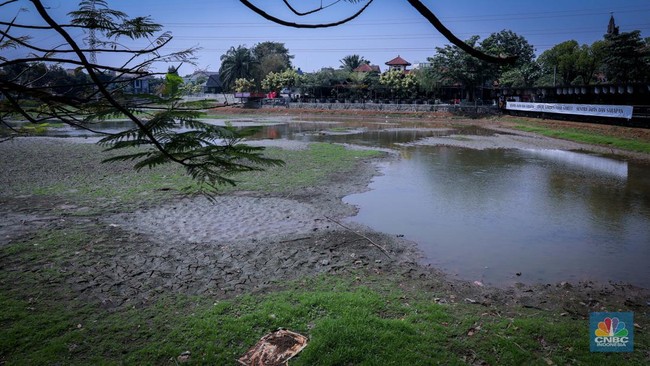
Jakarta, CNBC Indonesia - The World Meteorological Organization (WMO) has warned that the El Niño climate phenomenon will return this summer with a certainty level of 80%. Its presence is expected to worsen extreme weather in various parts of the world, ranging from heatwaves, extreme droughts, to floods.
In its latest forecast, the WMO stated that El Niño is likely to be of moderate to strong intensity and has a 90% chance of lasting at least until November 2026.
“The world must treat this as an urgent climate warning. El Niño conditions will pour fuel onto the fire of the already warming world,” said UN Secretary-General António Guterres, quoted by EuroNews, Thursday (June 4, 2026).
This warning comes after several regions of Western Europe recorded the highest spring temperatures in history due to the formation of a heat dome phenomenon. Scientists predict that similar events will become more intense, longer, and more frequent as El Niño develops.
Scientists have even warned that the impact could last until 2028.
El Niño is triggered by the warming of sea surface temperatures in the tropical Pacific Ocean. This condition causes changes in global weather patterns and often triggers extreme weather in various regions.
WMO Secretary-General Celeste Saulo said the world needs to prepare for greater impacts than usual.
“We need to prepare for the potential of a strong El Niño event, which will exacerbate droughts and heavy rains and increase the risk of heat waves both on land and in the oceans,” she said.
The WMO noted that the last El Niño period, from 2023-2024, was one of the five strongest in history. This phenomenon also contributed to making 2024 the hottest year on record globally.
The 2024 European climate report shows that the impact of El Niño at that time was very contrasting. Eastern Europe experienced extreme heat and drought, while Western Europe was hit by heavy rain and floods.
According to Guterres, the impact of this El Niño could be more widespread.
“This year, the impact will hit harder, reach further, and cross borders at a devastating speed,” he said.
The UN had previously warned of an 86% chance that the next few years will exceed the record for global hot temperatures recorded in 2024.
Scientists believe that the risk is increasing because a strong El Niño is occurring at the same time as the continued increase in the rate of global warming.
Although climate change is not believed to increase the frequency or intensity of El Niño, the increasingly warming conditions of the Earth make its impact more severe.
The warmer oceans and atmosphere provide more energy and moisture that trigger heat waves, extreme rainfall, and various other extreme weather events.
Based on WMO observations, sea surface temperatures began to approach the El Niño threshold from late April to mid-May. In fact, subsurface temperatures in the tropical Pacific were recorded more than 6 degrees Celsius above average, indicating a large reserve of heat that could strengthen the phenomenon.
The WMO stated that each El Niño event has its own uniqueness in terms of evolution, spatial patterns, and impacts.
However, this phenomenon is usually associated with increased rainfall in parts of southern South America, southern United States, the Horn of Africa, and Central Asia. As well as drought in Australia, Indonesia, and parts of southern Asia.
During the summer in the northern hemisphere, the warm waters of El Niño can trigger storms in the central/eastern Pacific Ocean, while inhibiting storm formation in the Atlantic basin.