
Digital Interactive Panels Make Early Childhood Students in Papua More Enthusiastic About Learning
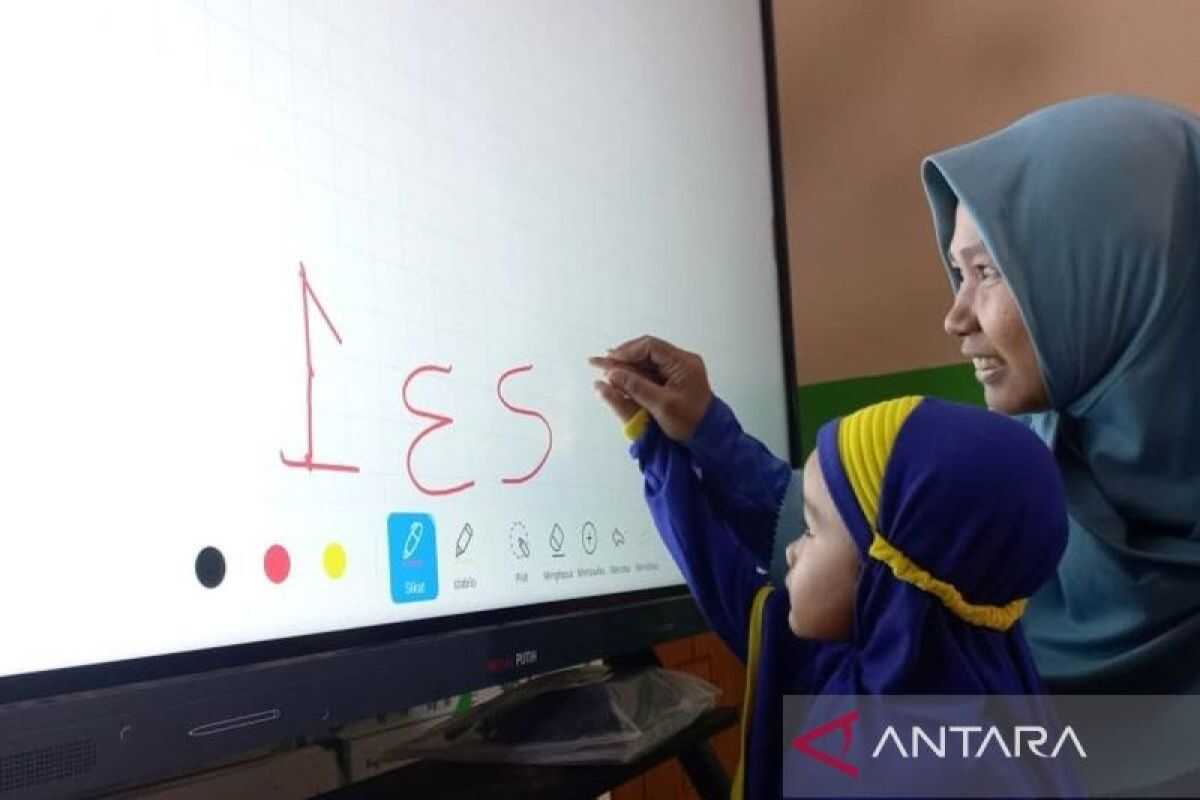
Jakarta (ANTARA) - The transformation of early childhood learning through the use of Interactive Flat Panels (IFP), or Digital Interactive Panels (PID), has made students in Keerom Regency, Papua, through to Teluk Bintuni Regency, West Papua, more enthusiastic about learning.
The headteacher of TK Pembangunan Yapis in Keerom Regency, Papua, Winarsih, said the arrival of the digital panels represented a major leap forward for Early Childhood Education (PAUD) in the border region.
“Learning is no longer one-directional; it now gives pupils the space to actively try, choose, and experiment with material displayed on the interactive screen,” she said in an official statement in Jakarta on Tuesday.
The classrooms at TK Pembangunan Yapis have now been transformed into digital exploration spaces. Large touchscreens allow children to learn about shapes, colours, and educational objects directly through touch, rather than merely listening to a teacher’s explanation. Students’ enthusiasm is evident each time a digital-based lesson begins.
A variety of digital learning content has become a favourite among the children. They draw, colour, and independently identify various objects. For a school long associated with limited facilities, the arrival of the panels has opened a window to a new world for early childhood pupils.
When an image of a bird of paradise appeared on screen, the classroom was instantly filled with laughter, wonder, and curiosity.
For children in Disadvantaged, Frontier, and Outermost (3T) regions, the digital panels are more than just electronic devices. Their presence symbolises that their schools are receiving attention and opportunities equal to those in major cities.
Pupils’ self-confidence has grown alongside the conviction that they too deserve technology-based learning.
According to a report from the Directorate General of Early Childhood, Primary, and Secondary Education (Ditjen PAUD Dasmen) at the Ministry of Primary and Secondary Education, the delivery of digital interactive panels for early childhood education has reached 64,190 units, or 100 per cent of the allocation. Some 349 early childhood education centres in disaster-affected areas also received the panels.
Director General of PAUD Dasmen, Gogot Suharwoto, said that going forward, efforts to strengthen electricity supply, connectivity, and teacher mentoring would continue to be expanded so that the benefits of the panels become more sustainable and reach more early childhood education centres.
“With shared commitment between educational institutions, regional Education Offices, and the Ministry of Primary and Secondary Education, the digital interactive panels in early childhood classrooms do not merely inspire children with images on a screen — they also kindle the great hope that geographical distance is no longer a barrier to producing a generation of Indonesians who are intelligent, confident, and equal,” Gogot said.