
Differences in Strategies Between Indonesia and Malaysia Stock Exchanges: Which Performs Better?
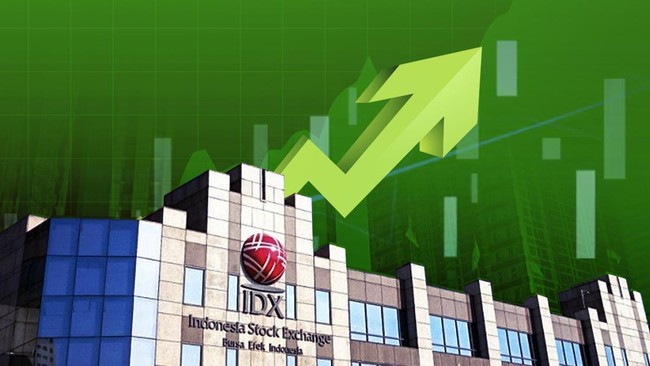
The capital markets in Southeast Asia are undergoing significant structural transformation. Stock exchange authorities are no longer merely facilitators of conventional share trading but have evolved into providers of integrated financial ecosystems.
A comparative analysis between the Indonesia Stock Exchange, Bursa Malaysia, and Singapore Exchange reveals fundamental differences in operational strategies, market capitalisation, technology adoption, and depth of investment instruments.
Head-to-Head: Indonesia and Malaysia
The Indonesia Stock Exchange and Bursa Malaysia represent capital market models that have grown from the foundation of their domestic real economies, yet with differing operational orientations.
Currently, the Indonesia Stock Exchange’s market capitalisation reaches US$737 billion, making it the largest equity exchange by valuation in Southeast Asia. This growth is supported by the dominance of conventional banking sectors, retail consumption, and global commodity cycles.
The Indonesia Stock Exchange implements a specific surveillance methodology in the form of the Special Monitoring Board with a periodic call auction price discovery system.
This methodology is designed to dampen volatility in shares with liquidity or fundamental issues, where buy and sell orders are collected first before being matched at a single price.
The Indonesia Stock Exchange also makes strategic breakthroughs through the New Economy Board, which accommodates multi-vote share structures, allowing technology company founders to retain strategic control after initial public offerings.
Additional features include the launch of structured warrants and integration of IDX Carbon for national emissions credit trading. However, this exchange harbours vulnerabilities in the form of absolute dependence on foreign capital inflows due to the lack of adequate derivative hedging instruments in the local market.
On the other hand, Bursa Malaysia operates with a market capitalisation of US$483 billion. This exchange’s strategy does not focus on massive initial public offerings but on absolute dominance in the global Islamic capital market sector. Bursa Malaysia also trades ownership of Bursa shares with the ticker (BURSA.KL).
Malaysia’s Shariah screening methodology operates very strictly, using a combination of quantitative ratio tests with a maximum debt limit of 33% and independent qualitative assessments by a supervisory board.
Bursa Malaysia innovates by launching various unique features, such as the Bursa Gold Dinar, a digital-based physical gold investment platform, and the Bursa Carbon Exchange as the world’s first voluntary Shariah-compliant carbon exchange.
This exchange also facilitates funding for small and medium-sized enterprises through a dedicated trading board called the LEAP Market. The fundamental weakness of Bursa Malaysia lies in the stagnation of creating new large-cap issuers, particularly in the high-tech industrial sector.
Learning from Singapore
The Singapore Exchange (SGX) operates with a financial architecture paradigm that is completely detached from its country’s domestic consumption levels. With a market capitalisation value exceeding US$849 billion, SGX positions itself purely as a gateway for global institutional capital flows into Asia.
Throughout this year, the Composite Stock Price Index (IHSG) has already plummeted 17.6%, the worst in Asia, while the Malaysian exchange has strengthened by 2.5%.
In addition to Bursa Malaysia, SGX also trades its own shares on SGX with the ticker S68, thus prioritising exchange transparency to maintain credibility on the international stage.
SGX’s main revenue sources are not generated from conventional local company share trading activities but from derivative futures trading, foreign exchange transaction settlements, and international bond issuances.
Singapore holds the status as a hub for the ecosystem of commercial asset securitisation instruments, where highly efficient tax regulations encourage many cross-border property developers to list their assets there to absorb global funding.
SGX’s most revolutionary breakthrough occurred in the institutional integration of digital assets and environmental standards. Through the establishment of Marketnode, SGX implements distributed ledger technology for securitising smart bonds and tokenised assets.
SGX also becomes the first exchange in Asia to mandate climate reporting for issuers, making it the financial architecture most ready to face the green economy era.
However, this business orientation that specifically serves cross-border institutions creates severe liquidity problems in its regular equity market.
The absence of local retail investor participation makes medium-scale share trading activity very dry, triggering waves of privatisations and ongoing withdrawals of shares from the public exchange by controlling shareholders.
Infrastructure Gaps and Regional Market Catch-Up Expectations
Referring to the level of adoption of advanced investment instruments, transaction technology smoothness, and readiness of risk management systems, Indonesia and Malaysia have an estimated infrastructure lag of about 15 to 20 years behind the depth of Singapore’s market.
Within the SGX ecosystem, the availability of comprehensive hedging instruments, property securitisation management, to short-selling transaction facilities have functioned as main operational standards for more than two decades efficiently.
In this infrastructure catch-up process, Bursa Malaysia steps one phase ahead of Indonesia. The short-selling mechanism in Kuala Lumpur has operated fully on a daily basis, immediately balanced with an automatic mitigation system to freeze trading when short-selling volume reaches 10% of total outstanding shares.
In contrast, Indonesia implements a policy that