
Defence expert says Indonesia does not need to develop ICBM missiles
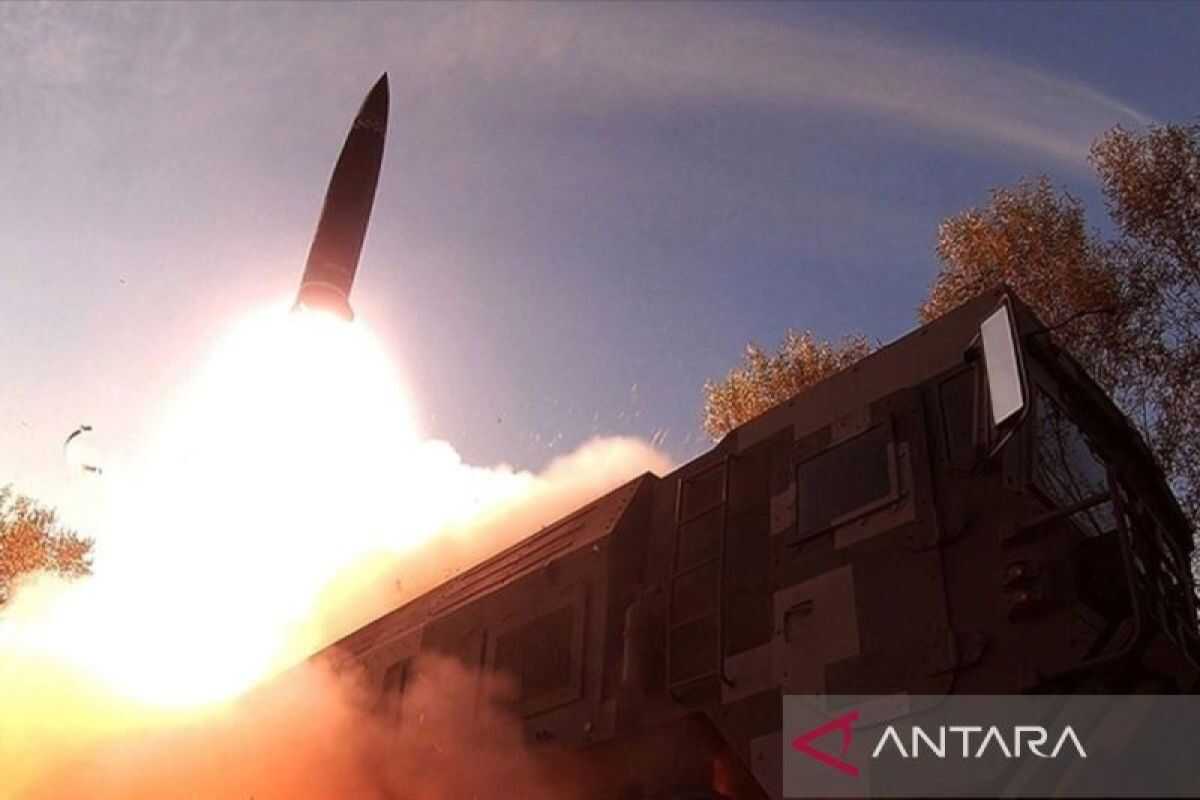
Jakarta — A defence and security analyst from the Institute for Security and Strategic Studies (ISSES), Khairul Fahmi, has argued that Indonesia does not need to develop intercontinental ballistic missiles (ICBMs) amid the current escalation of global conflicts.
According to Fahmi, the Indonesian Air Force (TNI AU) has a more urgent requirement to acquire squadrons of airborne early warning and control (AEW&C) aircraft.
“These aircraft are like flying radars that can detect the movements of stealth aircraft, cruise missiles, and enemy vessels from distances beyond the reach of our land-based radar (GCI), providing crucial situational awareness and reaction time for combat units,” he told ANTARA in Jakarta on Monday.
Khairul was responding to a statement by Indonesia’s sixth president, Susilo Bambang Yudhoyono (SBY), regarding the importance of strengthening air defence to protect Indonesian territory from foreign attacks.
ICBMs, he argued, are incompatible with Indonesia’s military doctrine, which prioritises active or defensive posture without expansionist ambitions towards other continents.
“ICBMs, with a range of thousands of kilometres, are fundamentally offensive power projection weapons typically designed to carry nuclear warheads for global strategic deterrence. The development of ICBMs directly contradicts Indonesia’s active-defensive doctrine, which harbours no expansionist ambitions beyond our shores,” he said.
Rather than spending massive research budgets on ICBMs, Fahmi argued that Indonesia would benefit far more from developing and acquiring supersonic anti-ship cruise missiles (ASCM) and highly precise short to medium-range ballistic missiles (SRBM/MRBM).
Fahmi emphasised that the TNI AU must also strengthen its capacity in acquiring air warning systems, which are essential given the current geopolitical conditions.
“Strengthening the TNI AU cannot be reduced to merely purchasing the latest generation fighter jets. Even the most advanced fighter aircraft will be blind and deaf without an integrated supporting ecosystem. The primary focus that needs to be pursued at present is building a Network-Centric Warfare (NCW) architecture and capable Command, Control, Communications, Computers, Intelligence, Surveillance, and Reconnaissance (C4ISR) capabilities,” he said.
Fahmi also noted that Indonesia’s defence system can be strengthened by increasing land-based air defence systems (Arhanud), including medium-range surface-to-air missile (SAM) batteries, strategically deployed in layers across critical national assets.