
Danantara as a Solution
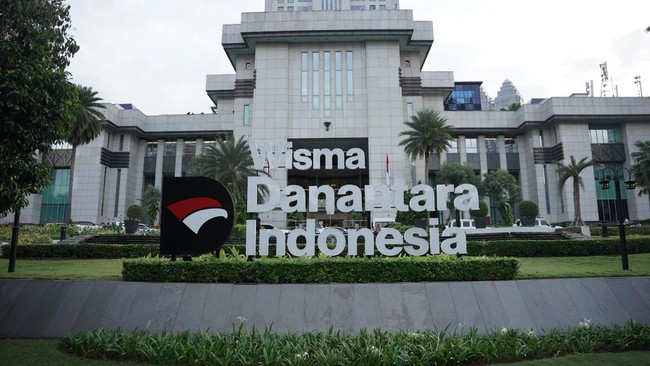
Danantara as a Solution
Note: This article is the personal opinion of the author and does not reflect the views of the CNBCIndonesia.com editorial team.
It has been a year since the Badan Pengelola Investasi Daya Anagata Nusantara (BPI Danantara) was established. Since its formation on 24 February 2025, the public has been awaiting its role as a state instrument in realising Indonesia’s economic progress, particularly in the field of investment.
Moreover, through government policy and approval from the Dewan Perwakilan Rakyat (House of Representatives), Danantara has been granted privileges to: (i) manage 100% of SOE dividends that are the right of the government; (ii) optimise SOE assets to be leveraged in order to obtain funding for Danantara’s investment activities or related SOEs.
The existence of Danantara has become a focal point of attention for rating agencies such as Moody’s and Fitch in the last two months. Unfortunately, this focus from the rating agencies has not yet reflected optimism regarding its existence in strengthening creditors’ confidence in Indonesia’s sovereign rating position.
The rating agencies have instead placed Danantara in their rating notes as a factor that could potentially lower Indonesia’s debt rating in the future. Moody’s and Fitch have issued official statements regarding Indonesia’s sovereign rating with a relatively similar stance on Danantara.
Danantara is indeed a new institution. However, with its vast resources, strong government and political support, and such significant privileges, it is entirely reasonable for the public (society, investors, and creditors) to hope that Danantara will mature quickly and deliver concrete results.
Danantara is not an ordinary sovereign wealth fund (SWF) organisation. Therefore, its existence must soon become a solution rather than a source of pessimism and concern amid such high public expectations and the reality of the needs demanded by the state, particularly in realising government targets as often stated by President Prabowo Subianto.
The idea of establishing Danantara is purely the vision of President Prabowo. The author believes that the concept of forming Danantara is not merely to make it an SWF like Singapore’s Temasek and GIC, which purely function as investment companies.
In addition to being an investment company, Danantara also serves as a holding company, even a super holding company, for all existing SOEs. This differs from Temasek or GIC, where they became super holding companies for the companies they own through a natural process via their investment activities.
SASAC as a Role Model
The author views that the concept of forming Danantara refers to SASAC (The State-Owned Assets Supervision and Administration Commission) in China. SASAC was established on 24 March 2003, exactly 23 years ago, overseeing tens of thousands of existing SOEs operating from the local to national levels.
SASAC is a “government body” tasked with managing SOEs and is accountable to the State Council, subject to Company Law and other administrative regulations. Almost similar to Danantara, SASAC is also given the authority to fully manage SOE dividends that are the government’s right for development in various investment activities.
The SOE transformation process carried out through SASAC can be said to have successfully accelerated the business development of SOEs in China. Based on the global magazine Fortune 500 publication released in March 2026, 128 companies, or 25% of them, originate from China.
The majority of these Chinese companies in the Fortune 500 are SOEs. Meanwhile, Indonesia is only represented by Pertamina, which does not enter the Top 100, precisely at rank 165, a significant drop from its first entry into the Fortune 500 at rank 122 in 2012.
The Chinese government’s policy of focusing SOE management under one body, namely SASAC, has not only managed to position them as the largest companies globally but also as the main contributors to high economic growth and job creation.
It should be noted that SOE reform in China began in 1984, marked by a fundamental change in the relationship between SOEs as corporations and SOEs as fiscal instruments (national budget). Before 1984, SOE dividends were the largest contributor to China’s state revenue (national budget) at around 50%; since 1984, the national budget no longer receives dividends from SOEs as a revenue source.
Since then, the Chinese government has implemented a dividend payout ratio (DPOR) of 0% (zero DPOR), meaning all profits generated by Chinese SOEs are returned to the SOEs as retained earnings to strengthen capital for expansion and SOE investments. This policy applied until 2003, known as the first generation of SOE reform.
In its development, the Chinese government opened up to foreign investors entering state-owned companies. Since 2003, China has conducted extensive privatisation of SOEs through initial public offerings (IPOs) on the capital markets.
The privatisation process was carried out by SASAC. The concept of SOE privatisation implemented is “zhua da fang xiao” or “grasp the large and let go of the small”—retain the large ones and release the small ones.
In 2007, a dividend policy (DPOR) was enforced to provide certainty of return on investment (ROI) for non-government shareholders. Initially, DPOR was 5-10%, then increased to 30% in 2020. This period of SOE reform is known as the second generation of SOE reform.
Although the DPOR policy was applied, the government’s share of dividends was still treated the same, i.e., not entering the national budget. The government’s share of SOE dividends was deposited into the State Capital