
Conglomerate Stocks Poised to Benefit from the Iran War
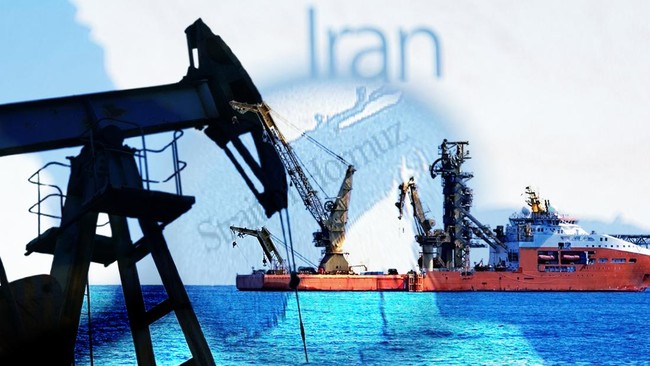
The surge in energy commodity prices due to the war between Iran and Israel and the United States (US) has left the world anxious. However, for some, this price increase is a blessing.
The escalation of geopolitical conflict between the US-Israel and Iran, culminating in security disruptions in the Strait of Hormuz, has significant implications for the global supply chain.
The Strait of Hormuz’s position as a crucial logistics route accommodating the distribution of world energy and major commodities means that any disruption in the area directly triggers a supply shock.
This uncertainty creates a positive catalyst in the form of a surge in global commodity prices.
The shift in the supply curve due to logistical barriers pushes up energy prices, precious metals, and sea freight rates to premium levels. In the domestic capital market, this situation provides substantial windfall profits for issuers operating in related sectors.
The increased operational margins recorded by several issuers on the Indonesia Stock Exchange (BEI) directly positively impact the valuation of companies controlled by several prominent conglomerates and Ultimate Beneficial Owners (UBO) in Indonesia. This crisis dynamic positions them as beneficiaries of the surge in global benchmark prices.
According to Refinitiv, after a month of the Iran vs Israel-US war erupting, the commodity prices that surged the most were oil prices, followed by coal.
The oil price surge is even higher than during the Russia-Ukraine War.
This commodity price surge also benefits companies and their owners. With surging prices, company revenues can increase.
Beyond commodities, the Iran vs Israel-US war also brings benefits to fertiliser commodities and companies in the shipping sector. Urea fertiliser prices have even skyrocketed by more than 10% since the war.
Drawing from commodity price movements and war impacts, several issuers stand to benefit, including the following:
Sectoral Analysis and Commodity Price Movements
Supply disruptions due to conflict escalation bring specific fundamental implications for each asset class. Below is a detailed breakdown of the profit mechanisms obtained by each sector along with the current benchmark commodity prices.
Below is a holistic mapping of sectors benefiting from global supply chain disruptions due to the Middle East conflict, referring to updates on issuer data and their controlling structures.
Oil and Gas Sector (Migas)
Current Benchmark Price: Brent crude oil price has surged to US$119 per barrel, while WTI moves in the highest range of US$112.
This maritime route is vital as it accommodates about 20% of the world’s oil supply. Disruptions to this route create an instant global supply deficit.
Upstream oil and gas producers such as MEDC, controlled by the Panigoro family, and ENRG under the Bakrie Group, become direct beneficiaries.
This benchmark price surge directly raises the company’s Average Selling Price (ASP), widening profit margins without needing significant production volume increases.
ELSA also receives positive derivative impacts if high oil prices encourage upstream contractors to increase capital expenditure budgets (capex) for exploration activities.
Coal Sector
Current Benchmark Price: Newcastle reference coal (ICE) moves moderately in the range of US$130-140 per tonne.
The coal sector’s correlation to the Middle East conflict operates through an energy substitution mechanism. When the crisis pushes oil prices beyond industrial economic limits, manufacturing countries shift energy needs to coal.
With oil prices correcting back, the urgency of this substitution gradually eases, but this uncertainty remains a top priority as substitution is a key part of countries’ energy resilience.
This increased substitution demand maintains sales volumes and margins for coal issuers. Alamtri Resources Indonesia (ADRO) has a strong cost structure efficiency (cash cost).
This condition allows the company to generate maximum free cash flow amid high substitute energy commodity prices and it is not subject to the new DMO regulations.
Aluminium Sector
Current Benchmark Price: London Metal Exchange (LME) reference aluminium stabilises in the range of US$3,200-3,300 per tonne.
The Gulf region is the world’s aluminium smelting base due to access to cheap natural gas supplies. Fears of maritime blockades previously triggered buying actions that pushed up aluminium prices due to expectations of supply shortages.
The peace declaration ensures smelter operations and logistics in the Middle East run without hindrance. This supply normalisation eliminates the scarcity premium on global aluminium prices.
The impact on ADMR (Alamtri Minerals Indonesia) is neutral, given that investor focus on this issuer remains on long-term execution of the smelter facility resolution in North Kalimantan, not merely short-term commodity price fluctuations.
Gold Sector (Precious Metals)
Current Benchmark Price: Spot gold price (XAU/USD) consolidates in the range of US$4,400-4,600 per troy ounce.
In the macroeconomic landscape, gold is an absolute safe haven or hedging instrument when geopolitical uncertainty peaks. This escalation scenario automatically reduces market risk appetite from riskier assets to safer ones.
Rising global risks trigger massive liquidity flows from financial institutions out of risky assets towards the precious metals market. This basic gold price increase directly boosts asset valuations and profitability projections for gold mining issuers.
EMAS, affiliated with Garibaldi Thohir, and ARCI, owned by Peter Son