
BTS Electric Bus Route Bojonggede-Sentul Requires Rp12 Billion Annually
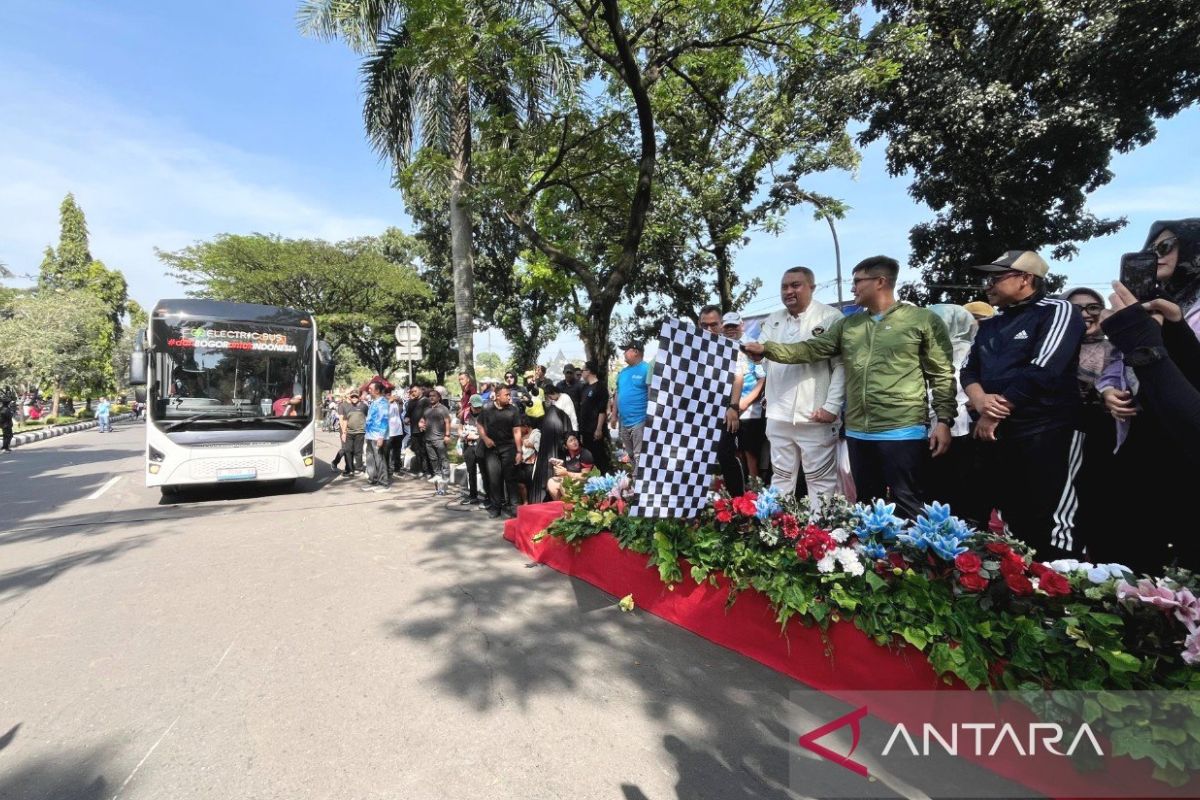
The Bogor Regency Government in West Java estimates a budget requirement of around Rp12 billion per year for implementing the Buy The Service (BTS) scheme for electric buses on the Bojonggede-Sentul route.
The Head of the Bogor Regency Transportation Agency, Bayu Ramawanto, in Cibinong on Tuesday, stated that the estimate is calculated based on the fleet’s mileage, daily trips, and operational costs per kilometre.
“For the time being, we calculate the electric bus at around Rp10,000 to Rp12,000 per kilometre. If it can cover 300 kilometres a day, just multiply it out,” said Bayu.
He explained that the Bojonggede-Sentul route is about 50 kilometres long. Assuming one fleet covers six trips per day, the total mileage reaches around 300 kilometres per day.
Under this scheme, operational costs are calculated by multiplying the per-kilometre rate by the total daily mileage and the number of operating days in a month.
The Bogor Regency Transportation Agency also estimates the need for nine bus units to serve this corridor, projecting a total annual budget of around Rp12 billion.
Bayu stated that the BTS scheme has advantages because the government does not need to spend initial capital on fleet procurement or other operational costs such as driver salaries.
“The benefit is we don’t need to buy buses or pay drivers. We just pay for the service,” he said.
He added that the calculation still assumes free service for the public, so all costs are borne by the government through subsidies.
However, if fares are implemented in the future, part of the operational costs could be covered by service revenue.
“If one bus can generate Rp100 million per month, that means Rp1.2 billion per year. For nine buses, it could be around Rp9 billion. That could reduce the subsidy burden,” said Bayu.
Previously, the Bogor Regency Government through the Transportation Agency was trialling the Bojonggede-Sentul route as an initial step to study the implementation of the BTS scheme for mass transportation.
The trial is conducted to gauge public response, service effectiveness, and potential integration with existing transport hubs in the corridor.
In addition, the Transportation Agency is considering that the development of the new route does not conflict with existing transport, such as city minibuses.
“That’s why we trial it first, so it doesn’t overlap too much with the existing minibus routes,” said Bayu.
According to him, developing mass transportation through the BTS scheme is expected to encourage the public to switch from private vehicles to more integrated and organised public transport.