
Bripka Hana Teaches Villagers to Process Livestock and Paper Waste into Economically Valuable Products
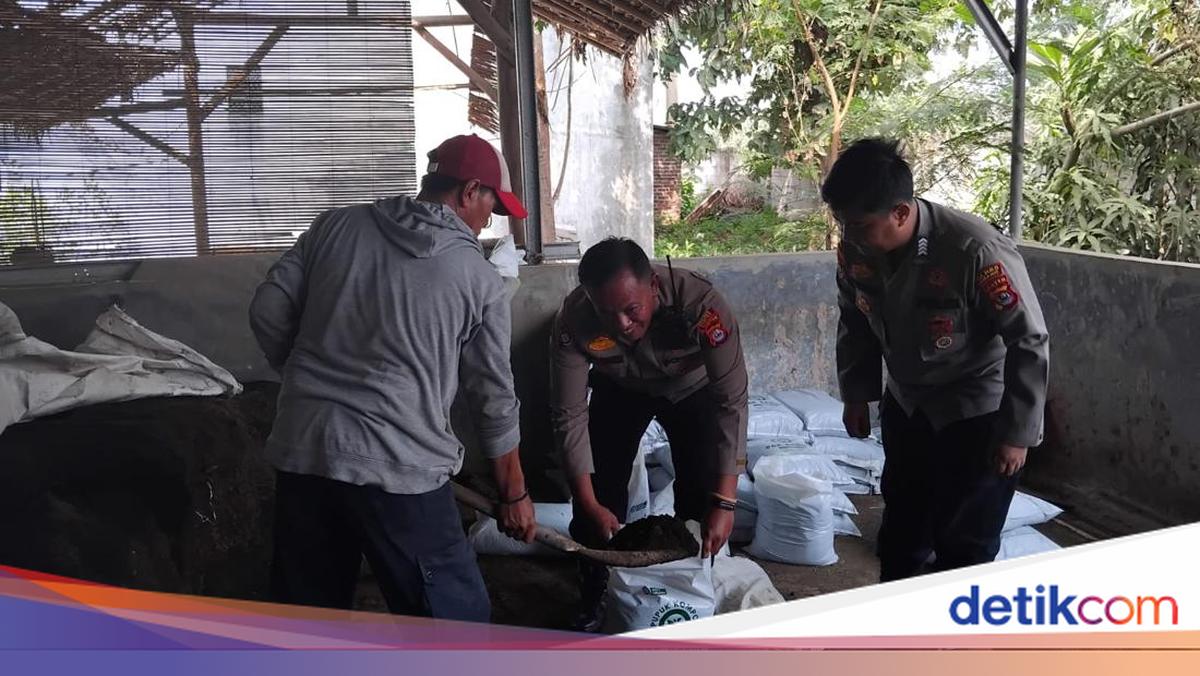
Bripka Hana Heriyana utilised waste to create economic value for residents of Tegal Maja Village, Serang, Banten, during her tenure as a community police officer. Bripka Hana encouraged villagers to process buffalo dung and paper waste into handicraft bags.
Bripka Hana has been nominated by several villagers for the Hoegeng Awards 2026. Rini, a staff member at Tegal Maja Village, described Bripka Hana as an innovative figure close to the community during her time as a community police officer.
“She is excellent, blends in with the community here, responsive, innovative, creative—basically, Mr Hana participates in all village activities,” Rini told detikcom on Tuesday (10/3/2026).
Rini explained that one of Bripka Hana’s programmes involved processing cow dung into compost fertiliser. She noted that the cow dung had previously been a complaint among villagers due to it being scattered around the environment.
“Buffalo dung is scattered everywhere, so they tried to turn it into fertiliser. Farmers are given sacks, valued at around Rp5,000 per dry sack, then processed by adding dry straw and various other things, ground, and fermented,” Rini said.
Rini stated that this programme has improved the villagers’ economy. On the other hand, the environment has become cleaner from buffalo dung.
“It damages the roads too, scattered everywhere, but since the programme started, alhamdulillah, people compete to collect it; it’s piled up on the sides and gathered, so thankfully it’s quite clean now,” she said.
The compost fertiliser processing site is near the village head’s house. Currently, there are 5 workers at the compost processing facility.
“There are 4-5 people managing it, and for the community (sellers), it’s anyone with buffalo livestock. They deliver it. Actually, it’s the women, so it’s quite helpful for extra income to buy chillies,” she said.
Additionally, Bripka Hana encouraged villagers to utilise paper waste from a local factory to create handicraft bags. This programme was proposed by the village head and supported by Bripka Hana.
“The paper waste is from a PT in our village; it used to be discarded, then they tried making crafts like bags. We provided training first, and eventually, our villagers could do it,” she said.
Bripka Hana usually assists in marketing these paper handicraft bag products. Around 30 villagers are involved in this handicraft group.
“If there’s an exhibition or sale, Mr Hana informs us, ‘Bu Rini, there’s an order for this.’ Our cheapest product is Rp35,000, and for branded-style bags, Rp800,000 to Rp1.5 million,” she said.
Bripka Hana was transferred in December 2025. She now serves as a sergeant in Unit 3 of the Intelligence and Security Division at Serang Police Resort.
“The programmes are still running because even though Mr Hana has moved to the police resort, he still contributes; he still visits here and helps,” she said.
Utilising Waste to Boost Villagers’ Economy
Previously, Bripka Hana was one of the candidates nominated for the Hoengeng Corner programme 2025. Bripka Hana created the compost fertiliser and paper bag handicraft programmes because waste issues were a major concern for villagers.
Bripka Hana served as the community police officer in Tegalmaja Village for 3 years. Upon starting her duties, Hana observed that most villagers owned buffalo livestock. This caused problems because the buffalo dung disrupted residents’ comfort.
“It started from environmental issues, so there was some friction in the neighbourhood between those who have buffalo and those who don’t; residents without livestock complained about the smell and it dirtying the environment,” Hana said in an interview with detikcom on Tuesday (11/11/2025).
Hana brainstormed ways to address the villagers’ problems. She eventually proposed to the village head to utilise the cow dung as compost fertiliser.
“Alhamdulillah, the village head shares my vision; we turned the existing social conflict in the environment into a productive product, especially for the community,” Hana said.
The compost fertiliser processing has been running for one year. Hana also invited unemployed villagers to participate in making the compost.
Hana buys buffalo dung from villagers at Rp5,000 per sack. The dung is then mixed with other raw materials to become compost fertiliser.
“Initially, it’s collected from the community to us; we value it at Rp5,000 per sack, we receive it then enter the production process. We accept from the community with the condition that the raw material is already dry,” she said.
“The production starts with grinding, mixed with other raw materials like rice bran, straw, molasses, and agricultural lime. After grinding, we ferment for 2 weeks, then package it,” she said.
After production is complete, the compost is packaged in 10 kg sacks for Rp20,000, standard 1 kg plastic packaging for Rp10,000, and premium 1 kg compost for Rp20,000.
“Our monthly turnover varies, but alhamdulillah, from opening until now, we’ve sold more than 30 tonnes,” she said.
Creating Handicraft Bags from Paper Waste
Bripka Hana also utilised factory paper waste into handicrafts. She collaborated with women in Tegalmaja Village to make bags from that paper waste material.
“We also have a craft group, again from company paper waste. So it’s utilised; we help with marketing and raw material selection. For the workers, we direct it to women, housewives,” she said.
This handicraft has been ongoing for 3 years. Hana initially contacted the company together with the village head to utilise the waste.
“The raw material wasn’t noticed by anyone; it was just discarded by the company. So we thought, why not utilise the leftover waste,” she said.
The paper waste is then processed