
BRIN Researcher Reveals Methods to Restore Watersheds for Public Welfare
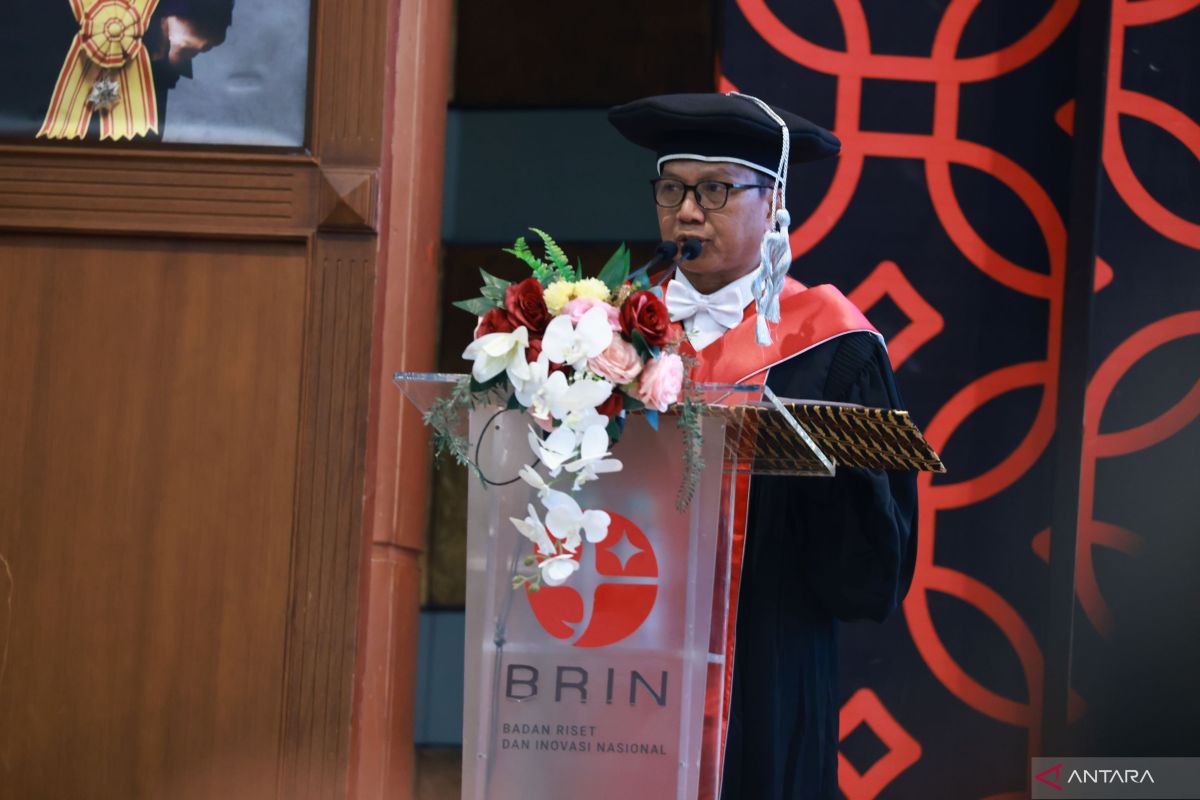
The impacts extend beyond the environment; farmers can save on production costs while maintaining soil fertility. Jakarta (ANTARA) - Professor of Research in the Field of Ecology from the National Research and Innovation Agency (BRIN), Hunggul Yudono Setio Hadinugroho, has revealed several methods for restoring Watershed Areas (DAS) towards regenerative landscapes that can be utilised for societal welfare. In a statement in Jakarta on Wednesday, Hunggul explained that soil and water conservation methods can suppress erosion by tens of tonnes per hectare per year in horticultural watershed areas. “The impacts are not only on the environment, but also economically, farmers can save on production costs while maintaining soil fertility,” he said. Hunggul continued that vegetative approaches, such as planting high-economic-value crops, have proven to reduce land degradation, increase community incomes, and strengthen local food security. “These results show that conservation does not have to sacrifice the economy; instead, they can go hand in hand,” he stated. Hunggul also mentioned the development of Micro-Hydro Power Plants (PLTMH) in watershed areas, which can provide dual benefits: supplying clean energy to rural communities, encouraging productive economic activities, and serving as an incentive for communities to protect forests and water sources. Furthermore, he has developed various data-based technologies and community participation, such as the simple rain gauge tool ATHUS (Simple Rain Gauge Device) to advanced sensor-based early warning systems ModATHUS (Modified ATHUS) for floods and landslides, as well as real-time environmental quality data platforms based on web and applications. Hunggul emphasised that the benefits of research will be optimal if integrated into policies. Approaches such as Payment for Ecosystem Services (PES), citizen science, and quadruple helix collaborations (academia, government, private sector, community) have proven to strengthen the implementation of sustainable watershed management. According to Hunggul, this regenerative approach not only maintains conditions but restores and improves ecosystem quality as well as societal welfare. “This approach positions the community as the main actor, with support from adaptive technology and policies,” he continued. Hunggul affirmed that watershed transformation is not merely a technical effort but a change in perspective on environmental management. “With an integrative approach, combining science, technology, local wisdom, and community participation, watershed management can become the foundation for environmental resilience, societal welfare, and sustainable development,” stated Prof Hunggul Yudono Setio Hadinugroho.