
Bantar Gebang Landslide Tragedy: A Stern Warning for Jakarta's Waste Management
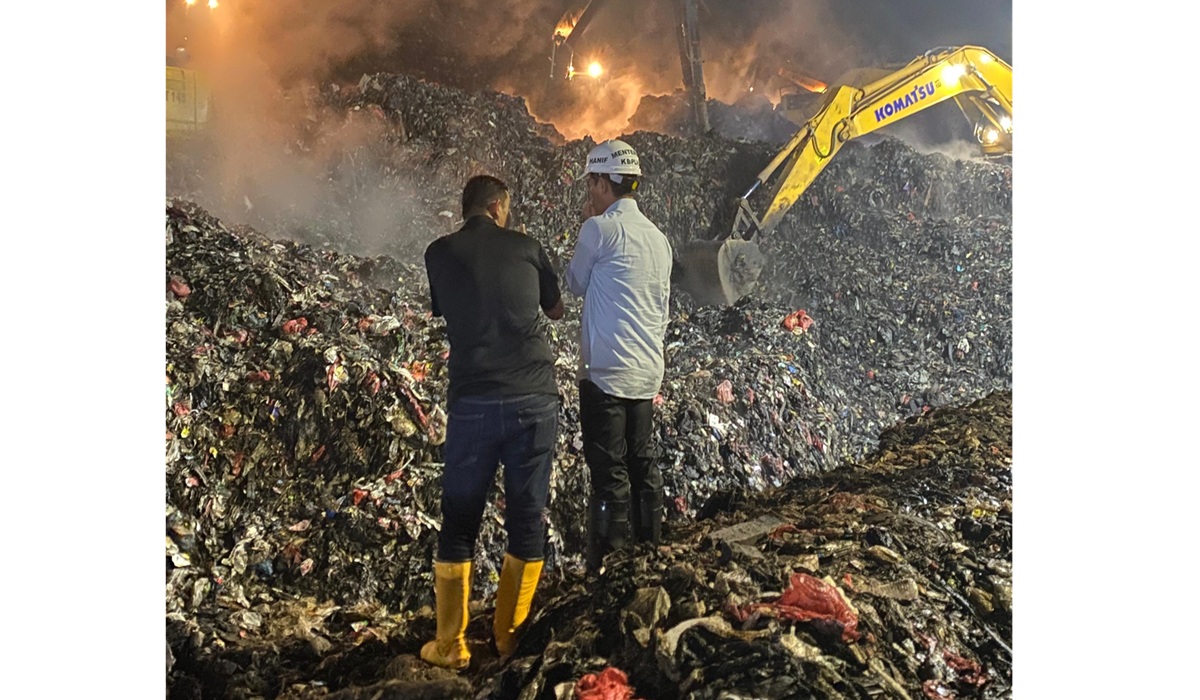
A humanitarian tragedy has struck again at the Bantar Gebang Integrated Waste Processing Facility (TPST). A 50-metre-high garbage mound in Zone IV collapsed on Sunday 8 March at 14:30 WIB, killing four people. This fatal incident has drawn sharp scrutiny to systemic failures in the capital’s waste management.
Environment Minister and Head of the Environmental Control Agency (KLH/BPLH), Hanif Faisol Nurofiq, regarded the incident as concrete evidence that the current system cannot be permitted to continue.
He emphasised that this disaster represents a stern warning to the Jakarta Provincial Government to immediately halt the open dumping method still practised at Bantar Gebang TPST.
According to Hanif, the open-stacking method not only violates Law Number 18 of 2008 on Waste Management, but also directly threatens human life and safety.
“This incident need never have occurred if waste management were conducted in accordance with regulations. Bantar Gebang TPST must become a lesson for all of us to reform immediately, for the sake of human life and environmental preservation,” said Hanif in an official statement on Monday 9 March.
The burden borne by Bantar Gebang TPST has indeed reached a critical point. Over 37 years, this area is estimated to have received approximately 80 million tonnes of waste.
Hanif described this condition as the tip of the iceberg of Jakarta’s unresolved waste crisis.
Currently, the government is prioritising victim evacuation whilst conducting thorough investigations to determine the precise cause of the collapse. The KLH/BPLH has launched a comprehensive investigation to establish whether negligence occurred in managing the site.
Legal enforcement will be pursued rigorously. If evidence of negligence causing loss of life is found, the facility’s operators face severe penalties under Law Number 32 of 2009 on Environmental Protection and Management. Penalties could reach 5 to 10 years imprisonment with a maximum fine of Rp10 billion.
In fact, this risk had been anticipated beforehand. On 2 March 2026, the KLH/BPLH through its Law Enforcement Deputy issued a Notice of Commencement of Investigation (SPDP) against several high-risk waste processing locations, including Bantar Gebang.
As a permanent solution, the government plans a radical functional transformation of Bantar Gebang TPST. Going forward, the facility will be designed to receive only inorganic waste.
This transformation will be supported by strengthening waste sorting systems directly from source and optimising the Refuse Derived Fuel (RDF) facility in Rorotan.
Through these strategic measures, the government targets Jakarta’s waste processing capacity to reach 8,000 tonnes per day with safety standards in accordance with environmental regulations.