
Balad Group proposes task force to eradicate lobster seed smuggling
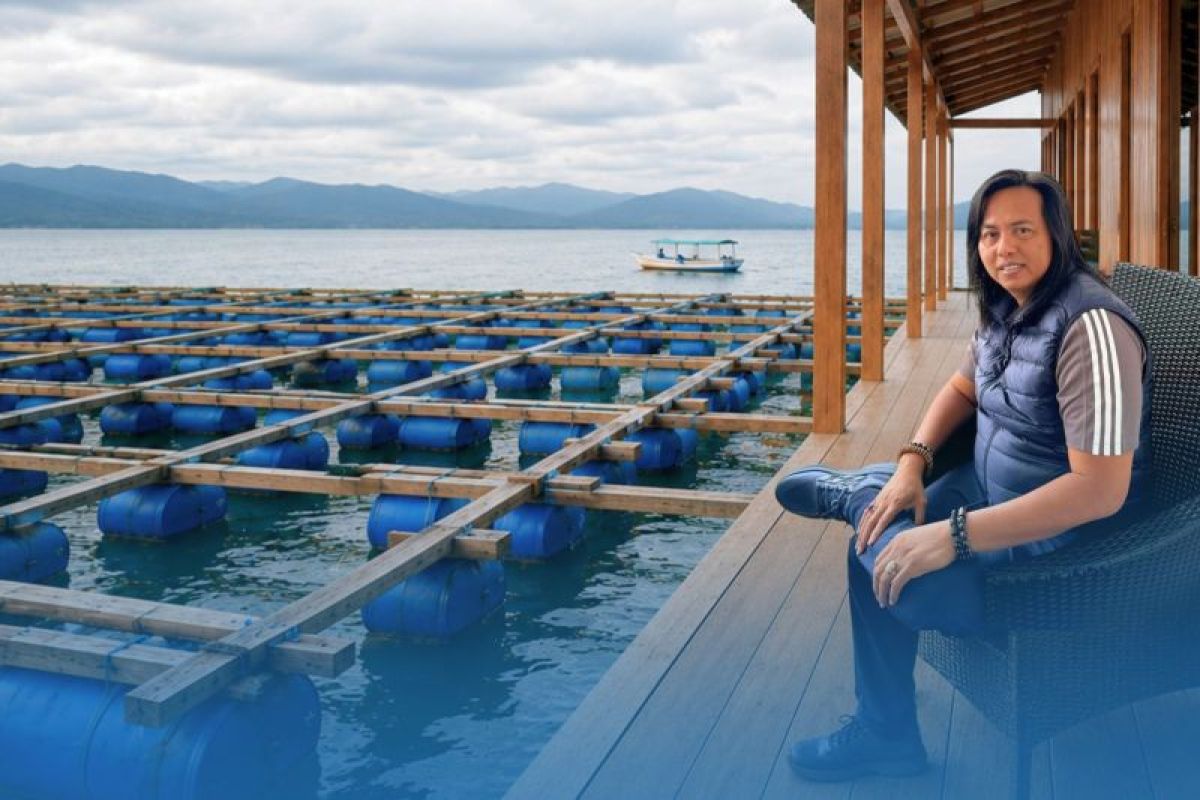
Jakarta (ANTARA) - Founder of Bandar Laut Dunia (Balad) Group, Khalilur Abdullah Sahlawiy alias Gus Lilur, has proposed that President Prabowo Subianto form a special task force to eradicate the smuggling of lobster seed (BBL) abroad.
He stated that BBL smuggling is not merely an ordinary legal violation but a cross-border economic crime that harms fishermen, weakens Indonesia’s maritime sovereignty, and allows other countries to reap the added value of Indonesia’s lobster resources.
“We call for the Tritura Nelayan Republik Indonesia. This is a demand from fishermen for the state to take firm action by eradicating BBL smuggling, facilitating cultivation in Indonesian waters, and mobilising the entire KKP apparatus to expand lobster cultivation by Indonesian fishermen,” said Gus Lilur in a statement received in Jakarta on Monday.
He noted that BBL smuggling cannot be handled routinely because it involves cross-border routes, organised actors, and enormous value, requiring the state to intervene with a dedicated task force.
Therefore, he suggested that the task force should involve the Ministry of Marine Affairs and Fisheries (KKP), the Indonesian National Police (Polri), the Indonesian National Armed Forces Navy (TNI AL), the Directorate General of Customs and Excise of the Ministry of Finance, airport authorities, port authorities, and state intelligence elements.
In his view, this decision would be a major step towards returning lobster resources to national interests.
“This is a sovereignty measure. This is a step to protect Indonesian fishermen,” said Gus Lilur.
He opined that the policy aligns with the amendment of Minister of Marine Affairs and Fisheries Regulation Number 7 of 2024 to Regulation Number 5 of 2026.
He deemed this regulatory change important as it directs lobster governance away from serving foreign cultivation interests and towards strengthening cultivation in Indonesian territories.
He emphasised that BBL must be grown in Indonesian waters, by Indonesian fishermen, and for the maximum welfare of Indonesia’s coastal communities.
“BBL comes from Indonesian seas, so its cultivation must be in Indonesia and the added value must remain in Indonesia. Do not let the seeds come from us, the risks be borne by our fishermen, but the huge profits be enjoyed by other countries,” he stated.
Nevertheless, Gus Lilur warned that halting BBL cultivation abroad would not be effective if smuggling networks are allowed to operate.
He revealed that smuggling networks use two main routes: sea routes, where BBL from Indonesia is sent to Malaysia and then forwarded to Singapore, and air routes, where BBL from Indonesia is sent directly to Singapore.
Thus, Gus Lilur conveyed that this pattern shows BBL smuggling has become part of the global lobster industry supply chain, where Indonesia serves as the seed source, transit countries provide routes and legality, and destination countries enjoy the largest economic benefits.
According to him, Vietnam has become one of the world’s largest lobster exporters because it obtains BBL supplies from Indonesia. The economic value of lobster in Vietnam is said to reach more than Rp100 trillion per year.
“This is a great irony because the seeds are from Indonesia, but other countries enjoy economic value in the hundreds of trillions. Our fishermen are just spectators; this must be stopped,” Gus Lilur emphasised.
BBL smuggling has recently recurred frequently. Most recently, TNI AL, through the Second Fleet Quick Response Team (SFQR) of the Cilacap Naval Base (Lanal), foiled a BBL smuggling attempt in the East Ring Road area, Karangkandri Village, Kesugihan Subdistrict, Cilacap Regency, on Saturday (18/4).
In an official TNI AL press release received in Jakarta on Monday (20/4), it was explained that the uncovering of the smuggling action began with a patrol conducted by the SFQR team in the coastal area of Kesugihan Subdistrict, Cilacap Regency.
Head of the Navy Information Service (Kadispenal) First Admiral TNI Tunggul explained that during the patrol, officers stopped one of the motorbike riders carrying a styrofoam box.
The team immediately inspected the box and found hundreds of lobster seedlings that had already been packaged.