
Andre Rosiade: Import Oversight Task Force to be Established to Prevent Refined Sugar Leakage
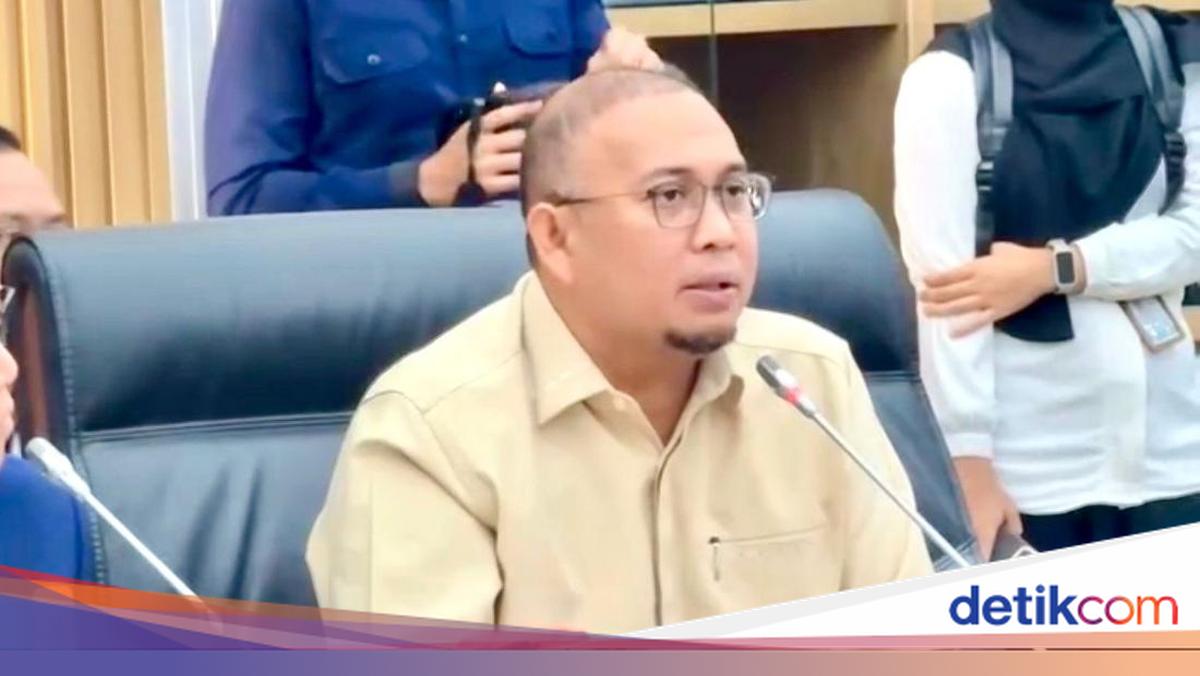
Deputy Chairman of the House of Representatives’ Commission VI from the Gerindra Party faction, Andre Rosiade, emphasised that his side will take firm steps to stop the recurring issue of refined sugar leakage that happens every year. The sugar for industry is suspected of leaking into the market and damaging the national sugar market.
This was stated by Andre during the working meeting of the House of Representatives’ Commission VI with the Minister of Trade, Minister of Industry, and Minister of Agriculture on Wednesday (8/4/2026). As well as a hearing with Danantara’s COO Dony Oskaria, the Head of the National Food Agency, the Head of the Central Statistics Agency, up to executives of state-owned enterprises in the sugar and food sector.
According to Andre, the issue of refined sugar leakage must no longer be allowed to drag on without concrete decisions. Therefore, the House of Representatives’ Commission VI together with the government agreed to prepare strategic steps by forming a Working Committee (Panja) for Sugar Import Oversight.
“To prevent this refined sugar from continuing to leak, I think Commission VI will take a firm decision in today’s conclusion,” said Andre.
Andre explained that the task force will strengthen the control function over the governance of national sugar imports. In addition, Commission VI of the House of Representatives will also provide full support to the government to assign state-owned enterprises to carry out controlled refined sugar imports so that distribution leakage can be stopped.
“There are two decisions. First, the formation of the Panja for Sugar Import Oversight. Second, we fully support the government in assigning state-owned enterprises to carry out refined sugar imports so that there is no leakage. This is the problem, the leakage,” explained the Chairman of the DPP of the Minang Family Association (IKM).
Andre Rosiade emphasised that the refined sugar issue is an annual problem that keeps recurring without a thorough resolution. He urged all parties to stop prolonging the polemic and focus on concrete resolution steps.
“So that this meeting is productive and we can make decisions, no more beating around the bush on the refined sugar issue. We face it every year and the ones who benefit are always the same,” said the legislator from West Sumatra.
Meanwhile, Minister of Agriculture Andi Amran Sulaiman revealed that the leakage of refined sugar entering the consumer market has caused market distortion and harmed the national sugar industry, including state-owned sugar enterprises. He mentioned findings of refined sugar leakage in several regions, such as Central Java and South Kalimantan, where refined sugar enters the market as consumer sugar (white sugar).
“Well, because of that, refined sugar leakage can occur. We caught the leakage in Central Java, then South Kalimantan and several other regions. Leakage from refined sugar but entered into the market as consumer sugar. This is dangerous,” explained Amran.
In addition, Amran also highlighted the plummeting price of molasses or sugarcane syrup from around Rp 1,900 to Rp 1,000 per litre. This condition further pressures the performance of state-owned sugar enterprises, including PTPN and Sugar Co.
“So all PTPN sugar should sell, but it can’t sell. Why? There’s refined sugar leakage. So the solution is for the President to order a limited ban (lartas) and it has been issued,” he said.
In line with that, Danantara’s COO Dony Oskaria revealed that the prevalence of refined sugar or industrial sugar leaking into the market is one of the main causes of company losses. He stated that these losses were triggered by uncontrolled refined sugar imports, thus suppressing the price of domestic sugar production.
“Sugar Co recorded a loss of Rp 680 billion due to prices that are indeed not good enough, due to uncontrolled sugar imports,” said Dony.
The formation of the Panja for Sugar Import Oversight and the assignment of state-owned enterprises in refined sugar imports is expected to become a strategic step to regulate the national sugar trade, protect the domestic sugar industry, and ensure more transparent sugar distribution that favours the interests of the people.