
Airlangga: Natural Resource Exporters Can Access Rupiah Loans Beyond 50% DHE Conversion Requirement
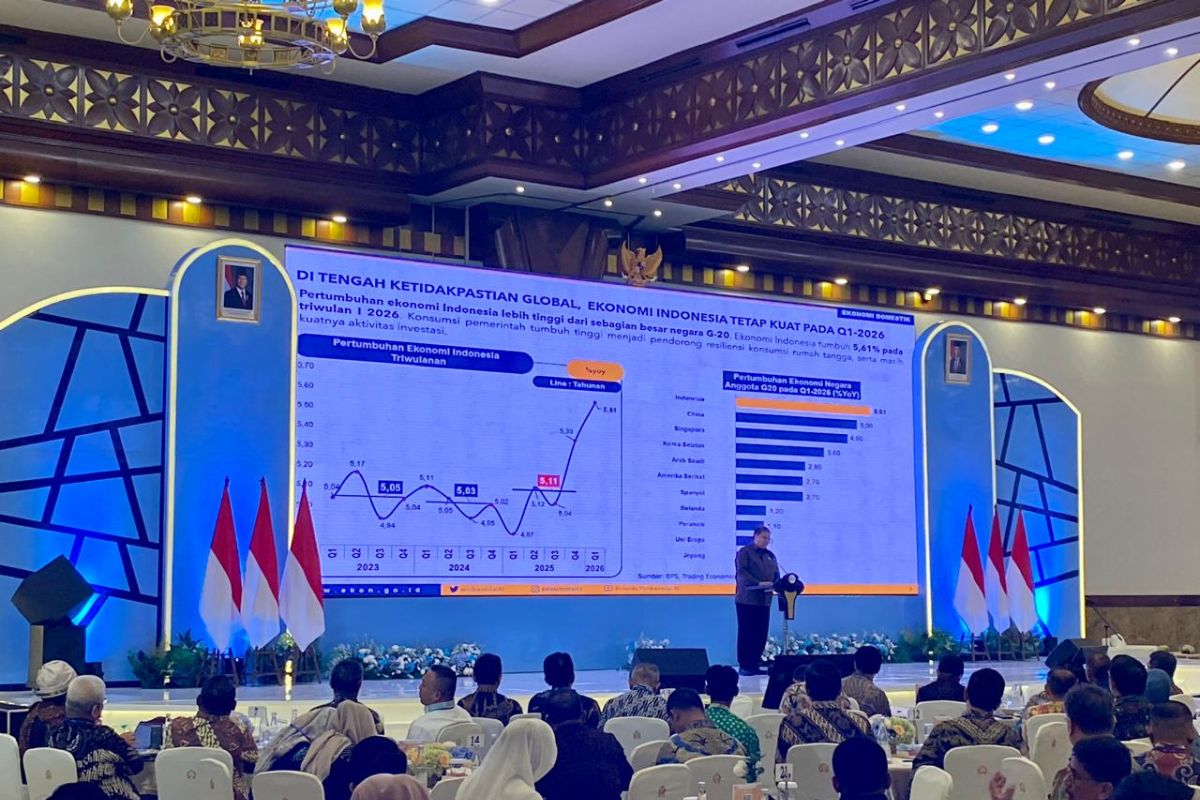
Economic Affairs Coordinating Minister Airlangga Hartarto said natural resource exporters can obtain rupiah loans from banks if their rupiah liquidity needs exceed the 50% DHE conversion obligation. Under new regulations, the foreign exchange conversion limit for export earnings (DHE) has been reduced from 100% to a maximum of 50%. Speaking at the National Conference on Regional Economic Development (KNPED) in Jakarta on Monday, Airlangga stated that Bank Indonesia (BI) and commercial banks will establish a financing mechanism for exporters requiring additional rupiah liquidity. ‘For import and other needs, exporters can use dollars. If rupiah requirements exceed the 50% foreign exchange conversion obligation, BI or banks will provide a loan mechanism,’ he said. Additionally, Airlangga noted the government has exempted income tax on interest earned from DHE funds held in foreign currency. Regulations under Government Regulation No. 21 of 2026 require natural resource exporters to repatriate 100% of DHE into Indonesia’s financial system with full compliance. Natural resource exporters must retain a minimum of 30% of DHE for the oil and gas sector and 100% for non-oil sectors in special accounts within Indonesia’s financial system, with a minimum holding period of three months for oil and gas and 12 months for non-oil sectors. Subsequently, DHE repatriation and retention must be processed through Himbara (State-Owned Bank Association) member banks. Exceptions apply for non-Himbara banks for oil and non-oil mining sectors from countries with existing trade agreements or memoranda of understanding with Indonesia. Exporters from countries with bilateral agreements may retain 30% of DHE for three months in non-Himbara banks. ‘BI will issue a letter regarding this exception (non-Himbara placement),’ Airlangga said. At the same event, Airlangga outlined the implementation of a state-owned enterprise (BUMN) for exports via PT Danantara Sumberdaya Indonesia (DSI) to strengthen export governance for strategic commodities, including palm oil, coal, and ferro alloy. As part of the initial phase, the Indonesia National Single Window (INSW) system will integrate export reporting with DSI acting as a co-exporter. ‘This will be implemented over the next three months, allowing companies to continue exporting with their existing partners. We will evaluate in parallel for the following three months, with full implementation by 1 January,’ Airlangga said. He added that the government will honour existing business-to-business (B2B) contracts provided there is no undervaluation or under-invoicing. Airlangga stated that establishing an export body is necessary to improve transparency in trade data between Indonesia and its partners, which have previously shown discrepancies in export-import figures. With DSI’s involvement, the government expects increased export revenue transparency to support tax, royalty, and other state revenues. ‘In the future, natural resources will not be limited to these three commodities, but we will prioritise Indonesia’s top three export commodities,’ Airlangga said.