
Acceleration of permanent housing construction in Sumatra remains the top priority
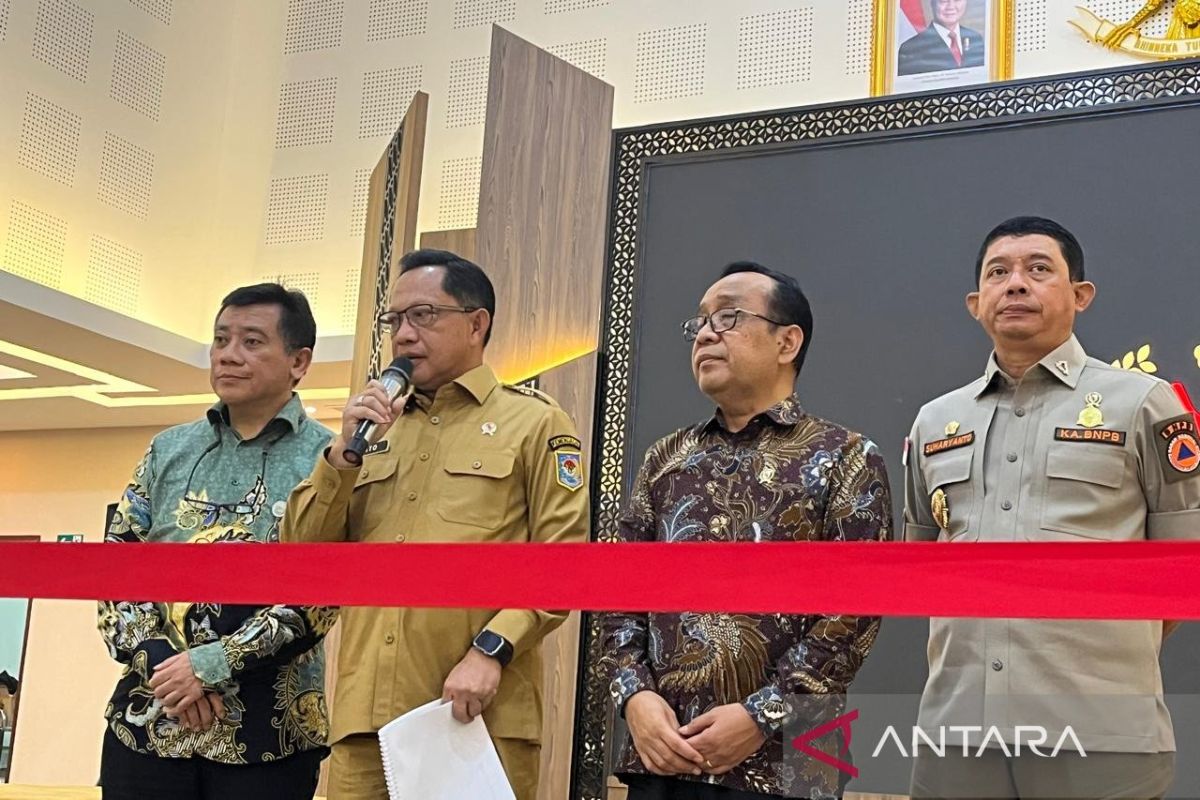
Jakarta (ANTARA) - The head of the Task Force for Accelerating Rehabilitation and Reconstruction (Satgas PRR) following the Sumatra disaster, Tito Karnavian, has stressed that accelerating the construction of permanent housing (huntap) remains the top priority in post-disaster recovery efforts in the Sumatra region.
“We emphasise that huntap is the most important priority, followed by other highly urgent matters, such as bridges and roads, which are indeed the main thoroughfares,” Tito said after a working meeting at the Coordinating Ministry for Human Development and Culture (Kemenko PMK) office in Jakarta on Monday.
Tito explained that although government operations, road access, and community activities such as markets have begun to return to normal, many infrastructures are still only functionally operational and require permanent completion.
According to him, several sectors that still need attention include agricultural lands such as paddy fields and fish ponds, the construction of permanent roads and bridges, and the resolution of temporary bridges.
In addition, the construction of huntap for affected communities is the main focus to ensure residents do not stay in temporary housing for too long.
Tito added that given the complexity of issues on the ground, including the need for river normalisation and other permanent constructions, the recovery is estimated to take up to three years.
“So this is the recovery programme for the estimated period; if we estimate three years. Thus, a master plan (rencana induk) has been prepared,” he said.
Nevertheless, the master plan will be reviewed to determine priorities for work to be completed in 2026, particularly the construction of main roads and other basic infrastructure. Meanwhile, less urgent work will continue from 2027 to 2028.
He also emphasised the importance of the role of local governments in accelerating rehabilitation and reconstruction. The President, he said, has allocated an additional Regional Transfer (TKD) of Rp10.6 trillion for the three affected provinces to support the acceleration.
According to him, regional proposals amounting to nearly Rp200 trillion and ministry/institutional work plans of around Rp98 trillion have been aligned into an indicative financing need of Rp120 trillion.
“From that total, approximately Rp100.2 trillion will be implemented by ministries/institutions over the three-year period,” said Medrizal.
For the first year of implementation in 2026, Bappenas is encouraging a Supplementary Expenditure Budget (ABT) of around Rp40 trillion so that the acceleration process outlined in the master plan can be quickly realised.
“For the first year 2026, we will try to discuss with the Ministry of Finance how to push for the ABT to be implemented to accelerate the process, which could reach nearly Rp40 trillion,” he said.