
A Week of Iran's Internet Blackout, Cyberwar Risk Rises
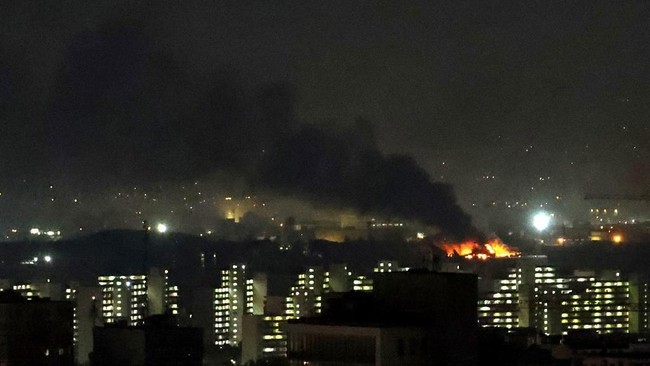
Iran’s internet blackout continues a week after joint United States and Israel military strikes against a number of strategic targets in the country. The situation has left millions of Iranians isolated from access to information and digital communications.
Global internet monitoring organisation NetBlocks reported that by the end of this week internet traffic in Iran remained around 1% of normal levels, indicating that nearly the entire national digital network remained non-operational.
“It has been one week since Iran fell into digital darkness because of the national internet blackout imposed by the regime,” NetBlocks said in a recent statement on social media, citing CNBC.com, Sunday 8 March 2026.
The blackout, lasting more than 168 hours, has left Iranians struggling to obtain updates on developments in the conflict, to contact family, and to access important online services. Meanwhile, government officials and state media are said to still have network access.
Military Conflict Continues
At the same time, US and Israel military operations against Iran continue. The attack campaign was launched to target Iran’s nuclear and ballistic missile capabilities, while also increasing pressure on Tehran.
Airstrikes are reported to be ongoing against several strategic facilities suspected of links to the Islamic Revolutionary Guard Corps (IRGC).
This situation heightens concerns that the conflict may not be confined to conventional warfare, but could spill into the digital realm as well.
Alleged Mix of Internal Shutdown and Cyber Attacks
Several analysts believe the internet disruption in Iran may not be solely due to government policy restricting domestic network access.
Kathryn Raines, head of cyber threat intelligence at security platform Flashpoint, previously said the disruption was likely triggered by a combination of government internet suppression and external cyber disturbances.
“The exact cause is not yet clear, but it is almost certainly a combination of state-imposed restrictions and external cyber disturbances,” she said.
Iran has not yet issued an official statement regarding the cause of the internet outage.
Cyberwar Threat Heightens
Cybersecurity firms also warn that Iran could respond to the conflict with retaliatory cyber attacks against countries or institutions considered adversaries.
Adam Meyers, head of Counter-Adversary Operations at CrowdStrike, said they have detected activity consistent with Iran-affiliated hacker groups.
According to him, the groups have begun conducting digital reconnaissance and launching denial-of-service (DDoS) attacks against several targets.
This development indicates that the Iran-US-Israel conflict is no longer limited to air and ground but has entered a phase of increasingly intensive cyberwar, with digital infrastructure becoming one of the main targets.