
A Revelation That Was Not Rushed
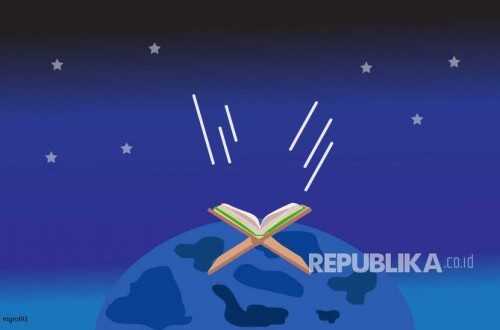
The Qur’an did not descend like a decree. It did not appear as a book that immediately closes history. It came down slowly, piece by piece, verse by verse—as if time itself was involved as part of its meaning. In a world that often demands instant results, revelation chose a path that seems inefficient: to accompany humanity, not to precede it.
Within the framework of seerah as told in Ar-Raheeq Al-Makhtum by Syafihurrahman Almubarakfuri, the Qur’an was first revealed, in its entirety, to the Baitul ’Izzah in the heavens during Ramadan, and was then revealed gradually to the Prophet Muhammad ﷺ over about twenty-three years. This fact is often read as theological information. Yet it is a statement of historical philosophy.
Civilisation does not change through total shocks. It changes through patient education.
Why did revelation not descend all at once? Because humanity does not change all at once. The soul cannot be forced to mature in a single night. Social structure does not collapse simply because the truth is complete in one book. Revelation that descends gradually acknowledges one bitter yet human reality: that true change always negotiates with time.
The Qur’an descends following the wounds, conflicts, joys, and failures of the community. It responds to events, not ignoring them. When the community is under pressure, the verses come as reinforcement. When the community grows strong, the verses come as warnings. When humanity falters, revelation does not close the door—it corrects.
Here, revelation is not a lifeless object. It is a historical dialogue.
The gradual descent of the Qur’an also rejects one dangerous illusion: that truth is sufficient to know in order to act. Civilisation is full of people who know what is right, yet fail to do it. Revelation descends slowly so that knowledge walks in step with the formation of character. The verses are not merely meant to be memorised, but to be lived.
Even the major laws—about intoxicants, war, social relations—were not revealed abruptly. They were prepared, warned, softened, then asserted. This is not a compromise with evil, but an ethical strategy so that humans are not ruined by burdens they are not yet able to bear.
At this point, revelation shows its solidarity with humanity. It does not shame people for their lagging behind. It guides them. As if revelation says: I know your limits, and I will not demand you exceed them without preparation.
In historical perspective, this is sharp criticism of all ideologies that want to change the world with a single final document, a single instant revolution, a single truth forced without process. The Qur’an, instead, teaches that truth which does not allow time will give rise to violence, not justice.
Ramadan—the month of the Qur’an’s descent—has become a symbol of this method. It is not merely a month of reading, but a month of training patience with the process. Reading the Qur’an in this month is not ritual repetition, but an acknowledgement that humanity remains on a long journey to be worthy of bearing its meaning.
Thus the Qur’an’s gradual descent is a lesson often overlooked: that God is not hurried,
that revelation does not panic at a world that changes slowly,
and that human history is not won by those who fastest force truth, but by those who faithfully accompany that truth as it grows.
The Qur’an does not come to determine civilisation. It comes to safeguard it so that it remains humane.