
Zero-percent Export Tariff to US Opened; National Industry Urged to Strengthen Competitiveness
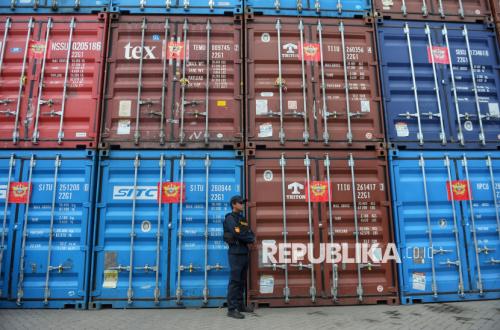
Jakarta — The trade agreement between Indonesia and the United States through the Agreement on Reciprocal Trade (ART) opens broader export opportunities for Indonesian products. Under this scheme, 1,819 Indonesian product tariff categories receive zero-percent entry tariffs into the American market.
However, economists caution that lower tariff facilities do not automatically increase exports. Their benefits depend heavily on the readiness of domestic industries to compete in the global market.
Senior economist at INDEF, Tauhid Ahmad, noted that the zero-percent tariff facility is also granted to several other countries in the region, meaning competition remains intense.
“Many countries also receive the same facility, such as Malaysia and Vietnam. This means the market is indeed open, but we must still compete with other nations whose industries are already strong,” said Tauhid during a discussion on the ART impact assessment organised by Prognosa Research & Consulting on Friday (6 March 2026).
According to Tauhid, export opportunities can only be utilised if the national industry can increase productivity, product quality, and production cost efficiency.
He cited the electronics sector as an example, which must directly compete with other Southeast Asian countries that have large production capacity. Even for flagship commodities such as crude palm oil (CPO), the global market has many alternatives from other countries.
Garda Maharsi, director of Prognosa Research & Consulting, said initial mapping of national industrial structure shows that not all sectors are equally prepared.
Several sectors such as nickel, energy, and petrochemical industries are considered to have significant opportunities to benefit from the trade agreement. Coconut oil commodities also still have potential to expand export markets.
“Some sectors indeed have fairly strong opportunities. However, for that potential to truly materialise, the industrial ecosystem must be strengthened,” said Garda.
According to him, this strengthening encompasses easier access to financing, improved logistics systems, and the fortification of industrial supply chains domestically.
On the other hand, several sectors such as textiles, metal products, and minerals are still deemed to require increased capacity to be able to compete optimally in the global market.
Sofyan Herbowo, director of Public Affairs at Praxis, believes that industrial production capacity is an important factor determining the success of utilising the zero-percent tariff facility. He stated that Indonesia still holds a strong position in several global commodities, one of which is crude palm oil.
“Indonesia remains one of the world’s largest CPO producers and therefore has influence in price formation in the global market,” said Sofyan.