
Zakat Fitrah: Stabilising Consumption Amid Lebaran Price Surges
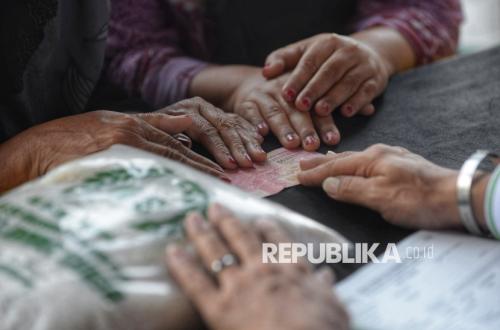
It feels like just yesterday that we were entering Ramadan, and soon we will bid farewell to it and enter the peak celebration of the Muslim ummah, Idul Fitri. Families across the nation are preparing: shopping for typical Lebaran food needs to buying new clothes. It is no exaggeration to say that the period leading up to Idul Fitri represents the peak of consumption in Indonesian society.
Surging Consumption and Price Pressures Ahead of Lebaran
From an economic perspective, this surge in consumption is often seen as a signal of increasing purchasing power, which in turn can drive short-term economic growth. However, on the other hand, the high increase in demand over a short period also impacts the rise in prices of various basic necessities.
It is recorded that chilli prices have increased by 25-40 per cent, chicken meat by 15-20 per cent, chicken eggs by 10-15 per cent, beef by 10-15 per cent, cooking oil by 5-10 per cent, and shallots and garlic by around 10-20 per cent. This price increase is a recurring seasonal phenomenon every year.
For the middle to upper groups, such price rises are relatively not a serious issue. In addition to having stronger purchasing power, this group generally also receives additional income such as the Holiday Allowance (THR).
However, the situation is different for poor communities, especially those who depend on daily income in the informal sector. With low and unstable income levels, rises in the prices of basic necessities become highly sensitive to their consumption capacity.
Even in normal conditions, this group struggles to meet daily needs. When prices soar ahead of Lebaran, the economic pressure they face intensifies. In economic literature, this situation often forces poor households to employ various distress coping mechanisms, such as selling productive assets (if any), going into debt, or reducing daily consumption. None of these three options are ideal solutions, as they potentially worsen their welfare in the medium term.
Zakat Fitrah as a Buffer for Vulnerable Groups’ Consumption
Amid these conditions, there is one important instrument that routinely appears every year: zakat fitrah. Every Muslim is obliged to pay zakat fitrah ahead of the end of Ramadan, either in the form of money or food staples such as rice.
BAZNAS records that the potential for zakat fitrah in Indonesia in 2026 AD/1447 H reaches Rp 7.95 trillion. If traditional distributions that are not recorded are taken into account, this amount could exceed Rp 10 trillion. This figure is equivalent to about 12 per cent of the national social protection budget managed by the government.
With such a large scale, zakat fitrah has strategic potential in mitigating the economic pressures faced by poor groups, particularly in maintaining purchasing power amid seasonal inflation.
From an economic perspective, zakat fitrah can be understood as a form of temporary income transfer that functions as a consumption stabiliser. When poor households receive zakat fitrah—typically in the form of food staples like rice—they no longer need to allocate income for those basic needs.
Consequently, the budget previously used to buy rice can be redirected to meet other needs that have also seen price increases. Thus, zakat fitrah effectively serves as a temporary inflation absorber that helps maintain consumption stability for poor households. In this framework, zakat fitrah operates as a mechanism for consumption smoothing, ensuring that minimum consumption levels are maintained despite economic pressures.
This impact is not merely theoretical but is also supported by empirical findings. Research by IDEAS shows that if zakat fitrah is converted into cash, poor communities can gain additional income of around Rp 265-292 thousand per capita.
This increase raises their total income from around Rp 322 thousand to Rp 588-618 thousand. This boost is highly significant in the context of poor households and directly contributes to improving food security for vulnerable groups.