
Yusril: Justice in the 21st Century Goes Beyond the Ability to Impose Penalties
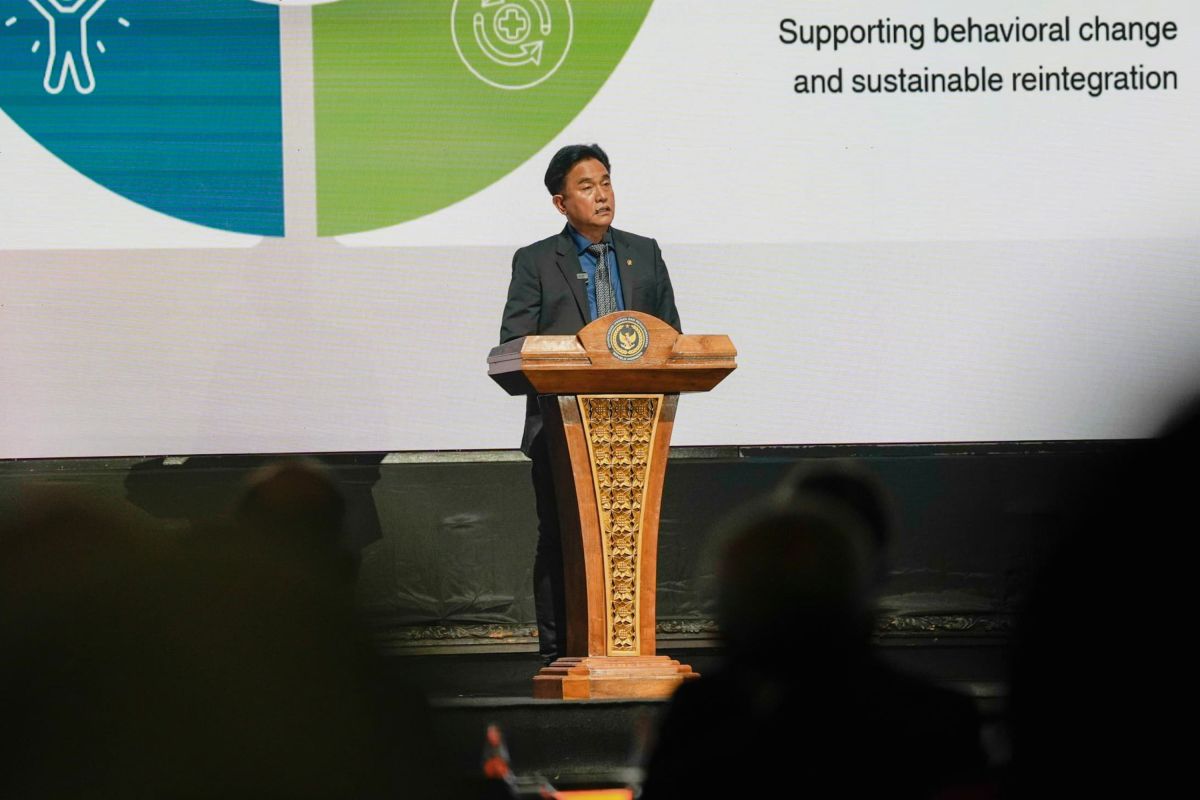
Jakarta (ANTARA) - Coordinating Minister for Law, Human Rights, Immigration, and Corrections of the Republic of Indonesia, Yusril Ihza Mahendra, emphasised that justice in the 21st century can no longer be understood merely as the state’s ability to impose penalties.
At the international forum of the 7th World Congress on Probation and Parole (WCPP) 2026 in Bali on Tuesday (14/4), he explained that justice must be viewed as the state’s ability to build balance.
“Balance between accountability, victim protection, public safety, respect for human dignity, and opportunities for change for offenders,” said Yusril, as confirmed in Jakarta on Wednesday.
He further asserted that the theme of WCPP 2026, titled Getting Smart on Justice: Healing Hearts & Safer Societies, reflects the global need to build a justice system that is not only firm but also rational, humane, and oriented towards restoration.
According to him, probation (conditional sentencing) and parole (conditional release) are not marginal instruments but indicators of the maturity of a modern legal system.
It was mentioned that advanced countries not only know how to punish but also understand when and how to provide space for social reintegration.
Therefore, said Yusril, building public trust in the probation and parole system is also very important.
He opined that the success of policies is greatly determined by the transparency, professionalism, and consistency of their implementation.
“Alternatives to imprisonment are not a denial of justice, but a way for justice to work more effectively and rationally,” he stated.
Furthermore, Yusril emphasised the importance of utilising technology and artificial intelligence in the judicial system, while still upholding ethical principles and accountability.
It was stressed that technology must not replace the state’s moral responsibility, where algorithms may assist but must not supplant accountable human judgment.
He outlined three main foundations in modern corrections system reform: evidence-based policy, grounded in ethics, and supported by strong cross-sector coordination.
He emphasised that the future of the justice system is not only determined by the capacity to punish but also by the state’s ability to nurture, restore, and reintegrate individuals into society.
“On behalf of the Government of the Republic of Indonesia, we hope this forum produces concrete cooperation and real contributions to strengthening a global justice system that is smarter, more humane, and capable of keeping societies safe,” expressed Yusril.
On the same occasion, Minister of Immigration and Corrections of the Republic of Indonesia, Agus Andrianto, stated that amid escalating global geopolitics, the presence of delegations from various countries at the WCPP 2026 event demonstrates a shared commitment to strengthening international cooperation in the field of corrections.
He also emphasised that the selection of Bali as the conference location reflects local wisdom values that align with contemporary progress.
“The restorative justice approach affirms that law is no longer merely about retribution but about restoration and social reintegration,” said Agus.
Furthermore, Agus stressed that a modern corrections system must be able to create a safer society through effective guidance and supervision, including by community guidance institutions (bapas) to break the chain of recidivism.