
Yusril: Islamic law science important to develop integrated with law
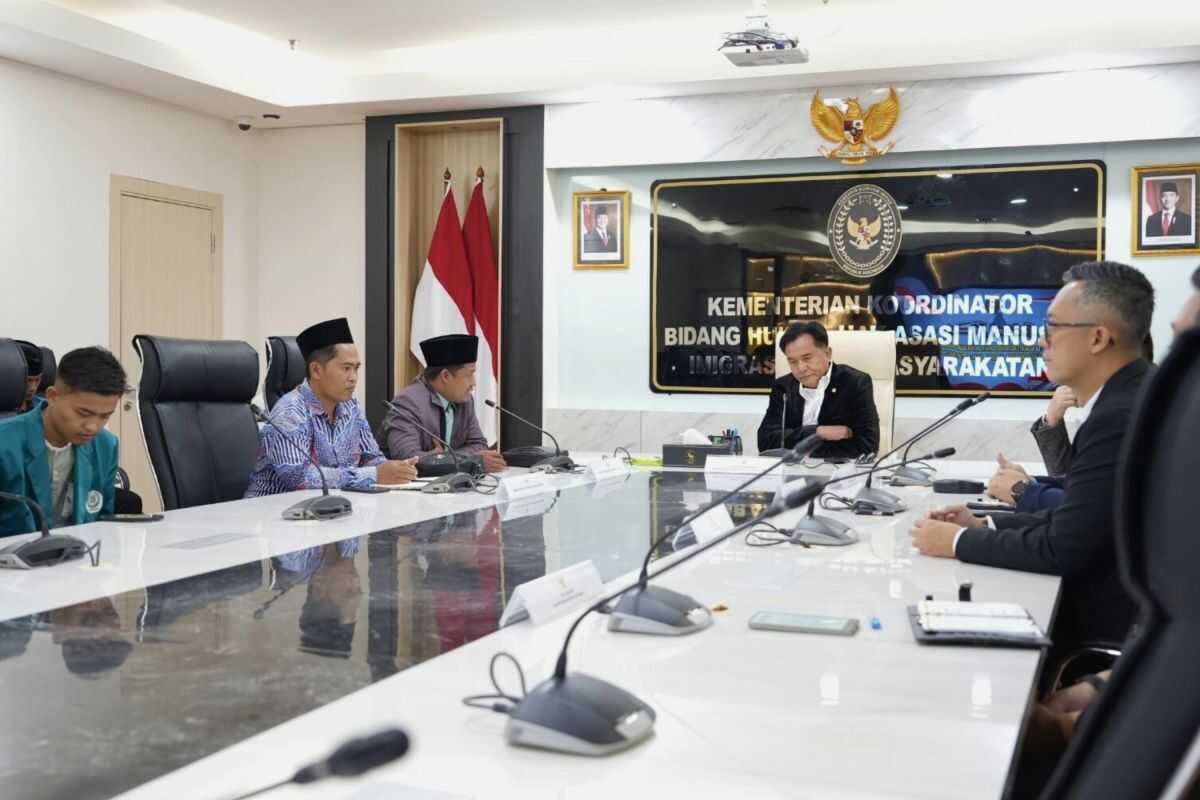
Jakarta (ANTARA) - Coordinating Minister for Law, Human Rights, Immigration, and Corrections Yusril Ihza Mahendra emphasised the importance of developing Islamic jurisprudence that is integrated with the dynamics of Indonesia’s national legal system.
This is because Islamic higher education institutions must be able to understand how Islamic jurisprudential norms are transformed into the national legal system.
“Many of our regulations, including in the economic and bankruptcy sectors, adopt Islamic values, though they are not always explicitly called Islamic law,” said Yusril when receiving an audience from STIS As-Salafiyah Sumber Duko in Jakarta on Wednesday.
Yusril cited the concept of Postponement of Debt Payment Obligations (PKPU) in bankruptcy law as an example of transforming Islamic values into national law.
According to him, this approach demonstrates that legal development does not solely rely on texts, but also on practice, custom, and societal needs.
Yusril encouraged students not only to study Islamic jurisprudence textually, but also to understand global legal developments and their interaction with customary law and modern legal systems.
“Don’t just learn Islamic law and jurisprudence, but also study law as it develops in the world. In this way, you can contribute to drafting laws that are responsive and contextual,” he said.
During the dialogue session, the campus conveyed the need to strengthen legal literature in the campus library. Responding to this, the coordinating minister expressed willingness to support the development of academic references.
He stated that he had recently published several books and if there are collections no longer in use, he will provide them to support literature enrichment on campus.
On the same occasion, Vice Chairman 2 of the School of Islamic Legal Sciences (STIS) As-Salafiyah Sumber Duko Achmad Dofiru Anam stated that the visit was part of the campus’s annual programme of study to deepen understanding of law implementation practices in Indonesia.
“This activity is very important for our students so they not only understand theory in the classroom, but also see directly how legal policies are formulated and coordinated,” said Achmad.
He hoped to gain a comprehensive picture of the challenges and innovations of the Ministry of Law, Human Rights, Immigration, and Corrections in realising just and transparent law.
The meeting became a forum for academic dialogue to discuss the transformation of Islamic law into the national legal system as well as the dynamics of its implementation in judicial practice and regulation formation.
Meanwhile, discussions proceeded interactively with discussions covering Islamic economic practices, the competence of religious courts, and the relationship between customary law and Islamic law in Indonesia’s legal system.
The activity is expected to strengthen synergy between the academic world and government in building a national legal system rooted in Indonesian values whilst remaining adaptive to contemporary developments.