
Yusril Asserts Government Has Never Banned Screening of 'Pesta Babi' Film
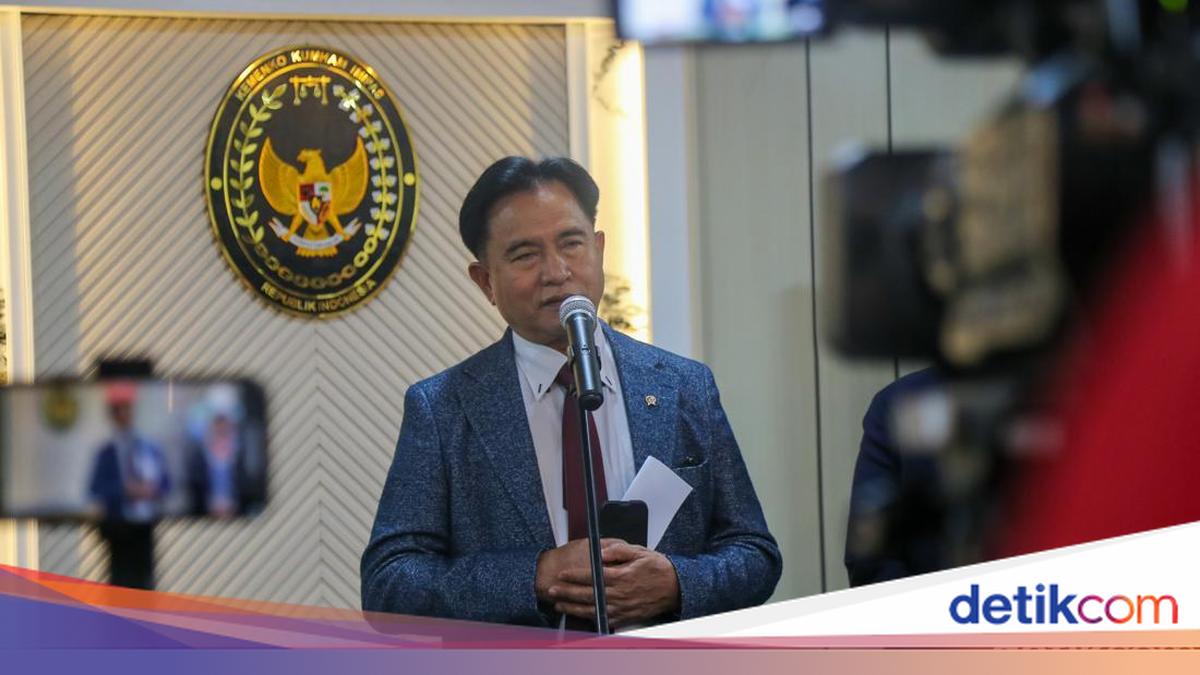
Not all campuses have banned the screening of that documentary film. At the University of Mataram and UIN Mataram in Lombok, the screening was prohibited due to administrative procedural issues only. Meanwhile, at other campuses in Bandung and Sukabumi, the screening proceeded without any hindrance,” said Yusril in a written statement on Thursday (14/5/2026).
According to Yusril, this pattern indicates that the disbandment or cessation of the screening is not a directive from the government or law enforcement authorities in a centralised manner.
“Looking at this pattern, the disbandment of the ‘Pesta Babi’ film screening is not a directive from the Government or law enforcement authorities, which are usually centralised,” he said.
The documentary film contains criticism of the National Strategic Project (PSN) in South Papua, which is considered to disrupt environmental conservation, the customary rights of Papuan communities, and the living environment. Yusril considers such criticism reasonable.
“I consider criticism of that kind perfectly reasonable, although there is indeed a provocative narrative. The title of the documentary film itself is controversial. ‘Pesta Babi: Colonialism in Our Time’ appears to be provocative,” he stated.
Nevertheless, Yusril reminds the public not to be provoked merely by the film’s title, which he assesses as deliberately created to attract public attention. He adds that the Government can also learn from the criticism conveyed through the film.
“But of course, people should not be provoked and react just because of a provocative title that may have been intentionally made by its producer to attract attention. Let the public watch it, and then hold discussions and debates afterwards. In this way, the public becomes critical, and pros and cons can emerge,” he said.
“The Government can draw lessons from the film to evaluate if there are any steps in the field that need improvement,” Yusril continued.
Regarding the project in South Papua, Yusril asserts that land clearing began in 2022 during the administration of the 7th President Joko Widodo, coinciding with regional expansion in Papua. The project is continued by the current administration as part of national food and energy resilience efforts.
“It is certain that the project is not modern colonialism in the current era. Papua is an integral part of the Unitary Republic of Indonesia. The Central Government of the Republic of Indonesia is not the former Dutch Government that called Papua Nederlands Nieuw Guinea as a colonial territory in the past. Land clearing like that also occurs in Kalimantan and other islands as integral parts of the Unitary Republic of Indonesia,” he emphasised.
According to Yusril, national strategic projects are built based on thorough studies to improve public welfare. Nevertheless, the Government remains open to criticism for evaluating field implementation.
“PSNs are built with thorough studies for public welfare, although the Government does not turn a blind eye to all shortcomings and weaknesses in their implementation in the field,” he said.
Yusril also highlighted the use of the term ‘Pesta Babi’ in the film’s title, which he deems capable of evoking various interpretations in society. He encourages detailed explanations regarding the meaning of the title.
“The term ‘Pesta Babi’ indeed has the potential to evoke various interpretations. Therefore, it would be better if the screenwriter, director, and producer also explain the meaning of those words,” he said.
Yusril emphasises that openness is not only demanded from the Government, but also from artists and creators of artistic works, including films.
“If the Government is often demanded to be open, then it is also time for artists, film screenwriters, and producers to be open and willing to provide explanations. The Government cannot remain silent by hiding behind authority and power, and at the same time, artists cannot remain silent and hide behind freedom of expression,” said Yusril.
Yusril reiterates that the Government guarantees freedom of expression in a democratic country, but that freedom must still be accompanied by moral responsibility. He asserts that the government has never banned the screening of the film.
“However, there is no freedom of expression without moral responsibility, both to oneself and to the public receiving that freedom of expression,” Yusril concluded.