
Young Leaders from Indonesia and Singapore Unite to Strengthen Social Cohesion amid Diversity
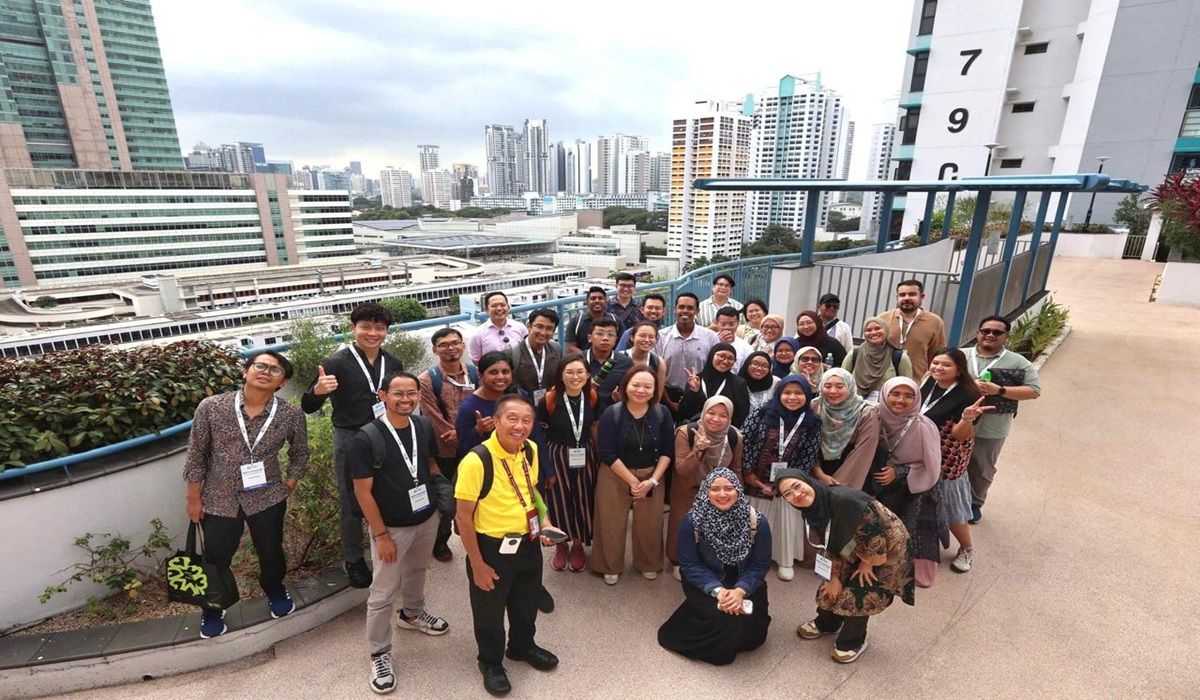
Approximately 30 young leaders from Singapore and Indonesia gathered in Singapore in January through the Bilateral Relations and Intercultural Dialogue for Growth and Empowerment (BRIDGE) programme, initiated by the Singapore International Foundation (SIF). One of the participants was Sri Nur Ainingsih, a cadre of Fatayat NU.
“This BRIDGE programme has greatly helped me think more openly and deepen my empathy,” said Sri.
According to her, these two qualities are important reminders that a leader must possess. “Open-mindedness and deep empathy will prevent us from easily judging someone,” she explained.
One memorable experience for Sri was a visit to the Harmony in Diversity Gallery, an educational gallery showcasing Singapore’s multi-religious approach to building interfaith harmony. She also appreciated how the BRIDGE programme structured discussion participants to ensure representation from each racial group in Singapore.
“Having participants from each racial group at every table made the discussion more vibrant. This became a moment we looked forward to because we could hear various perspectives,” she said.
She reflected that such a model could be applied in Indonesia. As a women’s activist, Sri highlighted how cross-border dialogue can advance women’s roles in community development. The key lies in creating comfort and safety for expressing opinions.
“Cross-border dialogue can significantly advance women in community development if every discussion forum’s participants feel comfortable voicing their opinions, with values of mutual respect and active listening,” she explained.
She also emphasised the importance of building shared perspectives through case study analysis, so that when moving together, there is no need to debate what should be done.
A deep impression was also expressed by Rustam Shariq Mujtaba, a participant from Singapore and founder of Project Broken Barges. As a member of the Inter-Religious Organisation (IRO) Youth Wing, Rustam initially felt confident in his understanding of harmony. However, discussions with NU participants opened his eyes.
“I felt very humbled when friends from Indonesia explained how extensively NU works to maintain harmony, including assigning members to secure places of worship at important times,” said Rustam.
He also appreciated the openness of Indonesian participants in sharing challenges related to misinformation that can trigger political tensions.
“This discussion was very open, and I greatly valued the honest conversation, because Singapore’s context does not face many such issues,” he added.
Rustam highlighted the importance of young people’s role in preserving cultural identity. According to him, efforts to transmit culture must be done deliberately by each generation.
“As an intergenerational storyteller, I see each generation having different ways of practising culture. Currently, many cultural expressions are emerging in digital spaces,” he explained.
Through Project Broken Barges, Rustam uses social media, artificial intelligence, and virtual reality to tell stories of village life in the past that reflect mutual cooperation and harmony.
“Technology and storytelling help bring these enduring values to the present, so we can continue to preserve them,” said Rustam.
This perspective aligns with Sri’s plan to use social media to dialogue about social cohesion upon returning to Indonesia.
Farah H. Sanwari, Senior Manager of SIF, explained the importance of investing in young people.
“Young leaders will play a crucial role in shaping the future of an increasingly diverse society. They need to have empathy and cross-cultural understanding to bridge differences.”
She emphasised that the BRIDGE programme is designed to provide dialogue space early in participants’ leadership journeys. SIF also uses indicators such as discussion quality and pre- and post-programme surveys to measure success.
“The principle of reciprocity is important; meaningful exchange can only be realised through mutual respect and learning,” stated Farah.
Regarding sustainability, SIF plans to hold online meetings for alumni and explore other collaboration opportunities.
“The goal is for the relationships built to continue developing and contributing positively to the wider community.”
Upon returning from Singapore, Sri has prepared concrete steps.
“I want to conduct interfaith and interracial dialogue with communities in Indonesia to build a spirit of shared knowledge.”
She also plans to launch live streaming on social media about social cohesion.
Rustam sees the potential for long-term collaboration among alumni. “By leveraging the BRIDGE network from various sectors—society, government, private sector, technology, and health—I am confident this collaboration can continue to develop.”
The BRIDGE programme is part of SIF’s long-term commitment in Indonesia since 1992. Thomas Ardian Siregar, Chargé d’Affaires of the Indonesian Embassy in Singapore, emphasised the importance of this exchange.
“Although different in scale and context, we are united by shared values such as harmony, diversity, and mutual respect.”
Corinna Chan, CEO of SIF, added that BRIDGE is a catalyst for collaboration, bringing together young people from both countries to formulate solutions to strengthen social cohesion.
For Sri, the BRIDGE programme is more than just a regular exchange. She returned with the conviction that being a leader in a multicultural society requires openness to listening and the courage to feel what others feel.
For Rustam, the valuable lesson is that maintaining intercom munity relationships is an ongoing process and not always easy.
With SIF’s support for programme sustainability, the small dialogue spaces they have built are expected to continue developing in Indonesia, Singapore, and between them.