
Yogyakarta Regional Parliament Calls for Review of Village Fund Diversion to Koperasi Desa Merah Putih
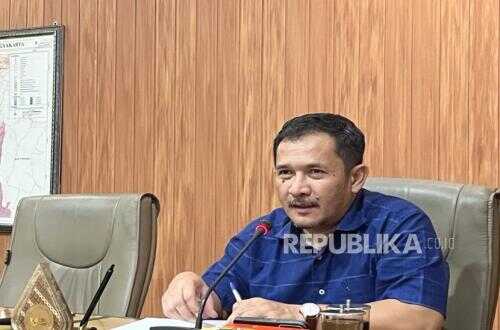
YOGYAKARTA — The Yogyakarta Special Region (DIY) regional parliament (DPRD) has spotlighted the policy of reallocating village funds to the Koperasi Desa Merah Putih (KDMP) programme, which it considers a potential threat to infrastructure development and basic service delivery at the village level. Commission A Chairman Eko Suwanto said the reduction in village funds would directly affect sectors crucial to local communities.
According to him, economic support infrastructure and day-to-day public services would be the most severely impacted.
“Village infrastructure will inevitably receive less attention when funding is cut. Yet agricultural roads, access routes between schools, and distribution channels to markets are vital for commerce and community activity,” Eko said on Monday (23/2/2026).
Eko noted that villages have fundamentally different needs compared to urban areas. The construction of farm roads, small irrigation channels, and pathways connecting sub-villages are essential to the smooth distribution of agricultural produce and local economic activity. Beyond physical infrastructure, the reduction in village funds is also seen as affecting basic public services.
Social assistance programmes, repairs to uninhabitable homes, and community empowerment initiatives risk being hampered by budget constraints. Villages, he said, have limited capacity to seek alternative funding sources compared to urban areas, which can still tap into corporate social responsibility (CSR) programmes.
“Villages without companies in their territory obviously struggle to secure CSR funding. As a result, urgent community needs cannot be addressed optimally,” he said.
Following working visits by Commission A to several villages, the DPRD recorded aspirations from communities for village fund allocations to be restored to previous levels. Eko described the proportion diverted to KDMP as substantial.
“Around 58 per cent of village funds have been redirected to KDMP. The community’s hopes are actually simple — villages need funds for infrastructure and economic empowerment. Therefore, village funds should be restored to at least their previous levels,” he said.
“Commission A has made several visits to individual villages. The hope is straightforward: villages need development, villages need funds for community empowerment. The aspiration is for village allocations to be restored to at least their former levels, ideally higher,” Eko added.
The DPRD and the DIY regional government, he said, continue to work on covering part of the budget shortfall through allocations from the regional budget (APBD). However, the region’s fiscal position is also under pressure.
In 2026, the DIY regional government allocated Rp 52.56 billion for village and sub-district community empowerment, sourced from the Special Autonomy Fund (Dana Keistimewaan). These funds were distributed to 438 villages and sub-districts across DIY as part of efforts to sustain empowerment programmes.
“The General Budget Policy and Provisional Budget Ceiling Priorities (KUA-PPAS) heading into the 2026 regional budget experienced a decline of approximately Rp 753 billion, compounded by cuts to the Special Autonomy Fund. This has further constrained the province’s fiscal capacity,” he said.
Nevertheless, Eko assessed that this support could not fully offset the impact of the central government’s reduction in village funds. The DPRD therefore considers the policy an inadequate solution. The regional legislature continues to press the central government to review the village fund diversion policy to prevent it from hindering development at the grassroots level.
“Central government programmes may proceed, but they should not come at the expense of village funds,” he said.
On a positive note, the DPRD observed that village fund management in the region has shown year-on-year improvement. From planning and administration to accountability, oversight systems are deemed increasingly robust and transparent. With multi-layered supervision involving the regional government, inspectorate, and law enforcement agencies, the use of village funds in DIY is said to be increasingly well-targeted and responsive to genuine community needs.
“Do not reduce village funds. Villages are the foundation of the people’s economic development and public service delivery,” he said.