
Yogya-Solo Mobility Surges, KRL Passengers Reach 2.2 Million
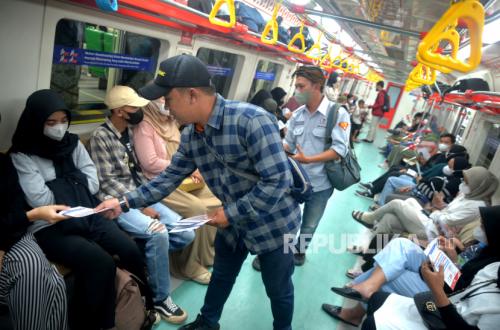
Public movement in the Yogyakarta, Solo, and Madiun corridor showed a significant increase at the start of 2026. This rise reflects a changing mobility pattern that is increasingly dependent on rail-based public transport.
PT Kereta Api Indonesia (KAI) recorded a surge in passenger numbers across several urban services in the first quarter of 2026.
KAI Vice President of Corporate Communication, Anne Purba, stated that this trend indicates a growing need for inter-regional mobility that is increasingly connected. “Trains are now part of people’s daily lives. Journeys have become more reliable, affordable, and able to reach more activity points, including tourist areas and culinary centres in Yogyakarta, Solo, and Madiun,” said Anne.
On the Prambanan Ekspres (Prameks) train service from Kutoarjo to Yogyakarta, the number of passengers reached 277,045 in the first quarter of 2026. This figure represents an increase of around 16.27 per cent compared to the same period the previous year, which had 238,260 passengers.
Meanwhile, the Yogyakarta-Palur KRL Commuter Line served 2,222,716 passengers, a growth of 19.19 per cent from the previous year’s 1,864,803 passengers. This service forms the backbone of daily mobility in the urban areas of Yogyakarta and Solo.
Mobility to airports also experienced an increase. The Yogyakarta International Airport (YIA) Airport Train recorded 697,267 passengers in the first quarter of 2026, up around 12.11 per cent from the same period last year.
In the Solo area and the Madiun agglomeration, the Adi Soemarmo Airport (BIAS) Train served 208,583 passengers, growing 31.12 per cent year-on-year. The Batara Kresna train service from Solo to Wonogiri served 40,763 passengers.
Anne stated that this increase demonstrates the need for transport services with higher frequency and adequate capacity. She assessed that the development of rail-based transport will be key in supporting future urban mobility. “The direction of urban transport development will continue to follow community needs. Trains have room to grow larger, connect more regions, and serve more journeys within an integrated system,” said Anne.