
YLKI Urges Thorough Review of JKN Contribution Increase, Prioritising Affordability for Participants
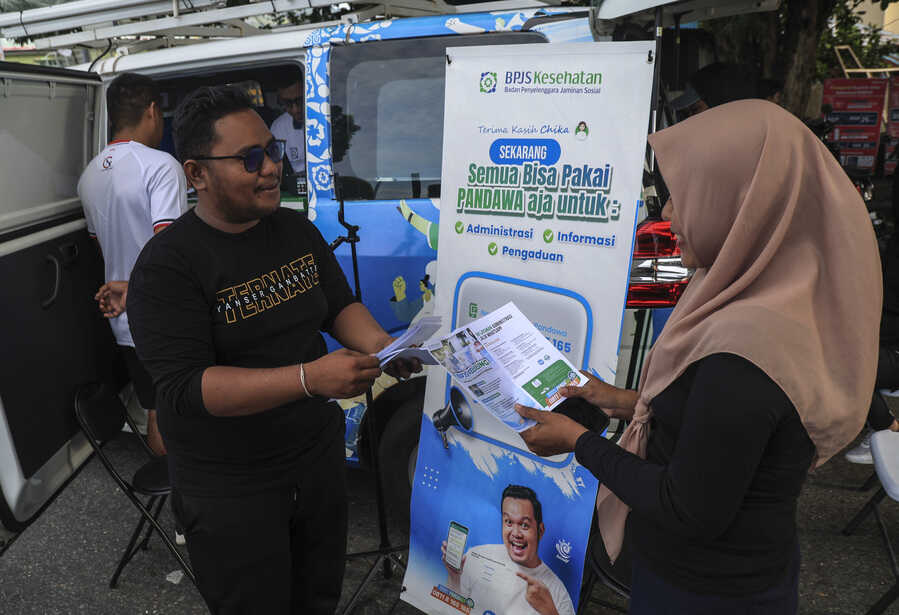
The Executive Secretary of the Indonesian Consumer Foundation (YLKI), Rio Priambodo, affirmed that the organisation does not reject the principle of sustainability for the National Health Insurance (JKN) program managed by BPJS Kesehatan. However, YLKI reminds that the policy of increasing contributions should not burden the public, especially from the perspective of participants’ economic capacity.
According to Rio, an increase in contributions should not be the primary option without a thorough review of affordability. He believes that the determination of ideal tariffs should consider income levels and people’s purchasing power.
“The sustainability of JKN is important, but it should not be the case that the financial burden is entirely placed on participants without considering their economic conditions,” he said when contacted on Wednesday (25/2).
YLKI also highlights the risks if the increase in contributions is too high. The policy is feared to trigger an increase in the number of participants who are in arrears with payments, thus exacerbating the financial problems within BPJS Kesehatan.
“If the contributions increase too significantly, the potential for arrears could increase. This could actually increase BPJS’s financial problems,” said Rio.
In addition, YLKI highlights the government’s plan to eliminate contribution fines. According to Rio, this policy has not yet been concretely realised. In fact, the elimination of fines is considered to encourage participants to return to actively paying contributions without being burdened by accumulated fines.
“We ask that the elimination of fines be truly realised. This could be a stimulus for participants to be more compliant in paying without feeling burdened,” he emphasised.
Furthermore, YLKI believes that the sustainability of JKN should not only depend on participant contributions. The government needs to optimise alternative funding sources, such as the imposition of taxes on packaged sweetened beverages (MBDK) and cigarette taxes as a form of cross-subsidy for health financing.
On the other hand, Rio encourages increased compliance by companies in paying employee contributions, as well as strict action against fraud that still occurs in a number of hospitals. According to him, budget leaks due to fraud also burden BPJS’s finances.
“Law enforcement against fraud and increased corporate compliance must be a priority. It should not be the case that participants continue to be burdened, while potential leaks and other funding sources have not been optimised,” he concluded. (E-4)
Advocacy Coordinator of BPJS Watch, Timboel Siregar, said that the increase in BPJS Kesehatan contributions should not be applied to independent participants in classes 1, 2, and 3 or the middle class.
Member of Commission IX of the DPR RI, Irma Suryani, responded to the issue of increasing JKN contributions.
The Head of Public Relations of BPJS Kesehatan, Rizzky Anugerah, responded to the statement by the Minister of Health regarding the increase in JKN participant contributions.
The total amount of outstanding contributions for BPJS Kesehatan membership in Babel reached IDR 191 billion.
BPJS Kesehatan should focus on helping the poor. Meanwhile, the wealthy can obtain health services from private insurance.
Member of Commission IX of the DPR RI, Irma Suryani, responded to the issue of increasing JKN contributions.
Minister of Health Budi Gunadi Sadikin said that the increase in BPJS Kesehatan contribution rates would not burden the poor because this group is paid for by the government.
The Director General of the Social Security Agency (BPJS) Kesehatan, Ali Ghufron Mukti, raised the issue of increasing BPJS Kesehatan membership contributions to the Minister of Finance, Sri Mulyani.
If the Minister of Health says that JKN contributions will not be increased in 2025, then net assets will be depleted.
Minister of Health Budi Gunadi Sadikin asked the public not to worry about BPJS Kesehatan contributions in 2025.