
Yen to Ringgit Party, Rupiah Weakens Alone
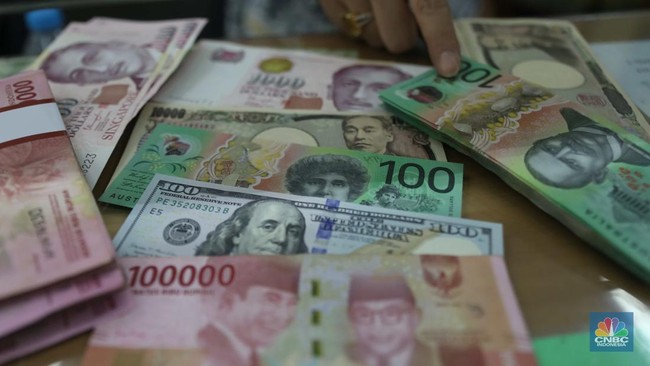
Jakarta, CNBC Indonesia - The majority of Asian currencies moved stronger against the US dollar on trading today, Monday (27/4/2026), although the rupiah remains lagging alone in the red zone. According to Refinitiv data as of 09.40 WIB, the rupiah weakened 0.17% to the level of Rp17,220/US.Thisweakeningmakestherupiahtheworst − performingAsiancurrencythismorning.Ontheotherhand, severalAsiancurrencieswereabletostrengthen.TheKoreanwonledthegainswithanappreciationof0.38, the Taiwanese dollar strengthened 0.16%, the Chinese yuan rose 0.11%, the Singapore dollar strengthened 0.10% to the level of SGD 1.27/US$, and the Philippine peso rose 0.06%. The Japanese yen also moved slightly into the green zone with a strengthening of 0.04%, while the Thai baht tended to stagnate. The movement of Asian currencies today is still heavily influenced by the direction of the US dollar in the global market. At 09.40 WIB, the US dollar index or DXY was observed to weaken slightly by 0.04% to the level of 98.490. When the US dollar weakens, the pressure on other countries’ currencies usually eases as well, including Asian currencies. Conversely, when the US dollar strengthens, other currencies tend to weaken more easily because investors return to hunting dollars as a safe-haven asset. Nevertheless, market conditions are not yet fully calm. The US dollar is still supported by uncertainties in the Middle East war, especially after hopes for peace have dimmed again. US President Donald Trump cancelled his envoy’s visit to Islamabad over the weekend. Trump stated that Iran could contact the US if it wants to negotiate to end the war that has been ongoing for about two months. This situation keeps the Strait of Hormuz, one of the world’s most important energy routes, effectively closed. Previously, the US dollar had strengthened in March as investors sought safe-haven assets after the war broke out. However, that strengthening has largely diminished this month as hopes for a peace agreement emerged. In the last few days, the dollar has moved more stably again due to stalled US-Iran talks. This week, investor attention is also focused on decisions from several major central banks. The Bank of Japan is expected to hold interest rates on Tuesday. However, the market is awaiting signals on whether the Japanese central bank will open the possibility of a rate hike as early as June. In addition, the US Federal Reserve (The Fed), the European Central Bank (ECB), and the Bank of England (BoE) are also expected to hold interest rates this week. Market participants will watch how the central banks view the impact of the war on inflation, the economy, and future interest rate directions.