
Yaqut Reveals Reason for Dividing Hajj Quota: To Protect Pilgrims' Lives
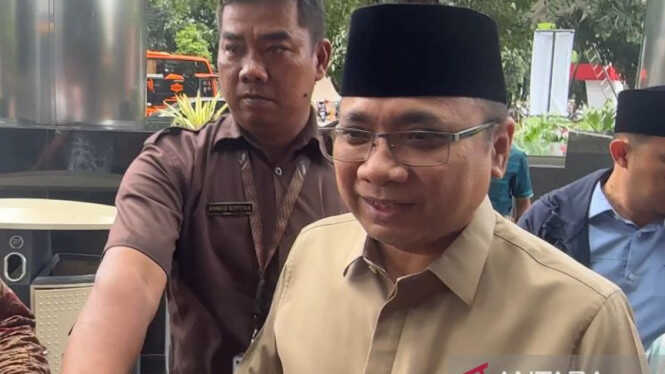
Jakarta, VIVA – Former Religious Affairs Minister Yaqut Cholil Qoumas has spoken out regarding his reasons for dividing the 2024 additional hajj quota on a 50:50 basis between special and regular hajj allocations.
Yaqut said his consideration at the time was to protect the lives of hajj pilgrims due to limited capacity at holy sites.
“Thirdly, I also need to convey that the matter affecting me concerns what we all know about the hajj quota,” Yaqut told reporters after a pretrial hearing at the South Jakarta District Court on Tuesday, 24 February 2026.
“The sole consideration behind my decision when determining the quota distribution was hifzhun nafsi — protecting the lives of pilgrims due to the limited space available in Saudi Arabia,” he added.
Furthermore, Yaqut explained that hajj affairs are not solely within the jurisdiction of the Indonesian government. Rather, there are agreements in place with Saudi Arabia.
“We must understand that hajj falls under Saudi jurisdiction. It is not exclusively the authority of the Indonesian government — it is not. The jurisdiction lies there. We are bound by the regulations in Saudi Arabia, including the quota distribution, because there is a memorandum of understanding that serves as our basis, from which the Ministerial Decree was derived,” he said.
The pretrial hearing of former Religious Affairs Minister Yaqut Cholil Qoumas regarding his designation as a suspect by the Corruption Eradication Commission (KPK) in an alleged hajj quota corruption case has been postponed until Tuesday, 3 March 2026.
“The hearing is postponed to next Tuesday, 3 March 2026. We will convene at 10.00 Western Indonesian Time,” said South Jakarta District Court Judge Sulistyo Muhammad Dwi Putro during the pretrial hearing on Tuesday, 24 February 2026.
The judge said the postponement was related to a request from the respondent, the KPK, which sent a letter dated 19 February requesting a delay to the following week.
He affirmed that the KPK would be summoned for a second and final time in accordance with prevailing regulations.
“We will summon the KPK for the second or final time — the rule allows for two summonses. If the KPK does not appear on 3 March, the hearing will proceed regardless,” he said.