
Yaqut Cholil Qoumas's House Arrest Status Questioned, Not Low-Level Corruption
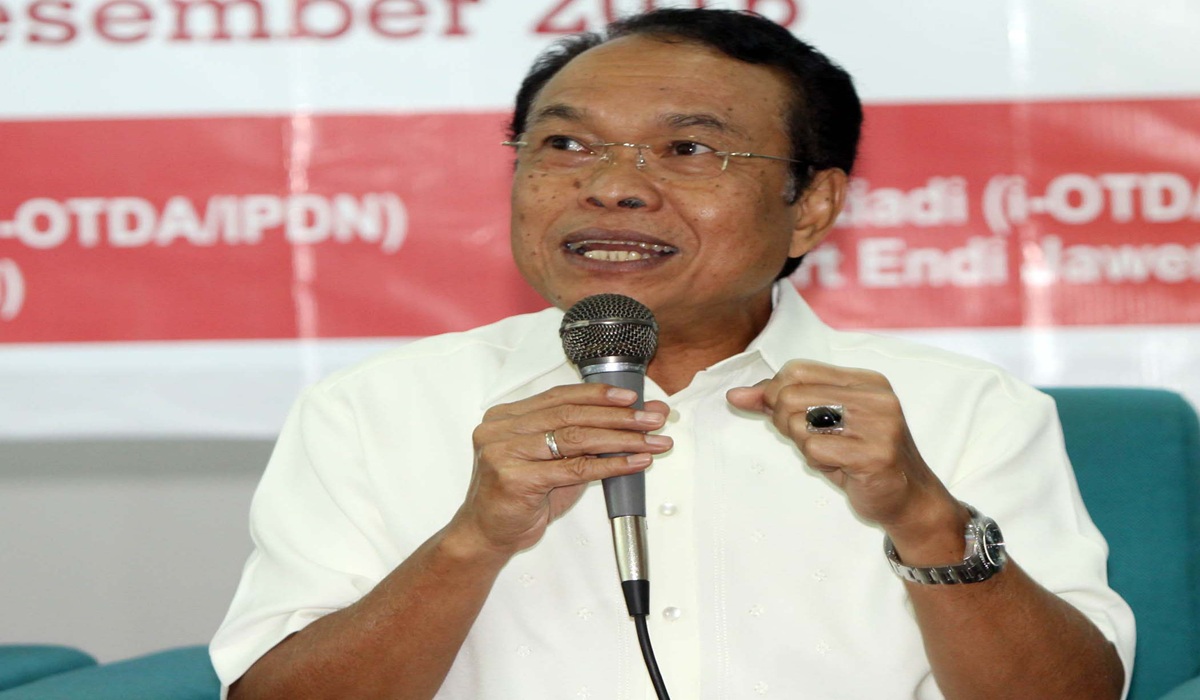
The Corruption Eradication Commission (KPK) decision to grant house arrest status to former Minister of Religious Affairs Yaqut Cholil Qoumas has attracted attention. IPDN Professor Djohermansyah Djohan assesses that this policy does not align with the character of the major corruption case being handled.
According to him, the case ensnaring Yaqut is not a minor one. Allegations of abuse of authority in hajj quota management, he says, involve significant state losses and many parties, including the private sector.
“House arrest is an alternative detention for low-risk cases. Meanwhile, this is a high-risk case, involving a ministerial-level state official, potential disappearance of evidence, and the possibility of fleeing,” said Djohermansyah in a written statement on Tuesday (24/3).
He states there are no strong indicators justifying this policy. From health reasons, prison conditions, to the case risk category, all are deemed not to meet the requirements. This situation, according to him, becomes an anomaly in law enforcement practices.
Furthermore, he sees symptoms of a lack of independence in law enforcement institutions. “There is some kind of invisible hand. The KPK appears not fully independent. This policy contradicts the basic principles of eradicating corruption,” said Djohermansyah.
He links this situation to changes in the KPK’s position, now under the executive umbrella. In his view, power intervention should strengthen, not weaken, law enforcement.
“The correct intervention should harden, not weaken. Not granting house arrest, but ensuring maximum law enforcement with layered prison barriers. Eventually, corruptors will be allowed city detention,” he added.
Djohermansyah also highlights the perspective on corruption in Indonesia. He assesses that this crime should be treated as an extraordinary crime, not an ordinary one.
“Corruption in our country is treated like an ordinary crime. Yet its impact is systemic, keeping the poor poor, even adding to poverty,” he said.
According to him, the house arrest policy has the potential to create a bad precedent. This loophole could be exploited by other suspects to receive similar treatment.
He assesses that the more fundamental issue lies in the weak supervision system. Internal and external mechanisms, from inspectorates to political oversight, are said to be not yet effective and even often entangled in corrupt practices.
On the other hand, the leadership exemplary crisis further worsens the situation. “If those at the top play around, those below will follow. Corruption eventually becomes a culture, from the centre to the regions, from the top elite to the lowest level,” explained Djohermansyah.
He assesses that the current anti-corruption strategy is actually regressing. He encourages comprehensive reforms, starting from revising KPK regulations to restore independence, to strengthening other law enforcement institutions.
He also compares it to practices in advanced countries, where public officials who are merely indicated for violations choose to step down due to moral responsibility.
“There, office ethics are held strongly. Here, the law is violated, let alone mere ethics,” he concluded.
The KPK has officially revoked the house arrest status of former Minister of Religious Affairs Yaqut Cholil Qoumas (YCQ) and returned him to the KPK Detention Centre.
Former Deputy Minister of Manpower, Immanuel Ebenezer or Noel, will apply for a change in detention. Meanwhile, Noel is currently detained by the KPK for being a suspect in an alleged extortion case.