
Yaqut Cholil Qoumas Under House Arrest: KPK Urged to Impose Moratorium on Changing Detention Status
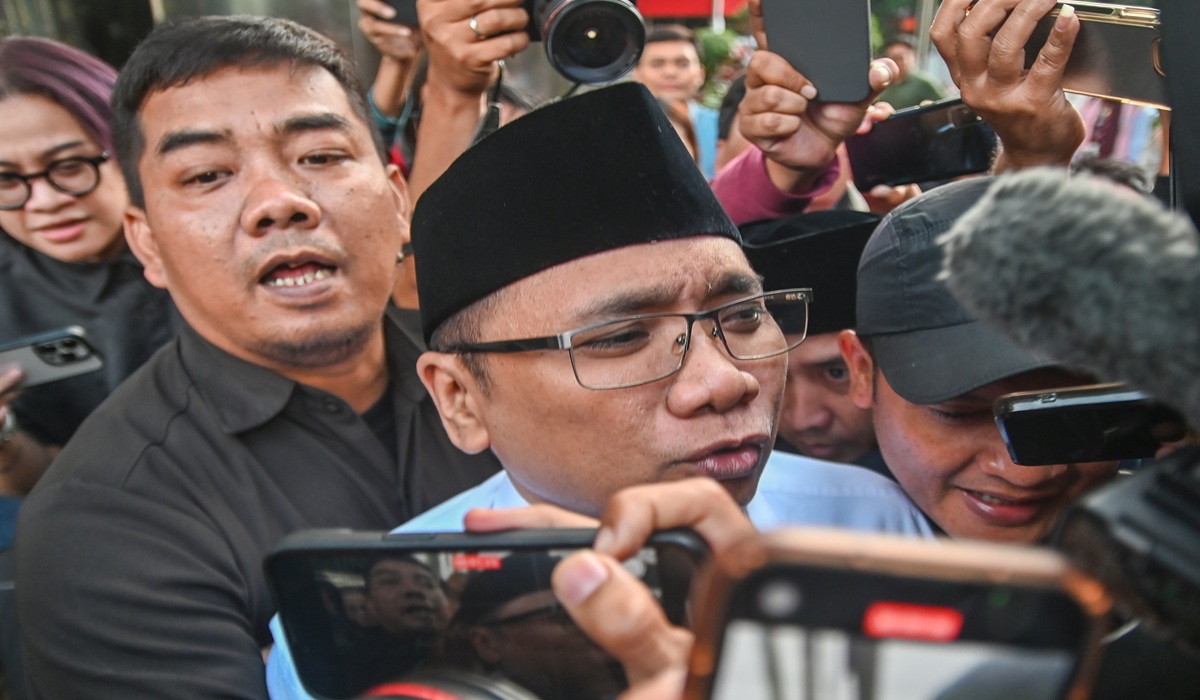
Former Minister of Religious Affairs Yaqut Cholil Qoumas has become a house detainee. Former Corruption Eradication Commission (KPK) investigator Yudi Purnomo Harahap has called on the KPK to temporarily halt the transfer of detention status to house arrest for corruption suspects. He views this policy not merely as a matter of rules but as concerning the symbol of law enforcement against extraordinary crimes.
“The transfer of detention status is not as simple as being regulated in the new Criminal Procedure Code (KUHAP). It is a symbol that corruption is an extraordinary crime, so placement in a state detention centre (rutan) is part of the deterrent effect,” Yudi told Media Indonesia on Wednesday (25/3).
According to him, the KPK’s decision in one case has the potential to trigger similar demands from other detainees. Therefore, the anti-corruption agency needs to take a firm stance to avoid opening the door to privileges.
“This decision could spark other detainees to receive similar treatment. The KPK must affirm that it will not grant the same policy to other suspects,” he stressed.
He also urged the KPK to impose a moratorium on this detention transfer policy.
“The KPK must implement a moratorium that this type of detention transfer will not be done in the future and reject all requests from detained suspects,” said Yudi.
Spotlight on this policy emerged in the case of Yaqut Cholil Qoumas, where the request to transfer detention to house arrest was initially granted. However, in general, requests for suspension or transfer of detention submitted by legal counsel or families are often rejected.
In terms of regulations, the KUHAP does regulate three types of detention, namely detention in a state detention centre (rutan), city detention, and house detention. However, in practice, the KPK has consistently used detention in rutan to facilitate the investigation process and maintain the effectiveness of law enforcement.
From an internal perspective, Yudi emphasised the importance of maintaining institutional consistency and integrity. He stated that the KPK’s standard operating procedure (SOP) principally places rutan as the primary form of detention.
In certain conditions, such as illness, detention can be temporarily suspended for treatment, but afterwards, the suspect must return to rutan.
Furthermore, Yudi encouraged the KPK Supervisory Board (Dewas) to proactively investigate the process behind this detention transfer decision.
“For Dewas, this is not difficult if they want to investigate why this detention transfer occurred and who is responsible. The key lies with the investigators, the director of investigation, the deputy for enforcement, and the KPK leadership. Just summon them to get a complete picture,” he said.
He emphasised that Dewas does not interfere with the substance of the case but oversees the process to prevent irregularities.
“Dewas does not enter into the material of law enforcement, but into the process. This is important for improvement so it does not recur, because Dewas’s function is to safeguard the agency’s reputation and ensure the direction of corruption eradication remains correct,” he continued.
In addition, Yudi reminded that detention by the KPK is generally carried out when investigators have strong confidence that the case is ready to be handed over to the court.
“When the KPK detains someone, usually the investigators are confident that this case will soon be transferred because the evidence is strong and the investigation is nearly complete,” he said.
According to him, the controversy that has already arisen means that explanations from the KPK may no longer be trusted by the public. Therefore, the most important step now is to accelerate the legal process.
“Whatever answer from the KPK may no longer be heeded by the public. Therefore, the KPK must accelerate the handling of the hajj quota case to bring it to court soon, so the public can see the results transparently,” he concluded.