
Yanti's Story: Launching a Home-Based Kriya Business with Ultra-Micro Financing
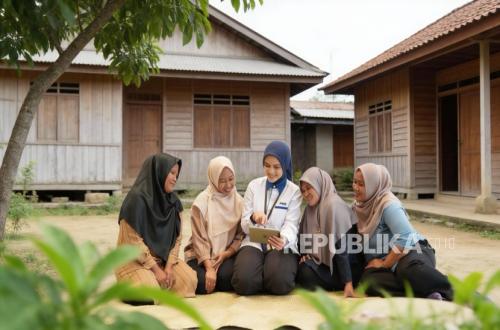
Access to financing remains a challenge for women running ultra-micro businesses. Limited capital and scarce collateral make many small business operators struggle to obtain formal finance to grow their ventures. The demand for financing in the ultra-micro sector continues to rise. PT Permodalan Nasional Madani (PNM) records that the outstanding financing under the Mekaar programme reached Rp45.35 trillion in 2025 and had reached 22.7 million financially underprivileged women in various regions. For some entrepreneurs, unsecured financing is seen as an opportunity to start and grow a business from a small scale. This condition was experienced by Sri Aryanti Nurafiah, a PNM Mekaar customer in Cikarang Barat. As a housewife, the woman known as Yanti wants to help the family economy through a keychain crafts business. However, capital constraints once made her hesitant to start. “If I relied only on my husband’s salary, I think it would not be enough. I want to open a crafts business, but with limited capital I am hesitant,” she said, quoted on Friday (22/5/2026). According to Yanti, the financing obtained from the Mekaar programme was used to buy raw materials and develop the home-based business. Over time, the business grew to the point where she opened her own stall. “I hadn’t imagined it before, but my business has grown and continues to grow. My capital was also increased by PNM, so I am now brave enough to open my own stall,” Yanti said. In addition to financing, Yanti also participated in training through the Mekaarpreneur programme. The training covers promotion, branding, packaging, and digital marketing. Currently, her products are marketed on several digital platforms such as TikTok and Shopee. The growth of the business earned Yanti second place in the Mekaarpreneur category for customers moving up a tier in the Bekasi-Jakarta region. The story is seen as reflecting the still-large demand for inclusive financing for ultra-micro women entrepreneurs. Mentorship and business training are also considered important factors for small-scale entrepreneurs to survive and expand their businesses.