
Yang Chaobin from Huawei: Building a Smarter World with 5G-A and U6GHz
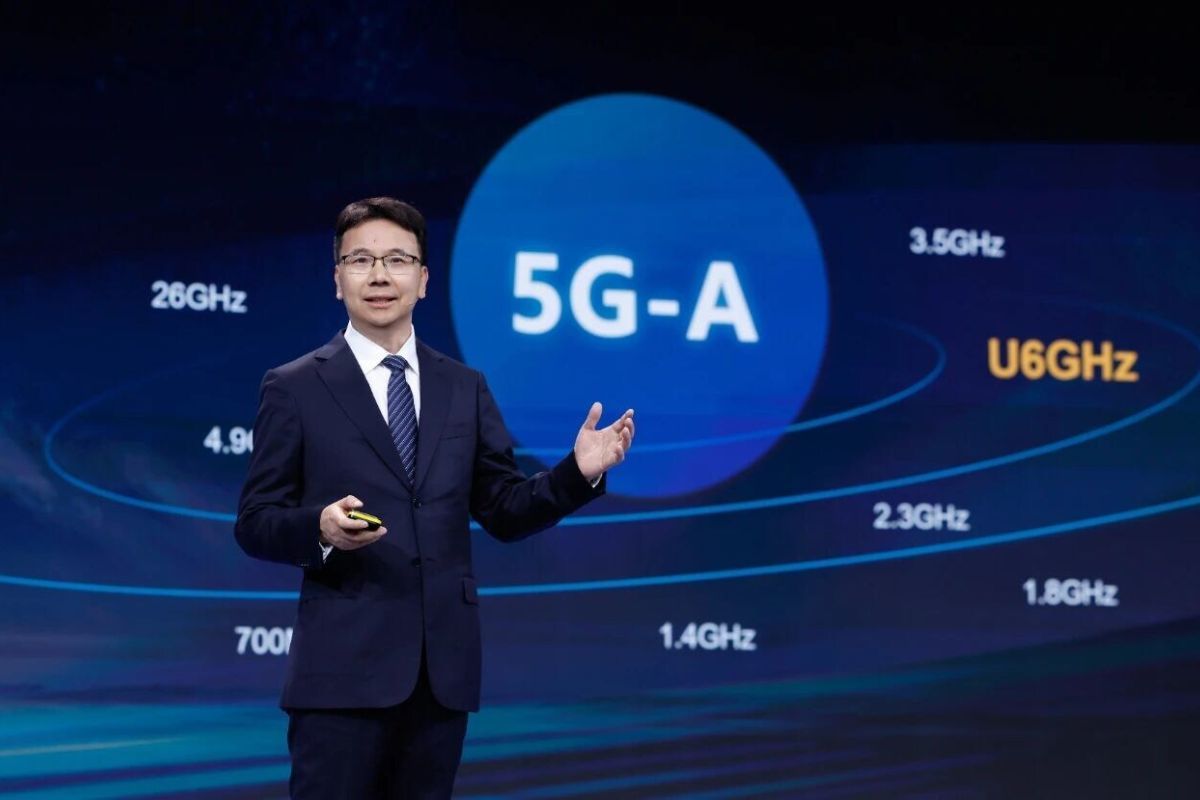
Barcelona, Spain — Following the remarkable transformation of industry and consumer experience by artificial intelligence (AI), the mobile AI era is creating new demands for telecommunications networks. This has made 5G-Advanced (5G-A) a critical technology that bridges the gap between network generations whilst unlocking the full potential of intelligent connectivity. At the Mobile World Congress (MWC) Barcelona 2026, Yang Chaobin, Chief Executive Officer of Huawei ICT Business Group, urged the information and communications technology (ICT) industry to accelerate efforts so that more people can benefit from AI developments. These efforts include deploying 5G-A, utilising new spectrum to support AI applications, and expanding network access to underserved regions.
New Demands for Communications Networks in the Mobile AI Era
According to Yang, over the past two years, the daily rate of global AI token usage has increased nearly 300-fold. “The era of smart technology is drawing closer. New AI applications continue to emerge every day. Therefore, it is time for the industry to work together to maximise the potential of 5G-A. We also need to efficiently utilise new spectrum resources such as U6 GHz to create new value for the industry while preparing for the evolution towards 6G,” he stated.
He added that networks can no longer focus solely on downlink. Future networks must provide extremely high bandwidth for both uplink and downlink to support multimodal data exchange between devices and cloud computing for AI applications. Additionally, networks must deliver secure, reliable, and ultra-low-latency connectivity to support real-time AI collaboration and intelligent decision-making.
Bridging the Network Generation Gap with 5G-A
According to Yang, rapid AI development is accelerating changes in the capabilities of mobile telecommunications networks. In this context, 5G-A serves as a bridge to the next generation of networks, whilst delivering capabilities better suited to ever-changing market demands. Huawei is also continuing to prepare 6G development, including promoting global agreement on 6G definitions, usage scenarios, and technology candidates. 6G standards are expected to emerge in 2029, making the next five years a critical period for AI-driven cellular services. This period has been called the “golden opportunity” that will be supported by 5G-A technology capabilities.
Highlighting the focus needed to achieve 6G implementation, Yang stated, “The AI era is approaching; therefore, the industry must identify ways to utilise 5G-A networks to meet rapidly evolving AI needs.” According to him, this includes providing downlink speeds of up to 10 Gbps and uplink speeds of up to 1 Gbps — significantly higher than current 4G network uplink capabilities. On the other hand, network development also involves new IoT technologies, such as RedCap and passive IoT, creating new challenges regarding fair return on investment for network investors.
“In the coming years, we must work together to meet the surge in AI demand. Whilst continuing to explore the boundaries of technology, we must also confront the reality of global development inequality,” Yang said.
He added that approximately 300 million people worldwide still lack access to cellular networks. This digital divide could widen further with rapid AI development. To address this, continuous innovation must be achieved through the use of various frequency spectra and more cost-effective solution designs. Huawei’s RuralStar solution, for example, has been deployed in more than 80 countries and has successfully connected approximately 170 million people. The solution also supports various digital services, such as education through DigiTruck classes in Kenya, village-level financial services in Bangladesh, and remote healthcare services in Argentina.
5G-A Solutions with U6GHz Spectrum
Currently, 5G-A has been deployed in more than 300 cities worldwide and is ready to enter the next phase of development. In many regions, C-band spectrum frequency is becoming limited. Therefore, U6 GHz frequency band is considered the key to increasing network capacity. U6 GHz frequency band is now recognised as one of the primary spectrum bands for future mobile communications in discussions at the World Radiocommunication Conference (WRC). Furthermore, industrial devices and infrastructure already support 5G-A technology at that frequency.
“The era of smart technology is moving faster. In the next five years, we must work together to meet AI service needs through widespread 5G-A commercialisation,” Yang concluded.