
Xi's Visit Aimed at Building Constructive Relations with the US
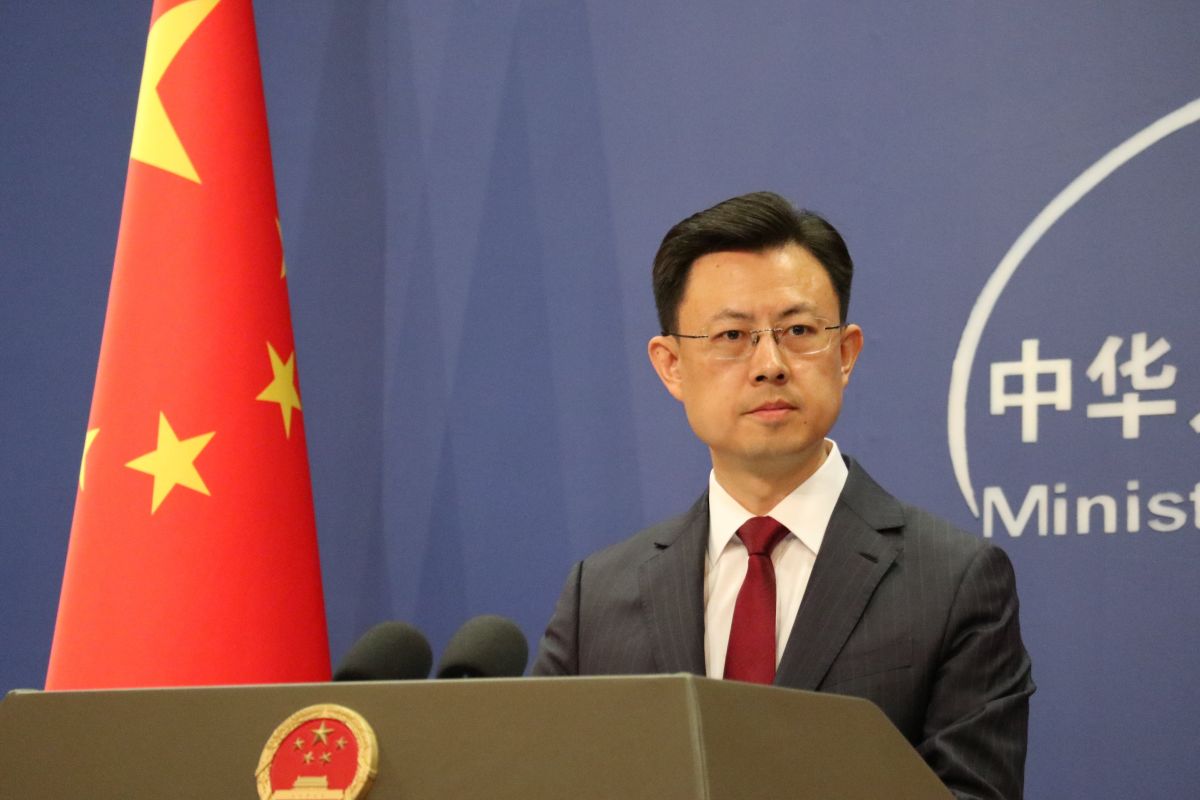
China will cooperate with the United States to enrich the dimensions of a constructive China-US relationship based on strategic stability.
Beijing (ANTARA) - China’s Ministry of Foreign Affairs stated that President Xi Jinping’s visit is being prepared to build a constructive relationship between China and the United States (US).
“China will cooperate with the United States to enrich the dimensions of a constructive China-US relationship based on strategic stability,” said Chinese Foreign Ministry Spokesperson Guo Jiakun during a press conference in Beijing on Monday (21/9).
President Xi Jinping is scheduled to undertake a state visit to the US from 23 to 25 September 2026 to meet with President Donald Trump.
President Trump himself visited Beijing from 13 to 15 May 2026, where he agreed to maintain the stability of economic and trade relations and expand practical cooperation across various sectors. During that visit, Trump was accompanied by numerous US CEOs, including Elon Musk (CEO of Tesla and SpaceX), Ryan McInerney (CEO of Visa), Jensen Huang (CEO of NVIDIA), and Tim Cook.
“At the invitation of President Donald Trump, President Xi Jinping will soon undertake a state visit to the US. During his visit, President Xi will engage in in-depth exchanges of views with President Trump regarding key issues concerning bilateral relations as well as global peace and development,” Guo Jiakun added.
Guo Jiakun noted that head-of-state diplomacy plays an irreplaceable role in providing strategic direction for China-US relations.
“The exchange of visits by both presidents within a six-month period will serve as a very important historical milestone. China and the US can strengthen dialogue and cooperation and manage differences appropriately to provide greater benefits to the people of both nations and contribute further to global peace, stability, and prosperity,” Guo stated.
However, Guo Jiakun did not explicitly answer whether China would restore the distribution of rare earth metals, despite an agreement reached during the Xi-Trump summit in Beijing.
“China is committed to maintaining the security and stability of global industrial and supply chains for strategic minerals. China and the US must work together to implement the important understandings reached by both presidents and maintain the momentum of stable growth in China-US economic and trade relations,” said Guo.
Nevertheless, he emphasised that restrictions on the export of rare earth metals are in accordance with applicable laws and regulations, including those involving Japan.
“China prohibits the export of all dual-use goods to Japanese military users or for Japanese military purposes, as well as any exports that could assist in enhancing Japan’s military capabilities, in order to prevent the re-militarisation of Japan and the country’s efforts to acquire nuclear weapons,” Guo Jiakun stated.
Guo emphasised that China’s position on maintaining the security and stability of global industrial and supply chains for strategic minerals remains unchanged. “All parties have a responsibility to play a constructive role towards this goal,” he added.
Prior to the meeting between the two leaders, US Treasury Secretary Scott Bessent met with Chinese Vice Premier He Lifeng in New York on Sunday (20/9). Bessent was accompanied by US Trade Representative (USTR) Jamieson Greer during the negotiations.
Bessent mentioned that the US wishes to manage risks associated with AI development, particularly regarding uncontrolled AI agents and cyber threats from non-state actors.
Via the X platform, Bessent stated that his discussions with He Lifeng were intended to help create a foundation for President Donald Trump’s talks with President Xi Jinping to advance US economic interests and bring tangible results to the American people.
Washington is also concerned about the potential use of AI to create biological weapons, he added.
China is more focused on the regulation of AI technology itself, an unnamed senior US official told the newspaper.
Recently, concerns have emerged in the US that AI could pose a threat to humanity. Trump has openly supported the continued development of the field, asserting that the US must not allow China to lead.