
Worst-Case Gulf War Scenario: Airlangga Proposes Emergency Decree to Address Budget Deficit
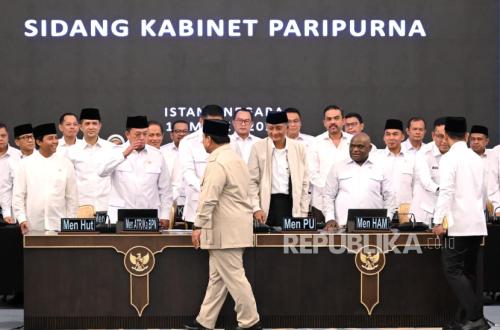
Jakarta — Coordinating Minister for Economic Affairs Airlangga Hartarto has proposed the establishment of an emergency governmental regulation (perppu) to anticipate adverse consequences from conflict in the Gulf region. This proposal would create flexibility for the government to allow the state budget deficit relative to GDP to exceed three percent.
According to Airlangga, if conflict in the region continues and leads to rising global crude oil prices, maintaining a three percent budget deficit will be difficult to sustain. He referenced the use of perppu during the Covid-19 pandemic as a precedent.
“We implemented perppu before, Mr President, that was during Covid. There are several factors that need to be included in the perppu we are preparing concerning timing, of course this becomes a political decision for Mr President,” Airlangga stated during a Full Cabinet Session at the State Palace in Central Jakarta on Friday (13 March 2026) in the evening.
Airlangga then outlined the proposed contents of the perppu, drawing from measures previously implemented during the Covid-19 pandemic.
“First, state revenue includes emergency incentives for income tax and value-added tax in affected sectors, without changing tax law. Second, import duties would include exemptions for certain raw materials to keep our exports flowing,” Airlangga told President Prabowo Subianto.
“Third, tax deferrals for micro, small and medium enterprises and energy-intensive industries. Then we have potential windfall gains from oil and gas and commodity non-tax revenue. We could calculate this for compensation, sir. Typically, CPO prices rise along with fuel prices, and nickel prices can also rise, as can gold and copper. We could, in a manner of speaking, impose additional taxes,” Airlangga added.
With the perppu in place, he believed the government would have greater flexibility for adjustments. “With this perppu, the government immediately has flexibility for changes. Then, energy cash transfers can continue, and emergency social assistance can also be increased through presidential regulation, and state bond issuances can proceed and utilise remaining budget balances,” Airlangga proposed.
In the same meeting, Airlangga presented three scenarios of how conflict would affect state finances if war between Iran versus Zionist Israel and the United States prolonged for up to ten months. Under the worst-case scenario presented by Coordinating Minister Airlangga, the state budget deficit could exceed four percent.
“In the worst-case, pessimistic scenario, with crude oil prices at $115 per barrel, our rupiah exchange rate at Rp17,500 per dollar, economic growth at 5.2 percent, state bond yields at 7.2 percent, the deficit would reach 4.06 percent,” Airlangga told the Red and White Cabinet.