
World's Smartphone King Remains Number One, iPhone-Xiaomi Step Aside
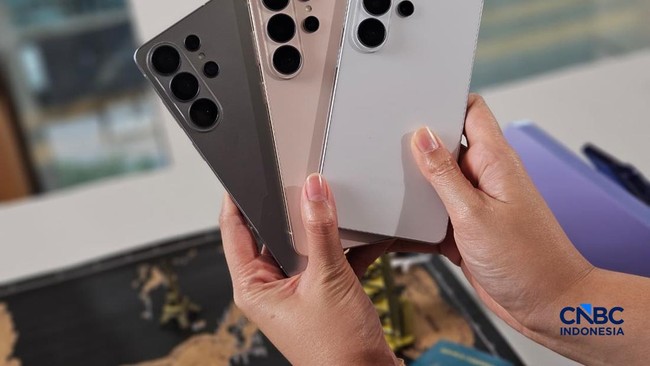
Jakarta, CNBC Indonesia - South Korea’s smartphone king, Samsung, has successfully dominated the global market at the start of 2026. This positive achievement was driven by strong demand for the premium Galaxy S26 series and the A series, which supported sales in developing countries.
Omdia’s report for Q1-2026 indicates that Samsung shipped 65.4 million units, marking an 8% year-on-year growth. The company’s market share reached 22%.
Apple trails Samsung with a 20% market share and 10% growth from the previous year. In the first quarter of this year, the company shipped 60.4 million units.
The iPhone 17 series remains the primary driver of growth. The affordable iPhone 17e performed strongly in the European Union and Japan, while the iPhone 17 Pro and Pro Max outperformed their predecessors.
One of Apple’s largest markets, China, also recorded positive results. Its growth reached 42% from the previous year.
Positions three to five are occupied by Chinese technology giants. All these companies recorded negative growth in Q1.
Starting with Xiaomi in third place, which shipped 33.8 million units and secured an 11% market share. The company’s annual growth was -19%.
Meanwhile, Oppo shipped 30.7 million units with a 10% market share, and its growth was -6%. Finally, Vivo shipped 21.3 million units and a 7% market share, with growth of -7%.
Omdia also noted Honor as the vendor with the fastest growth among the top 10, with shipments reaching 19.2 million units.
This achievement was due to Honor doubling its shipment volume in the Middle East and Africa year-on-year. However, there was a decline due to competition in its home market, China.
Overall, the global smartphone market shipped 298.5 million units, a slim 1% growth. Omdia highlighted two factors influencing this quarter’s sales.
First, increased sales from Samsung, Apple, and other vendors. This accelerated purchases before inflation, as memory and component costs rose.
Additionally, macroeconomic obstacles burdened consumer demand. Inflation pressured household spending budgets, ultimately widening the gap between distribution channel sales and actual sales.