
World's Largest Oil Reserve to be Released, but Prices Remain High
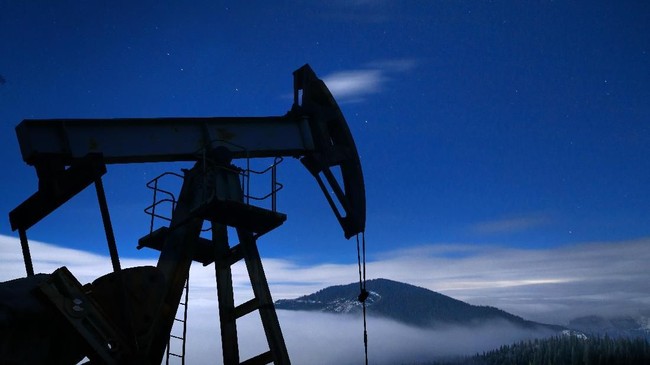
An announcement of the largest emergency oil reserve release in history by the United States and its allies has failed to immediately alleviate concerns about unprecedented price increases. More than 30 countries across Europe, North America, and Northeast Asia have agreed to release approximately 400 million barrels of oil onto the global market to curb surging energy prices. The United States is leading this effort by releasing 172 million barrels from its strategic petroleum reserves, equivalent to 43% of the total release coordinated by the International Energy Agency (IEA).
This marks the largest oil reserve release in the 50-year history of the IEA, the organisation responsible for safeguarding energy security for its member nations during global crises.
However, the measure has failed to stabilise the market. Crude oil prices have surged more than 17% since the emergency reserve release was announced last Wednesday. Brent crude, the international benchmark, closed above $100 per barrel on Friday for the second consecutive trading session.
Tamas Varga, an analyst at PVM based in London, stated that geopolitical conditions remain the primary factor driving price increases. Attacks on tanker ships in the Persian Gulf, along with the closure of the Strait of Hormuz and Iran’s new supreme leader’s vow to keep the trading route closed, continue to support higher prices.
“Until transit is restored, policy announcements of this kind will have limited impact,” said Tom Liles, senior vice president of upstream research at consultancy Rystad Energy.
Liles noted that Saudi Arabia, Iraq, Kuwait, and the United Arab Emirates exported approximately 14 million barrels per day (bpd) before the conflict. Roughly 5 million to 6 million bpd can be exported through Saudi and UAE pipeline routes ending at the Red Sea and Gulf of Oman. This leaves approximately 9 million barrels per day, or roughly 10% of global supply, that can only pass through the Strait and will remain constrained there until transit normalises, according to Liles. On the surface, the 400 million emergency barrels would cover approximately 40 days of the lost supply.
However, the reality is far more complex, Liles stated. “Only a limited volume can be released during any given period. It does not mean 400 million barrels suddenly appear on the market,” he said.
Supplies Remain Unsafe
The oil supply disrupted by the conflict is far greater than the stock that the IEA can release daily. Consequently, this action will have a limited impact on the oil price trajectory, according to analysts at Bernstein.
The United States will release 172 million barrels over a 120-day period. This equates to 1.4 million barrels per day, which is only 15% of the supply lost due to the closure of the Strait of Hormuz. Notably, it will take at least 13 days for these barrels to enter the market following President Donald Trump’s authorisation.
The IEA has not specified when or the volume of reserve releases from other member states. However, each of its 32 member states will decide based on circumstances suitable for them.
The IEA last released emergency reserves in response to Russia’s invasion of Ukraine. Its members achieved a combined record of 1.3 million barrels per day in September 2022, according to consultancy Rapidan Energy. The IEA may be able to increase the release rate to approach 2 million barrels per day.
“This buys time, but it does not solve the crisis,” said Bernstein analysts.