
World's First Virtual Minister Faces Legal Challenge in Albania
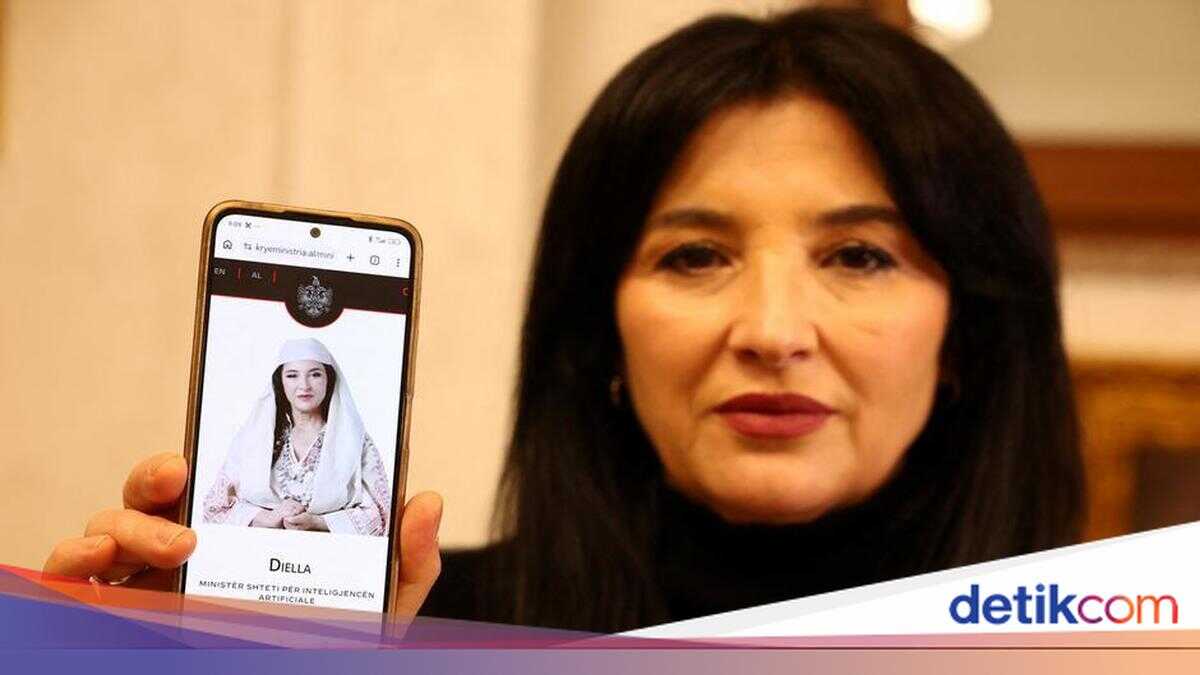
On 11 September 2025, Albanian actress Anila Bisha was at home with her family, watching a live broadcast of Prime Minister Edi Rama presenting his new cabinet.
The subsequent television display came as quite a shock. She saw herself as a ‘designated minister’ – not in her actual human form, but as a three-dimensional avatar.
“Diella,” whom Rama appointed as the first virtual minister, has Bisha’s voice and face.
For the Albanian government, this represents a bold step in technological innovation. But for Bisha, an actress with 40 years of experience in the entertainment industry, it was deeply unsettling.
“At first, I laughed,” she told DW. “But I didn’t understand the implications.”
What was presented as digital modernity quickly revealed a much more complex reality.
Albania was portrayed as a pioneer in the use of Artificial Intelligence (AI) in government. However, this narrative concealed many unanswered questions that ultimately ended up in court.
From virtual assistant to minister
Before becoming a virtual minister, “Diella” was a much simpler avatar.
The avatar first appeared as a digital assistant on e-Albania, the government’s online portal designed to guide citizens through public services.
According to Bisha’s court filing, she signed a contract in December 2024 allowing the use of her image and voice as an avatar for the e-Albania digital assistant for one year.
Then came the cabinet presentation in which Albania was introduced to its new minister for artificial intelligence, who had the same name, face, and voice as the e-Albania digital assistant, Anila Bisha.
The court must decide
Bisha says she was not informed that the avatar would become a minister.
Her lawyer, Aranit Roshi, describes the contract she signed as one with a limited scope. “It is an exclusive object, an exclusive purpose. This means that her image and voice should not be used for any other product,” he said.
The government rejects the allegations. “In our view, the claims are unfounded,” a government representative said in a statement, adding that it is up to the court to decide who is right.
A case of personal data protection
Legal experts say that this dispute is not primarily about copyright, but about the protection of personal data.
“The core of this case is the violation of personal data,” said Elton Peppo, a lecturer at the Faculty of Law at the University of Tirana.
Under Albanian law, which fully follows the standards of the European Union’s data protection regulations, a person’s image and voice fall into the category of personal data. “The use outside the time frame or purpose agreed upon in the contract constitutes a violation,” Peppo explained to DW.
Bisha has asked the Administrative Court to suspend the use of her image and voice until a final decision is issued. However, the Administrative Court rejected the suspension on Monday (23/02).
In the court filing, Bashi names the Council of Ministers, the National Agency for Information Society (AKSHI), the private company involved in the creation of the avatar, and Prime Minister Edi Rama as defendants.
In addition to the suspension of the use of the image, Bashi is also seeking damages of one million euros, equivalent to 20 billion rupiah.
For months, Anila Bisha says, people have been calling her “Minister Diella” in public.
The digital figure has begun to blur the personal figure behind it. The connection is no longer purely technical, but has entered the personal realm.
A form of identity duplication
Mark Marku, dean of the Faculty of History and Philology and lecturer in the Department of Journalism and Communication at the University of Tirana, describes the case as a form of identity duplication.
“Having the same image (as you) does not mean that you are selling your personality,” he told DW, explaining that one can license one’s appearance for a specific purpose, but this does not automatically transfer one’s beliefs, values, or political positions. “No one has the right to take someone’s identity and use it beyond what has been agreed upon.”
There is a significant difference between the role of an avatar and a minister: a digital assistant answers technical questions, while a minister speaks on behalf of the state.
After being appointed minister, “Diella” appeared on a large screen in the Albanian parliament to address members of parliament as the minister of artificial intelligence. She also appeared at various public events at home and abroad.
The script may have been written by someone else, but the face remains the same.
The actress says that sometimes she is afraid of what her “digital twin” will say. “In some cases, such as in the Albanian parliament, I felt concerned,” she said.
Internationally recognised innovation
Internationally, the AI Minister project has received much praise.
In February 2026, “Diella” was selected from more than 1,500 participants from more than 100 countries to receive the Global Future Fit Seal at the World Governments Summit in Dubai, an award for governments with visionary innovations.
However, technically, “Diella” remains a chatbot, a virtual assistant that operates within pre-defined parameters.
IT expert Besmir Semanaj says that there is no public evidence that the system has evolved into an autonomous decision-maker. “We still don’t know if ‘Diella’ has been trained as an independent system,” he told DW.
Innovation still under investigation
When introducing “Diella” as the minister of artificial intelligence, Prime Minister Edi Rama promised a new era in which “public procurement will be 100% corruption-free, and every public fund will be 100% transparent.”
However, in practice, this avatar is not an independent innovation but part of Albania’s digital governance system.