
World Water Day 2026: Rising Consumption and Safe Water Access in Focus
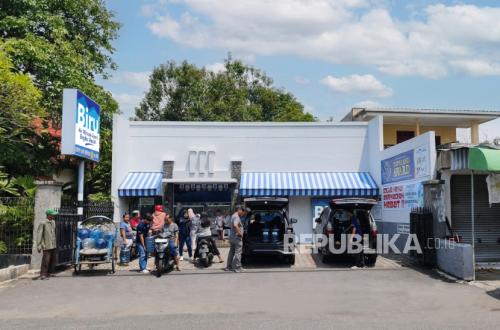
World Water Day 2026 coincides with Ramadhan and Lebaran, a period when household consumption activity in Indonesia surges. The Central Statistics Agency (BPS) reports that household consumption accounts for more than 50 per cent of national Gross Domestic Product.
A Redseer Strategy Consultants report estimates that total consumer spending in Indonesia during Ramadhan 2025 reached approximately Rp1.188 trillion. Ramadhan represents one of the periods with the highest household shopping activity, including for various basic necessities.
Within this dynamic, basic needs such as drinking water form part of household spending structures. However, access to genuinely safe drinking water remains a challenge. Data from the National Socio-Economic Survey (Susenas) conducted by BPS shows that whilst over 90 per cent of households have access to adequate drinking water, the proportion of households with access to safe drinking water that meets health quality standards remains at approximately 11-12 per cent nationally. This disparity is still evident in a number of regions and represents a concern in achieving the 2030 Sustainable Development Goals (SDGs) regarding universal access to safe and affordable drinking water.
Globally, World Water Day, commemorated annually on 22 March, serves as a reminder that water is not merely a commodity but an essential need directly connected to public health, productivity, and quality of life.
In this context, Biru Water has resumed its annual programme offering free filling of one gallon of Biru drinking water, which has been consistently conducted over the past five years in observance of World Water Day. Every resident is entitled to receive one gallon of drinking water free of charge, without conditions of purchase or transaction. Residents need only bring their own empty gallon bottle to the nearest Biru outlet. This year, the programme takes place on Sunday, 15 March 2026, conducted simultaneously from 08.00 to 12.00 local time across 766 outlets spread across 46 cities and 15 provinces in Indonesia.
This year, the distribution is projected to reach approximately 150,000 gallons or equivalent to 2,850,000 litres of drinking water with an estimated value of around Rp1.3 billion. This figure represents an increase compared to last year’s implementation, which distributed approximately 1.28 million litres of drinking water to the public.
The programme embodies the spirit of #BiruUntukSemua, affirming that quality drinking water is a right for everyone. This initiative positions access to drinking water as part of sustainable social responsibility, aligned with efforts to expand the fulfilment of basic public needs.
Yantje Wongso, Director of PT Biru Semesta Abadi, asserts that the World Water Day momentum must be understood as more than a mere annual ceremony.
“World Water Day is a reminder that access to safe drinking water is a basic need that must be sustained. This is not a seasonal issue and not merely a symbolic agenda. Quality drinking water is the foundation of public health and productivity,” he said.
He added that the proximity of this year’s momentum to Ramadhan and Lebaran further strengthens the relevance of the issue.
“Ramadhan is indeed a period when household consumption increases, including the need for drinking water. However, for us, whilst the timing context may change, the urgency remains the same. Quality drinking water is a right for all members of society, whenever and in whatever circumstances. Through #BiruUntukSemua, which we have implemented for five years, we ensure that this commitment is present in concrete and consistent manner,” he said.
According to Yantje, the programme’s sustainability over five years demonstrates that this initiative is not a temporary response to the momentum but rather part of the company’s long-term responsibility in expanding access to safe and affordable drinking water in Indonesia.
Beyond a mere annual commemoration, World Water Day becomes a moment to reassess the extent to which the most essential public needs have been met equitably. Amidst ongoing social and economic dynamics, ensuring access to safe drinking water is no longer an inequality but a basic standard that is equally applied to all Indonesian society.