
World in Turmoil Over Energy Crisis, Bahlil: Our Diesel Is Not Imported!
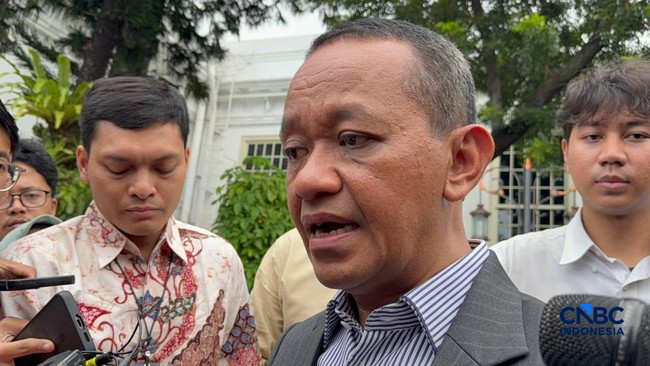
Jakarta, CNBC Indonesia - Minister of Energy and Mineral Resources (ESDM) Bahlil Lahadalia has emphasised that the supply of petroleum products, particularly diesel, is no longer dependent on imports, ensuring that domestic supplies remain secure despite disruptions in energy supplies across various countries.
Although several Asian countries have announced energy crisis conditions, he stated that Indonesia’s current energy situation is still considered safe.
“Even though other countries, including some neighbours and parts of Asia, have begun entering undesired states—emergencies that no country wants—we must reassure the Indonesian people that our diesel, insha’Allah, is no longer imported, so it’s clear,” he said during a press conference following an inspection of petroleum product supplies at the Bolon petrol station in Colomadu Subdistrict, Karanganyar Regency, Central Java, on Thursday (26/3/2026).
Nevertheless, for other petroleum products such as petrol, Indonesia still relies on imports for up to 50%. For liquefied petroleum gas (LPG) energy, Indonesia depends on imports for up to 70% of domestic needs.
“But I assure all ladies and gentlemen that, insha’Allah, we are also in a good condition for the next few days. However, even in this good condition, I ask for support from all Indonesians; this is not just a government issue but everyone’s problem,” he added.
In this regard, Bahlil requested that the public consume energy wisely by avoiding panic buying. The government is confident that with public cooperation, national energy supplies will remain secure despite the critical situation.
“Our oil reserves are currently at the national minimum standard level for both diesel and petrol,” he stressed.
Philippines Declares Energy Emergency
Philippine President Ferdinand R. Marcos Jr. has officially declared a national energy emergency due to threats of fuel supply disruptions stemming from escalating conflicts in the Middle East region.
The declaration was established through Executive Order (EO) Number 110, signed today, Tuesday (24/3/2026), considering the Philippines’ position as a country heavily reliant on imported petroleum products.
Citing the official Philippine News Agency (PNA), the Philippine government has identified that the heating geopolitical situation in the Middle East, particularly the potential closure of the strategic Strait of Hormuz, could trigger global oil production and transportation disruptions.
This condition is assessed to have a high potential to cause a domestic fuel supply crisis as well as price volatility that threatens the country’s economic stability.
“As a net importer of petroleum products, the Philippines remains heavily dependent on external fuel supply sources and is therefore vulnerable to disruptions in global oil production and transportation,” states the Executive Order Number 110 document, citing PNA, Tuesday (24/3/2026).
Furthermore, the Philippine Energy Minister has recommended to the President that the current situation presents a danger threatening energy supply resilience at a critical level.
Therefore, the establishment of this emergency status provides a legal basis for the government to execute swift and coordinated measures to protect the economy and the public.
India Faces LPG Crisis
Millions of restaurants across India are reportedly on the brink of mass closures. This is due to disruptions in the liquefied petroleum gas (LPG) supply chain caused by the war between Iran and Israel, along with the United States (US).
As is known, most of India’s LPG is supplied through imports. The blockage of distribution routes in the Strait of Hormuz has made the country’s energy supply critical, given that the majority of shipments must pass through that vital global trade artery.
Moreover, India’s Ministry of Petroleum and Natural Gas has officially instructed oil refineries to prioritise LPG supplies for 330 million households as the primary cooking fuel, on Tuesday. This policy sacrifices more than 3 million business operators who have relied on commercial LPG cylinders.
The Indian government, through a post on social media platform X, stated that in addition to prioritising households, it will redirect imported liquefied natural gas for essential commercial sectors. Public facilities such as hospitals and educational institutions will receive access first, ahead of entertainment and food industries.
Quoting CNBC International, Wednesday (11/3/2026), President of the National Restaurant Association of India (NRAI), Sagar Daryani, stated that the priority policy has created a highly worrying crisis situation. He warned that this step will force many restaurants to cease operations in the coming days.
“As many as 90% of restaurants in India heavily rely on LPG cylinders to run their kitchens. The industry is already facing low demand and high costs; if the LPG supply issue persists, it will lead to business closures and job losses,” said Sagar Daryani.
NRAI itself represents more than 500,000 restaurants across India. The industry is a key economic pillar with annual turnover exceeding 5.7 trillion rupees (Rp1.077 quadrillion) and employing more than 8 million people.
On the other hand, the LPG supply crisis, combined with a surge in black-market LPG prices, is forcing poor Indians to revert to using wood and charcoal for cooking, triggering health risks and exacerbating air pollution.
This price increase occurs amid global energy supply disruptions due to the war in the Middle East. India, as one of the largest LPG importers, is heavily dependent on supplies from that region.
In the capital New Delhi, gas cylinder prices have skyrocketed dramatically. Residents who previously bought LPG for around 1,800-2,000 rupees