
World First! Indonesia Prepares 3 Kg Fibre Composite Gas Cylinder to Replace LPG
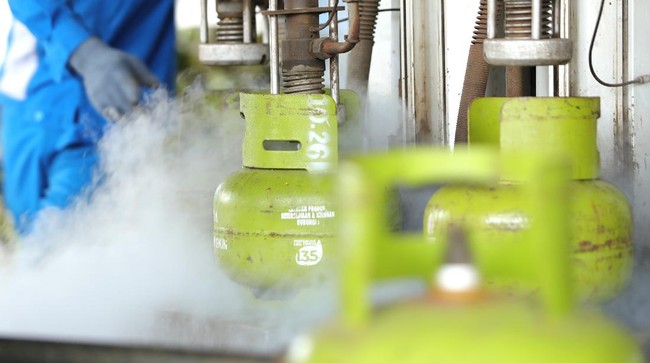
Jakarta, CNBC Indonesia - The Ministry of Energy and Mineral Resources (ESDM) is accelerating the implementation of Compressed Natural Gas (CNG) distribution as an alternative energy source to replace subsidised 3 kg Liquefied Petroleum Gas (LPG) cylinders.
One of the efforts involves preparing an innovative technology for gas cylinders made from fibre composite or Type 4 composite material.
Director General of Oil and Gas Laode Sulaeman explained that the development of small-sized composite gas cylinders represents a groundbreaking innovation worldwide. The government is currently focusing on completing the patent process and standardisation to ensure the cylinders are ready and safe for public use.
The government has evaluated that conventional Type 1 cylinders currently in use have limitations in terms of operational weight burden. The innovation in fibre material is expected to facilitate gas distribution to consumers.
This innovation is also considered to enhance safety due to the material’s characteristics, which can withstand high pressure more stably.
“Research on using CNG has been ongoing for quite some time, and there are two important components in the cylinder and valve sections that require technology, which has finally been discovered and can now be implemented,” he stated during an energy discussion event organised by ASPEBINDO in Jakarta, quoted on Wednesday (6/5/2026).
The development of the Type 4 cylinder will be overseen by Lemigas to ensure every produced unit meets safety criteria. The target is to complete all administrative aspects, including patent rights for the 3 kg cylinder design, within the next three months.
“The cylinder from Type 1 has already been documented in journals, sir. From Type 1 to Type 4, there are thousands of journals and writings. The most important thing now is whether it has been patented? That’s why I said that in three months, it must be patented. It’s not about just assembling something new,” he emphasised.
Furthermore, the use of CNG in fibre composite cylinders is projected to reduce energy subsidies by up to 30% compared to LPG usage. This is because the gas source for CNG comes from domestic gas fields with increasingly abundant potential.
“Why do we need this cylinder? The only thing missing is the Type 4 for 3 kg. That’s what we’re pursuing within the time frame mentioned by the Minister, so that in three months, there will be a Type 4 for 3 kg, and from there, we can start producing in larger quantities,” he asserted.
Previously, Energy and Mineral Resources Minister Bahlil Lahadalia stated that the government is studying alternative energy sources to replace LPG. This is because Indonesia must seek domestically based alternative energy to reduce reliance on LPG imports, especially amid current global geopolitical uncertainties.
It should be noted that Indonesia’s LPG needs exceed 8 million tonnes per year. Of this demand, 75%-80% of the LPG supply comes from imports and is mostly used for household needs.
“The issue now is that with political upheavals like this, securing LPG imports is certain, but we depend on the global market. Therefore, we are formulating alternatives. CNG is one of them,” Bahlil explained after a limited cabinet meeting at the State Palace in Jakarta on Tuesday (5/5/2026).
“CNG is already used by hotels, restaurants, and MBGs; it’s there, but in classifications of 20 kg and above, or 10 kg and above,” he said.
Currently, they are testing to introduce CNG in smaller sizes, or 3 kg. It is estimated that these trials can be completed in 2-3 months.
“In 2-3 months, we will get the results, and if it’s confirmed, we will proceed with conversion. Why? Because CNG’s raw material is all available domestically: C1, C2 gas,” Bahlil revealed.
Bahlil estimated, based on existing studies, that using CNG will be cheaper than LPG, saving 30%.
“Why is it cheaper? First, the gas is available domestically, and the industry is here, in the country. So, no imports; just the transportation costs alone can cover it.”
“And second, it’s available in almost all regions with gas sources, so it’s far more efficient. And if asked whether it’s performing well or not, on a large scale, it already is. In Java regions, CNG is already used by hotels, restaurants, and MBG kitchens,” Bahlil stressed.
He also opened the option for the CNG product to receive subsidies in the future.
“Everything is being studied. The subsidy option is still necessary; it’s just about the volume that we need to assess,” he added.