
World Bank: Indonesia Needs to Improve Human Resource Quality to Support Industry
Jakarta (ANTARA) - The World Bank stresses the importance of improving human resource (HR) quality and education as the main foundation of Indonesia’s industrial policy.
The World Bank’s Chief Economist for East Asia and Pacific, Aaditya Mattoo, stated that skills, as well as the provision of public infrastructure such as energy, ports, fibre optic networks, and roads, are the first pillar that must be strengthened.
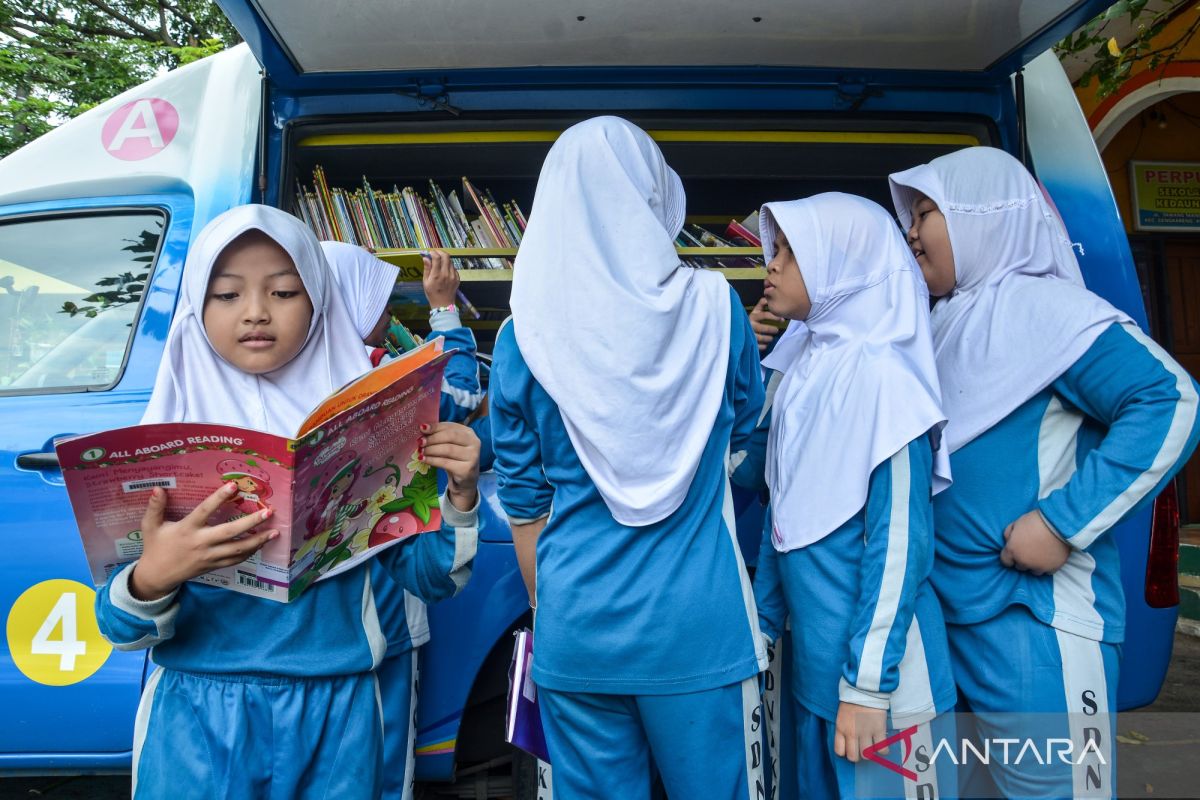
“Indonesia still faces serious weaknesses in basic education. Many children are unable to read at their age level or perform simple calculations,” he said in an online interview with ANTARA from Jakarta on Wednesday.
“In addition, the quality of STEM (Science, Technology, Engineering, and Mathematics) and managerial education is still weak,” he added.
The second pillar is eliminating policies that harm economic activity, such as non-tariff barriers on goods and services. This reform, according to him, can have a significant impact on the business climate.
Furthermore, he explained that the benefits of policies such as export restrictions to encourage downstream industries would be greater if the first pillar, namely infrastructure and human capital, is strong, and the second pillar, namely easing the import of raw materials, is implemented. Because import restrictions could actually weaken export capabilities.
Meanwhile, the provision of incentives such as tax holidays is believed to be more optimal if the foundation of education and infrastructure is strong, and ineffective policies are first eliminated.
These figures are higher compared to the growth projection for the East Asia and Pacific (EAP) region, which is only 4.2 percent.
East Asia and Pacific includes Cambodia, China, Indonesia, Laos, Malaysia, Mongolia, Myanmar, Papua New Guinea, Philippines, Thailand, Timor-Leste, Vietnam, and Pacific Island countries.