
World Bank: Danantara Investments Key to Driving Indonesia's Economic Growth in 2027
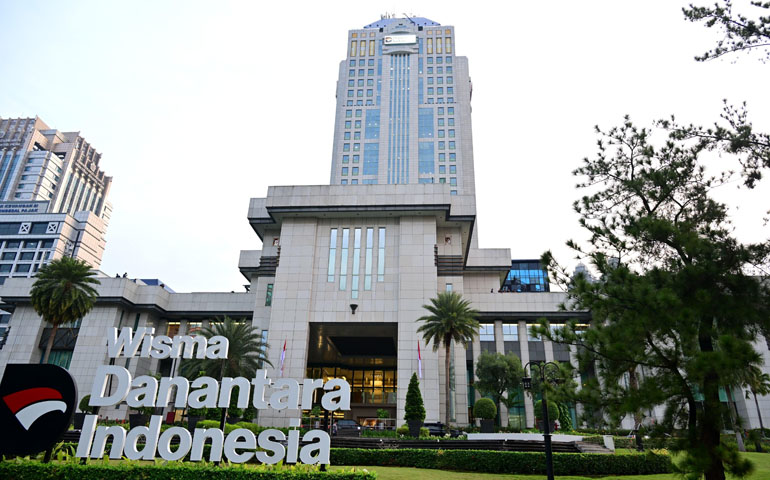
The World Bank has stated that investments by the Badan Pengelola Investasi (BPI) Danantara will be key to driving Indonesia’s economic growth in 2027. This statement was made in the World Bank East Asia and Pacific Economic Update April 2026 report, quoted on Thursday, 9 April 2026.
In the report, the World Bank indicated that economic growth in most East Asia and Pacific countries will experience a slight correction this year.
Indonesia will also face economic growth challenges this year, particularly due to rising global energy prices. However, the World Bank assesses that Indonesia can overcome these challenges thanks to strong commodity revenues and government initiative investments, including those by Danantara.
According to the World Bank, these investments will provide a significant boost to economic growth in the following year. “In 2027, Indonesia’s economic growth will improve, supported by Danantara investments and monetary easing policies,” the World Bank stated.
For information, this year Danantara will focus its investments on downstream processing and strategic industries.
At the beginning of this year, Danantara has started construction on six downstream processing projects worth USD 7 billion or equivalent to Rp110 trillion, such as the Smelter Grade Alumina Refinery (SGAR) Phase 2 project, aluminium smelter project, and biorefinery project. In addition, Danantara also plans to conduct groundbreaking for 21 other downstream processing projects this year.
In addition to highlighting Danantara’s role, the World Bank also mentioned that deregulation policies and business permit simplification have the potential to positively impact economic growth and employment absorption in Indonesia. This is expected to support various government fiscal initiatives in driving domestic economic growth.
“Policy reforms, such as deregulation and business permit simplification as in Indonesia, can drive economic growth potential and productive job creation,” the World Bank added.