
World and Japan's Eyes on the Malacca Strait, a Busier Route than Hormuz
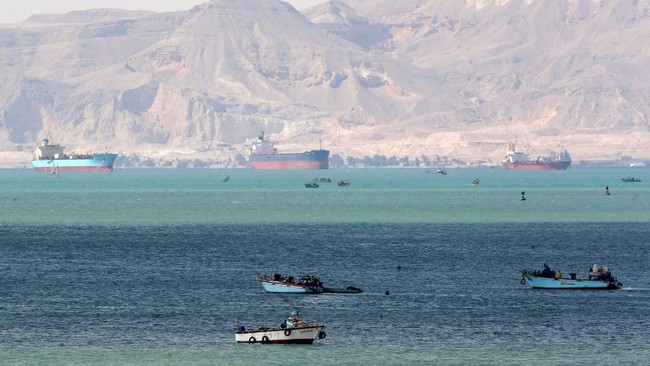
The Malacca Strait is currently a hot topic both domestically and internationally. This sea route, which directly borders Indonesia, has come under the spotlight following the world’s observation of how vulnerable global energy trade is when one of the main chokepoints is disrupted.
This attention arises amid the Middle East conflict between the United States and Iran. The tensions have drawn focus to the Strait of Hormuz, one of the world’s most important energy trade routes, due to its strategic position for Iran and oil-producing countries in the Gulf region.
This situation has prompted the world to re-examine other sea routes that also play a major role in global energy trade, including the Malacca Strait.
Domestically, attention to the Malacca Strait has intensified after Finance Minister Purbaya Yudhi Sadewa mentioned the possibility of charging fees for ships passing through the route.
However, this statement was later clarified by Foreign Minister Sugiono. He emphasised that Indonesia will not impose taxes or tariffs on ships passing through the Malacca Strait.
The government also stressed that Indonesia continues to respect international maritime law, including the principle of freedom of navigation in international shipping lanes.
At the same time, attention has also come from Japan.
Charge d’Affaires of the Japanese Embassy in Jakarta, Mitsuru Myochin, assessed that Indonesia holds an important role due to its geographical position directly bordering the largest part of the Malacca Strait.
According to Myochin, there are two major chokepoints that are very important to the world: the Strait of Hormuz and the Malacca Strait. Because Indonesia borders the largest part of the Malacca Strait, Indonesia’s position is seen as increasingly strategic in maintaining regional stability.
Japan’s statement is not without reason. Both straits connect energy producers with major consumer countries in Asia.
Therefore, it is interesting to examine further the comparison between the Strait of Hormuz and the Malacca Strait, two routes that are equally key to world trade and energy supply.
Comparison of the Strait of Hormuz and the Malacca Strait
In global oil trade, sea routes like the Strait of Hormuz and the Malacca Strait are known as oil chokepoints. This term refers to important routes that serve as main transit points for world oil distribution.
Due to their narrow shape and difficulty in being replaced by alternative routes, disruptions in these areas can immediately trigger market concerns. Causes can vary, from geopolitical conflicts and military tensions to ship accidents and operational obstacles.
Based on data from the U.S. Energy Information Administration (EIA), around 73 million barrels of oil per day pass through various major world chokepoints. Of that amount, the Malacca Strait and the Strait of Hormuz are two of the most important routes.
The Malacca Strait is located between Indonesia and Malaysia. This route serves as the main corridor for oil shipments from the Middle East to Asian countries such as China, Japan, and South Korea.
In the first half of 2025, around 23.2 million barrels of oil per day passed through the Malacca Strait. This volume is equivalent to about 29.1% of world oil trade via sea routes. With that figure, the Malacca Strait is one of the busiest oil routes in the world.
Meanwhile, the Strait of Hormuz connects the Persian Gulf with the Arabian Sea. This route is the main exit point for oil exports from producer countries in the Gulf region.
Around 20.9 million barrels of oil per day pass through the Strait of Hormuz, or about 20% of world oil consumption and around a quarter of global oil trade via sea routes. Most of the oil passing through this route is sent to Asian markets, including China, India, Japan, and South Korea.
In terms of volume, the Malacca Strait accommodates a higher daily oil flow compared to the Strait of Hormuz. However, in terms of geopolitical risk, Hormuz is often seen as more sensitive due to its location in the volatile Middle East region.
The comparison between the two straits cannot only be viewed from oil volume.
In terms of ship traffic, the Malacca Strait is far denser than the Strait of Hormuz.
Data from the Marine Department Malaysia, cited from Reuters, shows that more than 102,500 ships crossed the Malacca Strait throughout 2025. This number is up from around 94,300 ships in 2024. On average, there are about 280 ships per day passing through the route.
In comparison, ship traffic in the Strait of Hormuz is lower. Before the US-Iran war broke out on 28 February 2026, around 140 ships per day crossed the Strait of Hormuz. However, after the conflict escalated, ship traffic on this route dropped sharply. On 23-24 April 2026, only five ships passed through the Strait of Hormuz in 24 hours.
This density makes the Malacca Strait one of the busiest shipping routes in the world. This approximately 900-kilometre route is the shortest sea path connecting East Asia with the Middle East and Europe.
From this comparison, it is clear that both straits have different roles in the global energy supply chain. The Strait of Hormuz serves as the exit point for oil from the Gulf region, while the Malacca Strait is an important entry route for energy supplies to East Asia.
This difference in function makes both equally crucial. Disruptions in Hormuz can hold back supplies from the main producer region, while disruptions in Malacca can hinder energy distribution to major consuming Asian countries such as China, Japan, and South Korea.
Therefore, Japan’s attention to the position of the Malacca Strait is very important because this route is part of their national energy security.
Japan has also provided grant assistance in the form of high-speed patrol vessels to the Indonesian Navy through the Official Security Assistance (OSA) scheme. This scheme allows Japan to provide direct defence equipment assistance to partner countries’ militaries.
Previously, Japan