
Working Visit by BP BUMN and Danantara to KAI Accelerates National Railway Transformation
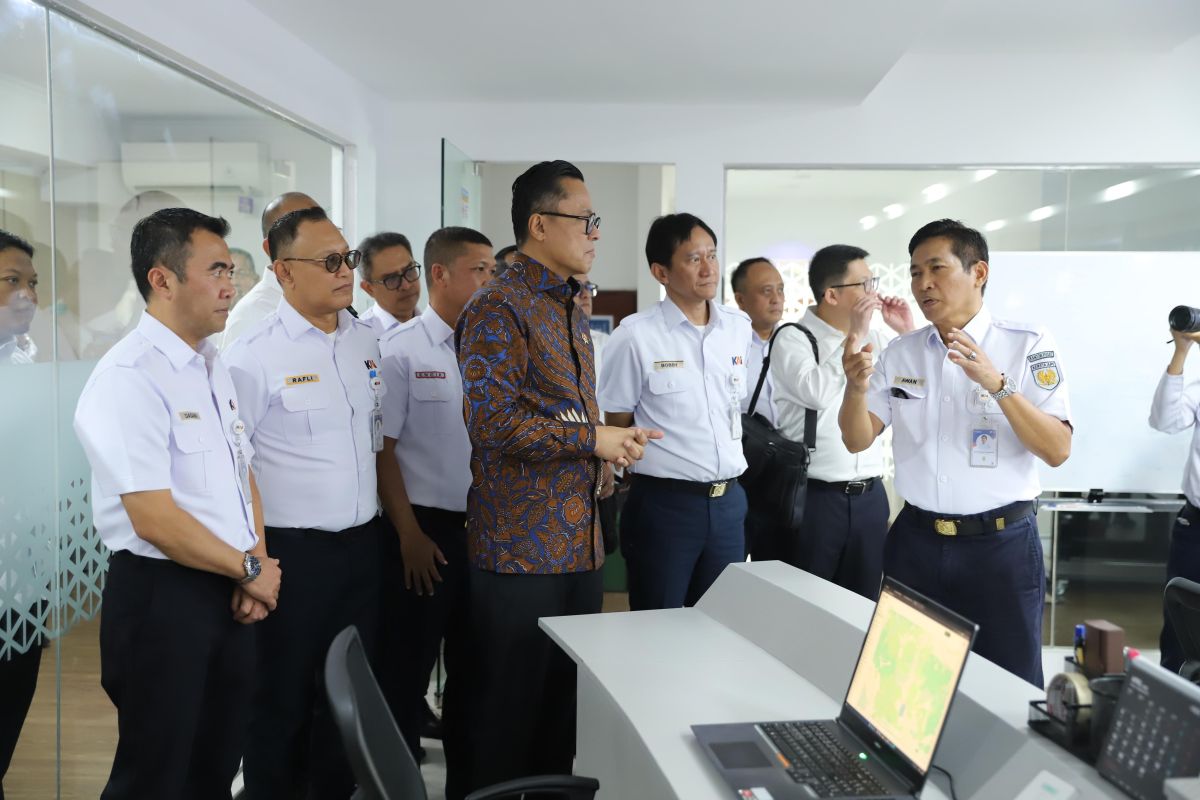
Bandung (ANTARA) - The Head of the State-Owned Enterprises Regulatory Agency (BP BUMN) and COO of BPI Danantara, Dony Oskaria, along with his team, conducted a working visit to the headquarters of PT Kereta Api Indonesia (Persero) in Bandung on Monday (20/4). The visit, held at the KAI Central Office Auditorium, was welcomed directly by KAI President Director Bobby Rasyidin and his team in an open and productive discussion atmosphere.
This meeting served as a platform for aligning the direction of national mass transportation development. Various strategic steps were discussed, from increasing service capacity and strengthening networks to their impact on mobility and economic growth in various regions.
Dony Oskaria emphasised that the transformation of mass transportation needs to be accelerated, with KAI positioned as the main driver at the national level.
“The transformation of mass transportation is the hope of President Prabowo, and in this regard, KAI is expected to be its primary locomotive. Therefore, KAI’s development needs must be clearly conveyed so that we can ensure full support from Danantara and BP BUMN, both in terms of funding, policy, and ecosystem strengthening, so that the acceleration of railway transformation can proceed more directed and have a broad impact on society,” said Dony.
He stressed that the direction of railway development is focused on three main aspects: safety, comfort, and connectivity, as the foundation for building a reliable mass transportation system.
In the discussions, electrification development became one of the key focuses, particularly to strengthen urban transport capacity. This programme includes increasing capacity on the Tanah Abang–Rangkasbitung line, electrifying the Cikarang–Cikampek line, and plans to develop the Bogor–Cigombong line to meet the growing mobility needs in agglomeration areas.
This strengthening aligns with the role of KRL as the backbone of daily mobility, with a volume of more than one million passengers per day, making capacity increases an urgent necessity.
In addition to strengthening in urban areas, railway development outside Java also received attention. KAI is pushing for increased commodity-based transport capacity in Sumatra, logistics network expansion in Kalimantan, and opening new network potential in Sulawesi to broaden national economic impact.
In line with these directives, KAI President Director Bobby Rasyidin stated that KAI continues to strengthen transformation steps in a directed and integrated manner.
“KAI views the railway as a system that connects people, regions, and economic activities. When connectivity is increasingly broad, people’s movement becomes easier, and economic opportunities can grow more evenly,” said Bobby.
Currently, KAI manages a 7,048 km network with 599 active stations, supported by more than 11,000 assets spread across operational areas. This infrastructure serves as the foundation for expanding service reach and bringing transportation access closer to the public.
The transformation carried out by KAI focuses on increasing capacity and modernising services. In the urban sector, KRL transport capacity is projected to increase from around 1.1 million to 1.4 million passengers per day by 2030, along with strengthening asset reliability and operational safety.
Additionally, KAI is developing technological innovations through the introduction of Battery Electric Multiple Unit (BEMU) as a flexible low-emission operational solution for lines that are not fully electrified, while supporting decarbonisation efforts in the transportation sector.
Transformation efforts are further strengthened through a comprehensive asset rejuvenation programme, including plans to replace locomotives and increase carrying capacity to meet projections for future passenger and freight transport growth.
Through collaboration between the government, Danantara, and KAI, this transformation is expected to proceed faster and provide direct benefits to people’s lives.
“When mass transportation develops well, public access becomes easier, economic distribution smoother, and environmental quality can be maintained,” Dony concluded.