
Workers Hope for Swift Implementation of Outsourcing Restrictions
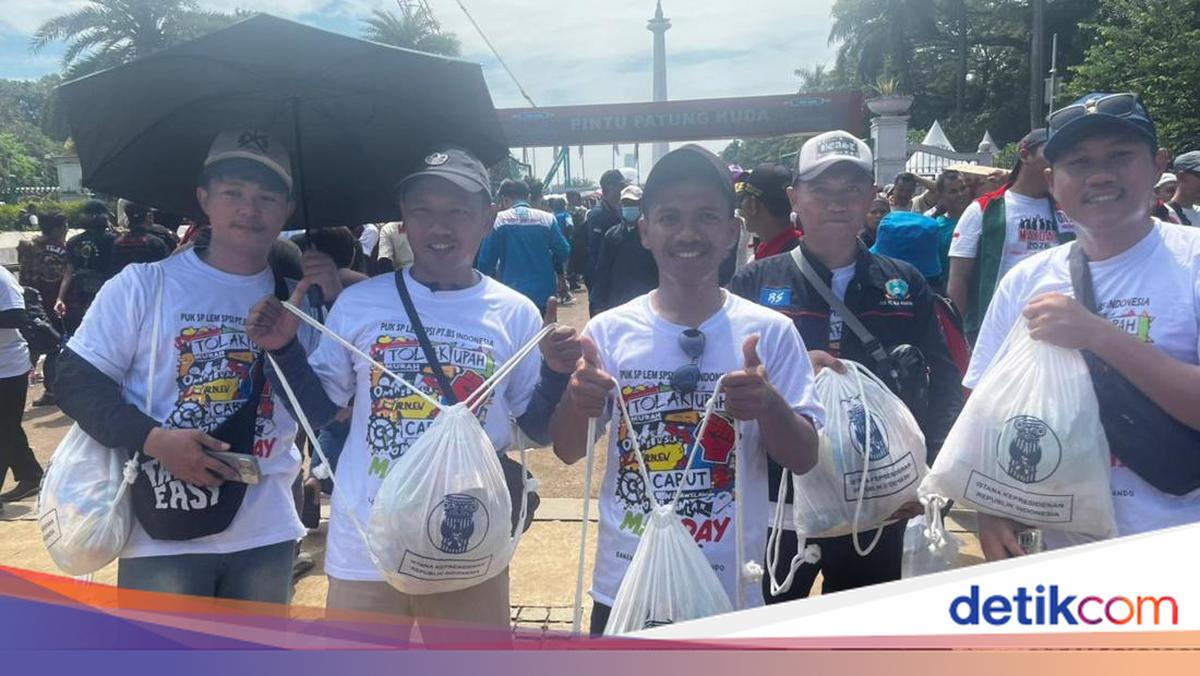
Hendra (41), one of the workers employed in Cikarang, revealed that the contract or outsourcing system has long made workers feel uneasy. “Yes, if possible, implement this kind of rule (outsourcing restrictions) as soon as possible. Most companies use outsourcing, with contract employees. So, it should be applied to all,” said Hendra when met after an event in the Monas area, Jakarta, on Friday (1/5/2026). Hendra himself has worked at his current workplace for 14 years. He is also grateful to have now been promoted to permanent employee status. Nevertheless, according to him, many workers still feel anxious every year due to their contract status. Therefore, he hopes the new regulation brings good news so that workers have future certainty. “Yes, so there is a future, no more anxiety every year. We are called contract fighters, haunted by the fear of contract expiry,” he explained. In line with Hendra, another worker, Soleh (29), also expressed the same hope. He hopes the regulation provides clear protection for workers. “So that (workers) have a future,” said Soleh. Soleh himself has worked as a contract employee for six years. However, he remains grateful that his contract has been continuously extended until now. “Alhamdulillah, it keeps going,” he stated. On the other hand, an employee named Eka (33) also views the outsourcing restrictions as a positive step. Recalling her past experience as a daily casual worker (HL), she truly felt the difference in welfare when becoming a permanent employee. “I used to be (HL). Coming home was uncertain, pay per day. Now (permanent employee) UMR, alhamdulillah. So, limiting outsourcing is positive,” said Eka. Manpower Minister Issues New Outsourcing Regulation Previously reported, Manpower Minister Yassierli issued a regulation on legal certainty protection for outsourcing workers through Permenaker Number 7 of 2026 on Outsourced Work. This regulation was issued to mark International Labour Day (May Day) on 1 May 2026. Yassierli stated that this regulation is a concrete step by the government to ensure that outsourcing practices run more fairly and provide clear protection for workers. “This Permenaker is a follow-up to the Constitutional Court Decision Number 168/PUU-XXI/2023, which mandates restrictions on outsourced work. The policy aims to provide legal certainty, strengthen worker/labour rights protection, and maintain business continuity,” said Yassierli in his statement on Thursday (30/4). Under this regulation, the types of work in outsourcing are limited to certain fields, namely cleaning services, food and beverage provision, security, provision of drivers and worker transport, operational support services, and support work in the mining, oil and gas, and electricity sectors. In addition, the employing company that delegates part of its work to an outsourcing company must have a written agreement. The agreement must at least include the type of work outsourced, duration, work location, number of workers, work protection, and the rights and obligations of the parties. On the other hand, the outsourcing company is also obliged to fulfil all worker rights in accordance with applicable laws and regulations, including wages, overtime pay, working hours and rest, annual leave, occupational safety and health (K3), social security for health and employment, religious holiday allowances, and rights regarding termination of employment (PHK). Yassierli explained that this Permenaker also regulates sanctions for employing companies or outsourcing companies that do not comply with the established provisions. “Through this Permenaker, the Government reaffirms its commitment to continue promoting the implementation of harmonious, transformative, and just industrial relations with the spirit of advancing industry and prosperous workers,” he added.