
Work-from-Home Makes Return Traffic More Relaxed, Commuters No Longer Rush Back to Bekasi
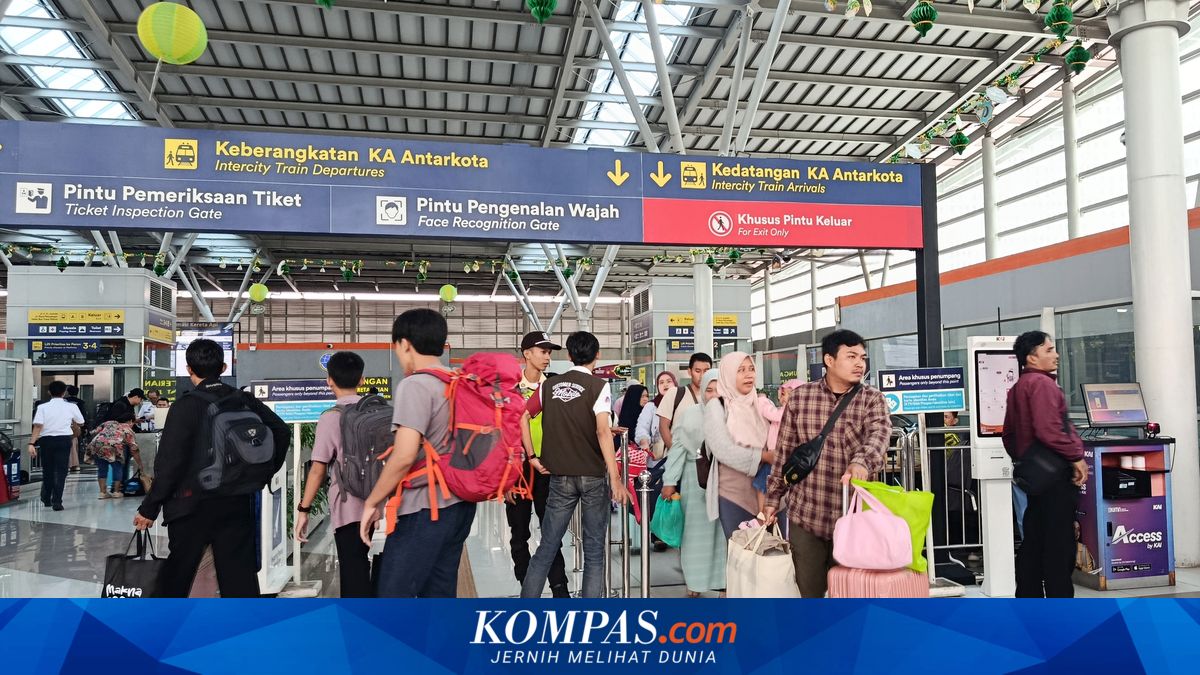
In Bekasi, a number of returnees are spending more time in their hometowns because they are permitted to work from home (WFH) by their employers.
One of them is Denis Arfian (34), a resident of West Bekasi, who returned from his hometown in Yogyakarta on Thursday morning (26/3/2026).
“It’s a huge relief because the office implemented WFH after Eid. So I could still rest at my boarding house,” said Denis when met at Bekasi Station on Thursday.
Denis said that the WFH policy also gave him more time to gather with family in his hometown while avoiding the peak return traffic density.
Wulandari (28) expressed something similar, utilising the WFH flexibility to delay her return for a more comfortable journey.
“Alhamdulillah, the trip was smooth, yes. Comfortable and no need to jostle,” she said.
Meanwhile, Dewi Zuriyati (43), a resident of Cibitung, chose to schedule her departure home to Bekasi today because she had to reopen her grocery stall.
“I have to go back now, because I want to open the shop again. If it’s closed too long, customers will go elsewhere,” said Dewi.
Dewi said that the journey from Semarang to Bekasi went smoothly even though the return traffic was still busy. According to her, this phenomenon shows that this year’s return traffic tends to be flexible.
“Now it seems like returnees are no longer fixated on a specific time, just according to each person’s needs,”
Kompas.com observations at the location found that Bekasi Station was still crowded with passengers even though it was not at the peak of return traffic. Returnees from their hometowns arrived one after another carrying suitcases, large bags, and typical Eid souvenirs.
Based on data up to 09.00 WIB, there were 8,477 long-distance train passengers arriving at Bekasi Station.
Overall, the arrival passenger volume in the Daop 1 Jakarta area on the same day reached 52,471 people, higher than the departures recorded at 33,520 passengers.
This condition indicates that the return flow is starting to dominate, with the majority of passengers coming from several cities on Java Island, such as Yogyakarta, Surabaya, Semarang, Purwokerto, and Bandung.
As the return traffic remains high, the public is urged to plan their trips well and take advantage of the remaining available tickets.
In addition, the more spread-out return traffic pattern is expected to reduce extreme congestion as usually occurs during the peak Lebaran return traffic.