
Work from Home Alone is Insufficient; Indonesia Needs to Prepare an Energy Policy Package
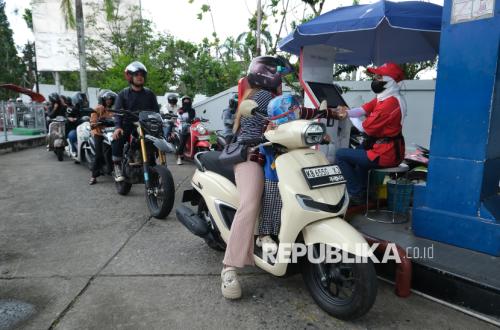
The Institute for Essential Services Reform (IESR) assesses that Indonesia requires a robust energy policy package if the geopolitical crisis in the Strait of Hormuz persists over the long term. A one-day work-from-home (WFH) option is seen as helpful in suppressing petroleum fuel (BBM) consumption, but it is not sufficient to confront the risks of global energy disruptions.
IESR supports the government’s initiative to promote flexible working arrangements as an initial response to global energy price pressures. The WFH policy is viewed as capable of reducing commuter travel in major cities, curbing urban BBM demand, while providing space for the government to maintain supply stability and public expectations.
However, the institution assesses that the impact of WFH on national energy consumption is limited. Indonesia’s BBM consumption does not solely stem from work commutes but also from logistics, goods transport, inter-city travel, as well as industrial and non-office economic activities.
Therefore, WFH is assessed as needing to be part of a broader strategy, rather than a standalone solution to facing a potential energy crisis due to the conflict between the United States and Israel with Iran. The risk of prolonged disruptions in the Strait of Hormuz is seen as potentially triggering global energy price pressures even after the war subsides.
IESR Chief Executive Officer Fabby Tumiwa stated that a one-day WFH is an appropriate emergency measure to contain BBM demand. “This crisis shows that Indonesia must move faster towards a more efficient, renewable, and resilient energy system against imports and other fossil fuels whose prices and supplies are heavily influenced by geopolitical risks,” said Fabby on Wednesday (25/3/2026).
As a short-term step, IESR urges the government to establish a national energy-saving protocol. The recommendations include restrictions on non-priority official travel, reductions in the use of official vehicles, and shifting physical meetings to online spaces in government agencies, state-owned enterprises (BUMNs), and the private sector.
IESR also emphasises the importance of strict oversight of daily BBM stocks and distribution. Energy supplies are requested to be prioritised for essential sectors such as food logistics, healthcare services, public transportation, and emergency services, accompanied by single-channel public communication to prevent panic buying.