
Women's Representation in DPR Far from Target, BPS Releases New Data
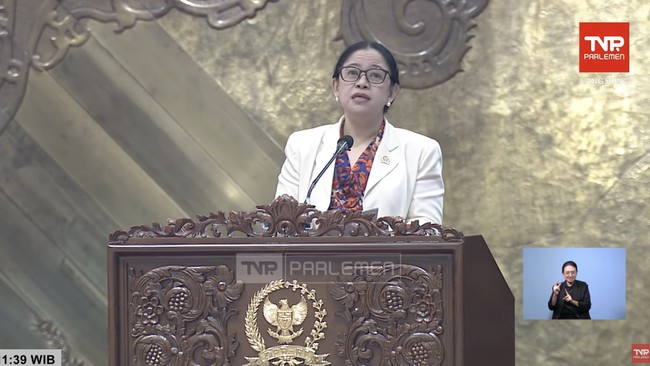
Women’s representation in Indonesia’s parliament remains far from meeting the affirmative target. The latest data indicate that the percentage of women in legislative bodies is still around 22%, well below the 30% target. Based on data from the Central Statistics Agency (BPS), the percentage of women in the DPR and legislative bodies in 2025 is recorded at 22.28%, while men still dominate at 77.72%. Nevertheless, BPS notes that the gender gap in parliament has been slowly narrowing in recent years. This coincides with increasing participation of women in various sectors. Overall, the condition of gender inequality in Indonesia shows improvement. This is reflected in the 2025 Gender Inequality Index (IKG) of 0.402, an improvement of 0.019 points from the previous year. “This decline indicates an improvement in equality between women and men,” said BPS Chief Amalia Adhininggar Widysanti during a press conference yesterday. The IKG measures three main dimensions: reproductive health, empowerment, and the labour market. In the empowerment dimension, significant improvement is seen in the education sector. The percentage of women aged 25 and above with at least high school education has increased to 38.35% in 2025. However, this progress is not yet fully reflected in political involvement. Women’s representation in parliament remains below the national affirmative target of 30%. Inequality is also still evident in the world of work. Women’s Labour Force Participation Rate (TPAK) has indeed increased to 56.63%, but it is still far below that of men at 84.40%. BPS also notes that improvements in gender inequality are not evenly distributed across all regions. Several provinces in eastern Indonesia still have higher levels of inequality compared to other areas. In fact, some regions have experienced widening gaps, such as Bengkulu, Central Papua, and Highland Papua. Overall, while gender inequality indicators show a positive trend, gaps in several important sectors remain a major challenge.