
Women Key to Climate Resilience but Remain Marginalised
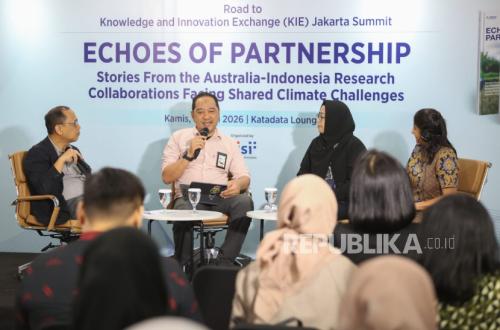
REPUBLIKA.CO.ID, JAKARTA — Women have proven to be key actors in preserving forests and strengthening climate resilience, yet their roles are still not fully accommodated in policies. This disparity is seen as hindering the effectiveness of solutions to the increasingly complex climate crisis.
These findings emerge in the book Echoes of Partnership, published by KONEKSI, which summarises 20 collaborative Indonesia-Australia research projects. The book asserts that climate solutions do not depend solely on technology and policy, but also on who is involved in the process, including vulnerable groups such as women.
BRIN researcher Dr. Lilis Mulyani stated that women are often at the forefront of social forestry practices, from protecting forests to ensuring ecosystem sustainability. “In many places, there are women champions. In addition to being the frontline in protecting forests from illegal logging practices, women also play an active role in caring for and maintaining forest sustainability,” Lilis said at the book launch in Jakarta on Thursday (9/4/2026), based on a press release.
Although regulations have opened equal opportunities, implementation in the field remains uneven. Lilis believes that women’s involvement needs to be strengthened through affirmative policies, including targets for 20–30% participation in social forestry programmes. She also highlighted women’s role in preserving biodiversity, while men are more dominant in economic aspects.
In addition to gender issues, the book also spotlights the importance of a circular economy approach in addressing the climate crisis.
Monash University researcher Dr. Tanvi Maheswari explained that the Indonesia-Australia Citarum Action Research Programme (CARP) promotes waste management based on a circular economy to restore the Citarum River environment.
This approach emphasises waste reduction from the outset, increased recycling, and the reuse of valuable materials. In addition to curbing pollution, this strategy opens up new economic opportunities for local communities through community-based waste management.
However, Tanvi cautioned that there is no single solution for all regions. “Climate problems cannot be solved with one regulation, because each area has different challenges,” said Tanvi.
On the other hand, the government faces serious challenges in financing and policy coordination. Director of Climate Change Adaptation at the Ministry of Environment and Forestry Franky Zamzani assessed that limited funding and weak inter-agency coordination remain the main obstacles.
The book also affirms the increasingly widespread impact of the climate crisis, which not only damages the environment but also widens social inequalities. Vulnerable groups are the most affected, while their access to decision-making remains limited.
Through this publication, KONEKSI emphasises the importance of cross-country collaboration and the active involvement of vulnerable groups in every stage of policy. Without it, climate solutions risk being ineffective and unsustainable.